Saturday, June 20, 2026. There is no live tape this weekend. US equity and bond markets were shut Friday for Juneteenth and only reopen Monday, June 22, so the last cash prints on the screen are still Thursday’s June 18 closes. Think of this as a stocktaking exercise rather than a reaction note. The week that just ended carried two of the biggest swing factors of the year, the formal signing of the US-Iran peace deal and Kevin Warsh’s hawkish FOMC debut, and the way those two forces interact is what sets up Monday’s reopen and Tuesday’s Micron print. Greater China is still partly offline into the weekend, with Hong Kong and the mainland out for the Dragon Boat holiday, while Japan was the only major market trading Friday and slipped modestly off its highs.
Top Call: A Finished War, an Unfinished Fed
The market closed the week wanting to celebrate the peace dividend, and it has every reason to. The Iran deal was signed Friday in Switzerland, the Strait of Hormuz is reopening to toll-free shipping, and crude has now retraced essentially the entire war premium. The catch is that the same week also handed investors a Fed that quietly deleted the rate cut it was supposed to deliver. Warsh’s first projections flipped the median 2026 dot to an implied hike and lifted the committee’s PCE inflation forecast all the way to 3.6 percent. So the bullish case rests on cheaper energy and one fewer tail risk, while the bearish case rests on a central bank that is now openly biased toward tightening. Our read into Monday is constructive but disciplined: lean into the disinflation story through energy and the consumer, respect the higher-for-longer message in rates, and treat Tuesday’s Micron report as the swing vote on whether the AI-memory leadership that drove Thursday’s bounce can carry the tape into quarter-end.
Geopolitics: The Deal Is Signed, the Hard Part Is Deferred
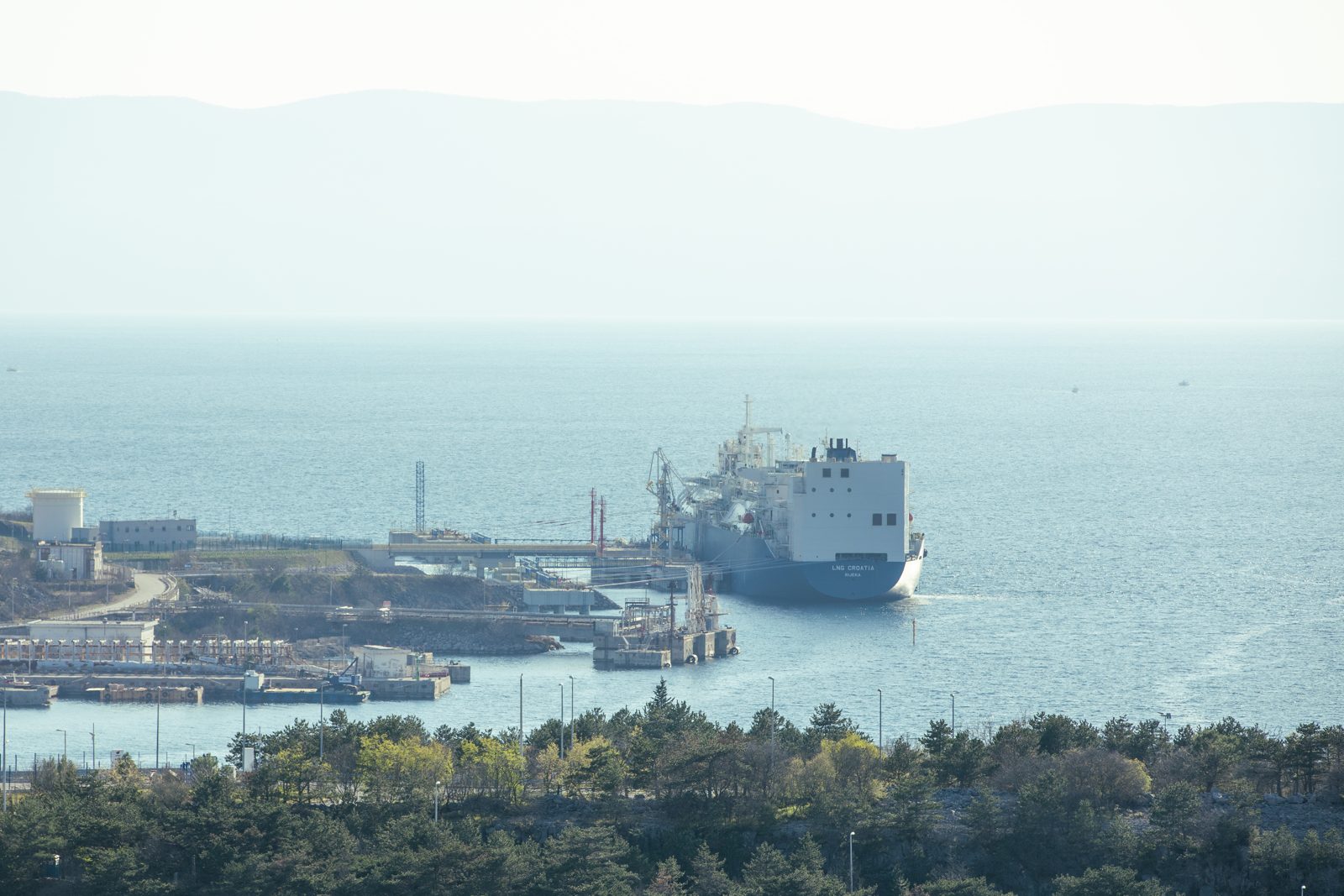
The headline of the week is done. The United States and Iran signed their peace agreement Friday in Switzerland, both sides declared a permanent end to military operations across every front including Lebanon, and Washington authorized the toll-free reopening of the Strait of Hormuz along with the removal of the naval blockade. Tankers are already moving, and Thursday saw close to 10 million barrels of crude transiting or staging near the strait, including the first Saudi-owned vessels to sail since the conflict began in late February. For the macro narrative that has dominated since the spring, this is the closing chapter.
There is one wrinkle worth flagging, because it explains why this is not a clean all-clear. The follow-on talks on Iran’s nuclear program, which were supposed to begin in Switzerland, were postponed, with the White House delaying the vice president’s trip. The ceasefire and the shipping lane were deliberately locked in first precisely so the harder issues could be carved out, but the slip is a reminder that the durable, comprehensive settlement is still a work in progress. For markets the distinction matters less than it sounds. The piece that drove the oil premium, an open and unblocked Hormuz, is the piece that got signed. The nuclear file is a slower diplomatic track whose delays carry headline risk but little immediate energy-price consequence.
The Fed: Warsh Reframes the Whole Year
Wednesday’s meeting was the pivot of the week and arguably of the quarter. The committee held at 3.50 to 3.75 percent in a unanimous vote, but the surrounding projections were the real event. The median 2026 dot moved up to 3.8 percent, which converts the path from an expected cut into an expected hike, and nine of eighteen participants now pencil in at least one increase before December. Just as striking, the Fed lifted its 2026 PCE inflation forecast to 3.6 percent from the 2.7 percent it carried only three months ago, an unusually large revision that names persistent geopolitical and energy-driven pressure as the culprit. Warsh, in a notable procedural signal, did not submit his own dot this round and used his first press conference to lean away from forward guidance toward pure data dependence.
The cross-asset reaction tells the honest story. Stocks staged a two-day round trip, selling off Wednesday and then ripping back Thursday on a semiconductor-led rebound that carried the S&P up 1.08 percent to 7,500.58 and the Nasdaq Composite up 1.91 percent to 26,517.93. Rates and the dollar, by contrast, did not give the move back. The two-year held its jump, the 10-year sits near 4.46 percent, and the dollar index pushed back above 100. Equities are willing to price the peace dividend and disinflating oil, but the bond market is pricing a Fed that has removed its safety net. That gap is the central tension we carry into the back half of June, and if the summer inflation prints fail to cool, it widens.
Oil: The War Premium Is Basically Gone
Crude drifted lower again to close the week, with Brent settling near $77 and WTI around $74, the softest levels since early March. Oil has now unwound roughly 38 percent from its April peak, an extraordinarily fast deflation of the entire conflict premium. The pressure is coming from both directions at once. Geopolitically, the Hormuz reopening restores blocked barrels just as the war that justified the premium ends. Fundamentally, OPEC has been adding supply while trimming its own 2026 demand growth outlook, a combination that points toward a looser balance. The practical caveat is that physical normalization takes time. Industry and agency estimates have shipments rebuilding through the third quarter and not returning to pre-conflict throughput until early 2027, so the path lower may be choppier than the headline trend suggests.
The cross-asset signal is the part that matters for portfolios. Falling energy costs are a direct disinflationary force and a clean tailwind for the consumer, which is exactly the offset the economy needs while the Fed signals it would rather hold or hike than cut. The flip side is that the same cheaper crude keeps draining the energy complex, the weakest corner of the equity market all month as the war bid evaporates. For now the household benefit outweighs the sector drag, but a fuller Hormuz normalization that tips the global balance into surplus would keep energy equities under pressure deep into the summer.
Semiconductors: Micron Is Tuesday’s Main Event
The chip complex did the heavy lifting in Thursday’s rebound, and it walks into the most important print of the month. Micron reports fiscal Q3 on Tuesday, June 24, and the setup is loaded. Company guidance points to roughly $33.5 billion in revenue, EPS near $19.15, and gross margin around 81 percent, but the Street’s revenue estimates fan out from about $33.7 billion all the way to nearly $41 billion, a spread that captures how uncertain investors are about the slope of AI data-center spending. After a roughly 70 percent run on the year built almost entirely on the high-bandwidth memory that feeds AI accelerators, this is the cleanest single test of whether that boom is a durable franchise or a cycle that has gotten ahead of itself.
The number we will watch hardest is gross margin, not revenue. At 81 percent it sits far above Micron’s historical norm and serves as the most direct read on HBM pricing power, and margins are typically the first thing to compress when supply loosens. The bull case is structural: Micron says its entire 2026 HBM output is sold out under multi-year contracts, with demand running an estimated 50 to 67 percent above available supply, a genuine departure from the spot-driven boom-bust of past memory cycles. The bear case is the lingering shadow of Broadcom’s early-June guidance scare and a memory market straining as producers divert capacity to data-center buyers at the expense of phones and PCs. A clean beat with margins intact would validate Thursday’s bounce and likely pull the group higher into quarter-end. Any wobble on margins or 2027 commentary would land hard on a sector that has priced a great deal of good news.
The competitive backdrop is also heating up, which is the read-through worth carrying. Qualcomm signaled a real push beyond mobile by launching custom AI data-center silicon and entering talks to acquire chip startup Tenstorrent for as much as $10 billion, a sign that the compute land grab is widening beyond the usual names. Samsung and SK Hynix are shipping seventh-generation HBM4E samples to major customers, intensifying the memory arms race that Micron sits inside, and Intel pushed its 18A-P node into risk production with reported interest from Apple and Google. The takeaway is that AI infrastructure demand remains the market’s central organizing theme, and the supply side is racing to meet it.
Corporate and Deals: A Busy M&A Tape
Earnings were light around the holiday, but the deal machine kept running, which is itself a useful signal that financing stayed open despite the hawkish Fed. Accenture’s Thursday print was the one worth reading for an AI-services pulse, and it was solid on the surface and softer underneath. Revenue rose to $18.7 billion, up 6 percent, with operating margin near 17 percent and EPS up 9 percent to $3.80, but bookings fell 2 percent to $19.3 billion, the line that sets next year’s revenue. The offset is large-deal momentum, with 104 contracts of $100 million or more year-to-date, increasingly tied to enterprise AI transformation. We read it as a mild positive for the AI infrastructure names and a neutral-to-cautious tell on the breadth of corporate IT budgets. Earlier in the week Jabil delivered a clean beat at $8.8 billion in revenue and $2.59 EPS, a reassuring confirmation that the hardware supply chain feeding AI buildouts is still busy.
On the deal front, the week produced a steady run of strategic activity. Yum Brands agreed to sell Pizza Hut for $2.7 billion and approved an incremental $4 billion buyback, American Express agreed to buy TheFork from Tripadvisor for $700 million, Ingredion moved to acquire Tate & Lyle for about $3.6 billion, and Olin agreed to buy Huntsman for roughly $4.3 billion. Those follow the larger Fox-Roku $22 billion merger and Salesforce’s roughly $3.6 billion purchase of Fin earlier in the month. None reset the tape on their own, but the cadence is consistent with a market where strategic buyers are still willing to act.
Space: SPCX Fever Cools Into Rocket Lab’s Index Moment
The space trade is going through a textbook post-IPO digestion. SpaceX, which debuted June 12 at a record $1.77 trillion valuation and spiked toward $225, has since cooled back near $206 as a former Nasdaq chief publicly questioned whether the stock is trading on fundamentals given its restricted 4 percent free float. The more interesting dynamic is the rotation underneath. Rather than lifting all boats, the SpaceX listing pulled capital out of the smaller space names that had rallied in anticipation. Rocket Lab, widely seen as the clear number two in commercial space, joins the Nasdaq-100 before Monday’s open as part of the quarterly rebalance, yet it trades roughly 28 percent below its 52-week high even with a record Q1 and a recent analyst upgrade. Index inclusion brings a technical bid from passive funds, but it will not by itself reverse the sentiment-driven profit-taking that has gripped the group.
Asia and Europe Overnight
Greater China stayed partly dark into the weekend. Hong Kong was out for Tuen Ng and the mainland exchanges remain shut for the Dragon Boat holiday through Sunday, which keeps regional liquidity thin until everyone is back Monday. Japan was the lone major market trading Friday and gave back a little, with the Nikkei 225 easing roughly seven-tenths of a percent to around 71,250 after brushing 72,000 earlier in the week. The pullback is consistent with a market that has run hard on a weak yen and surging exports but keeps stalling just above 70,000, and with the Bank of Japan’s recent move to 1 percent gradually eroding the carry that fueled the rally. Europe traded quietly without a US lead and drifted marginally lower, with the Stoxx 600 and DAX both a touch softer in light conditions, while the FTSE 100 sat near 10,360. With New York shut, the European tape carried little signal into Monday.
Geopolitical Tracker
US-Iran: Peace deal signed Friday in Switzerland. Ceasefire holds, the Strait of Hormuz is reopening to toll-free shipping, and tankers are transiting. The follow-on nuclear talks were postponed, deferring the hardest part of the settlement and leaving a thread of headline risk, though with little immediate energy-price impact.
Ukraine-Russia: Still structurally unresolved and overshadowed by the Iran outcome. Combat continues along the eastern axes and ceasefire talks remain stalled. A pending US security-assistance package is the item to watch for headline risk.
Taiwan Strait and South China Sea: PRC coast guard pressure near the Pratas Islands continues at a low simmer with no major escalation. The pattern of incremental Chinese activity persists but stays contained.
Key Events Ahead
| Date | Event | Why It Matters |
|---|---|---|
| Mon Jun 22 | US Markets Reopen | First chance to price the signed deal and the hawkish Fed together |
| Mon Jun 22 | Rocket Lab Joins Nasdaq-100 | Passive bid for the space name as SPCX fever cools |
| Mon Jun 22 | Hong Kong and China Reopen | Greater China back from Dragon Boat; watch Hormuz read-through |
| Tue Jun 24 | Micron Q3 FY26 Earnings (MU) | The AI-memory verdict; ~81% gross margin is the key tell |
| Wed Jun 25 | New Home Sales (May) | Housing read after the 15% starts plunge |
| Thu Jun 26 | Final Q1 GDP, Jobless Claims | Growth and labor check into quarter-end |
| Fri Jun 27 | Core PCE (May) | The Fed’s preferred gauge after the SEP lifted 2026 PCE to 3.6% |
Saturday weekend note, June 20, 2026. US equity and bond markets were closed Friday for Juneteenth and reopen Monday, June 22; there is no weekend tape. US cash levels shown are Thursday’s June 18 closes: S&P 500 7,500.58 (+1.08% Thu), Nasdaq Composite 26,517.93 (+1.91% Thu), Dow 51,564.70 (+0.14% Thu) after Warsh’s hawkish FOMC debut flipped the dot plot to a 2026 hike and lifted the 2026 PCE forecast to 3.6%. The US-Iran peace deal was signed Friday in Switzerland with the Strait of Hormuz reopening, while the follow-on nuclear talks were postponed. WTI near $73.70, Brent $77.20, oil down roughly 38% from the April peak. Gold around $4,300, Bitcoin near $64,100, DXY 100.45, 10Y 4.46%. Nikkei near 71,250; Hong Kong and mainland China closed for Dragon Boat through the weekend. Micron reports Tuesday, June 24. For internal use only. Not investment advice.