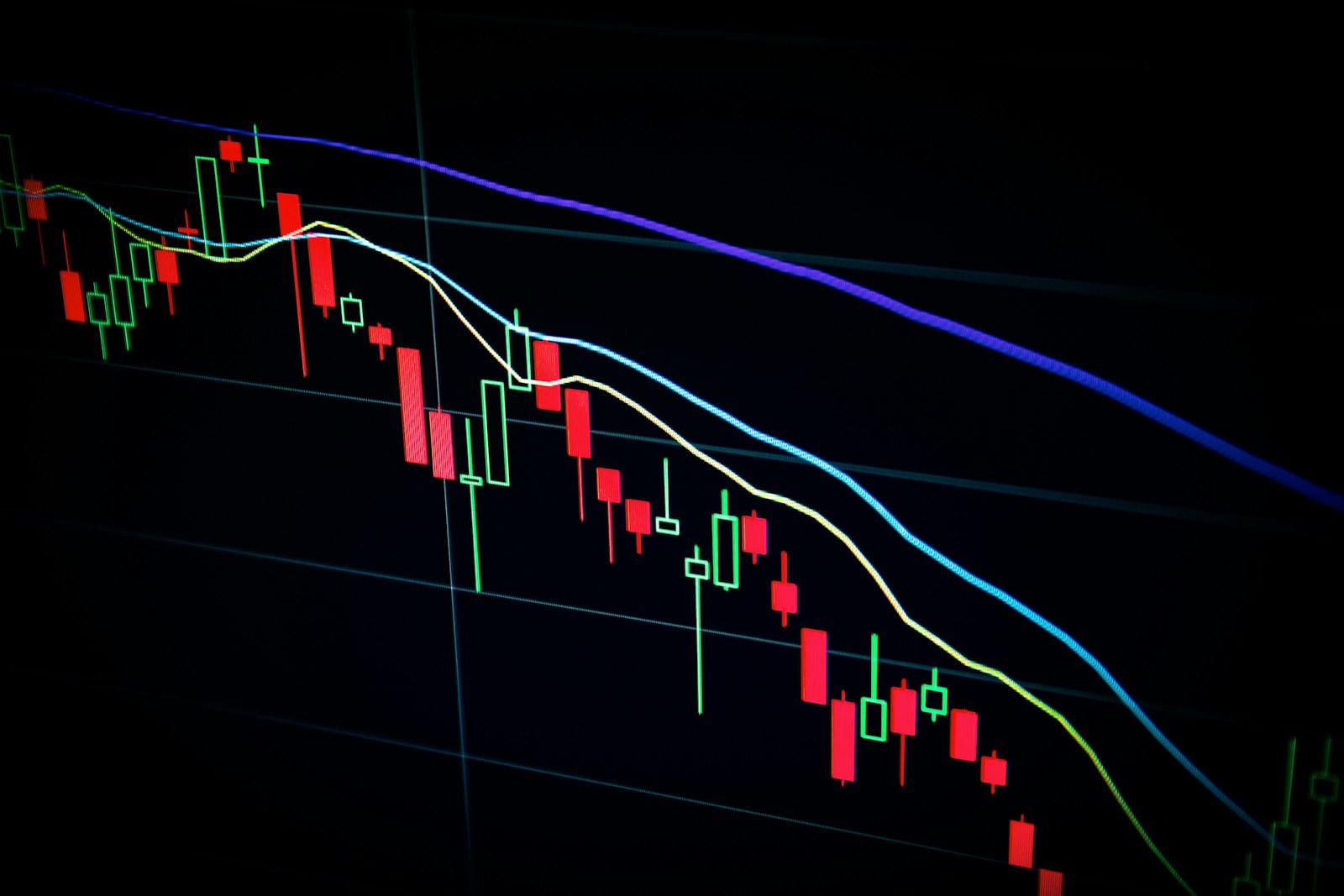
Tuesday, June 23, 2026, written pre-market around 7:30am ET. The screen has finally given us the air pocket the AI complex has been daring for months, and it arrived overnight in Seoul rather than on Wall Street. Nasdaq 100 futures are down roughly 3 percent near 29,740, S&P 500 futures are off about 1.2 percent toward 7,385, and only the Dow is holding relatively firm, down about half a percent at 51,883 as money rotates out of the megacap-tech weighting and into anything that is not a memory chip. Micron is indicated down close to 9 percent in pre-market trade, 24 hours before it reports. The trigger was a violent unwind in Asian memory names that halted the Korean market limit-down, and the question into the cash open is whether this is a healthy flush of a parabolic trade or the first crack in the story that has carried the entire tape. As always with a pre-open note, these are overnight and futures levels and they can move by the bell.
Top Call: The AI-Memory Trade Just Took Its First Real Hit, and It Lands the Day Before Micron
The single most important thing for PMs this morning is that the memory complex, the purest expression of the AI-infrastructure trade, just suffered its first genuine drawdown of the cycle, and the timing could not be more loaded. The Kospi crashed 9.99 percent and triggered a market-wide circuit breaker as Samsung fell about 12 percent and SK Hynix about 12.5 percent, with foreign investors dumping close to $3.8 billion of stock in a single session. That same selling has Micron indicated down 9 percent here and Nasdaq futures off 3 percent, less than a day before Micron delivers the print that the whole group is now priced against. Our read is that this is a positioning event rather than a fundamental one. The catalyst was profit-taking after an extraordinary run, with SK Hynix up nearly 190 percent on the year, not any new evidence that high-bandwidth memory demand is rolling over. The tell that this is a de-grossing and not a regime change is that gold is falling just as hard as stocks, down almost 3 percent to $4,090, which means investors are raising cash across the board rather than rotating into safety. We stay constructive on the structural HBM story but would respect the tape, because Micron tomorrow night now has to validate a narrative that the market is suddenly willing to question.
Semiconductors: A Limit-Down in Seoul Sets Up Micron as the Verdict
The epicenter was Korea, and the mechanics matter. Samsung and SK Hynix together make up nearly half of the Kospi and have supplied roughly 70 percent of the index’s 2026 gains, so when both fell about 12 percent the entire market hit its circuit breaker and halted for 20 minutes, closing down 9.99 percent. Kioxia tumbled more than 15 percent. The most revealing detail is the split in behavior beneath the headline. Foreign investors sold a net 5.79 trillion won while domestic retail bought a record 11.11 trillion won, a textbook standoff between fast money taking profits on a stretched position and local investors who still believe the AI buildout is intact. We lean toward the latter on fundamentals and toward the former on near-term price action. Nothing in the businesses changed overnight. What changed is that a trade priced for perfection met the first whiff of doubt, and leverage did the rest.
That sets up the most important print of the quarter. Micron reports fiscal Q3 after Wednesday’s close, and after today the bar has shifted. Consensus sits near $34.7 billion in revenue and roughly $19.95 in EPS, against company guidance of about $33.5 billion and gross margin near 81 percent. The number we care about most is that gross margin, because at 81 percent it is the cleanest possible read on HBM pricing power and the first line to compress if supply is loosening. The bull case is unchanged and structural. Management has said its entire calendar 2026 HBM output is sold out under multi-year contracts, and Micron remains the only US-based maker of the memory that feeds every AI accelerator in production. A clean beat with margins intact would frame today’s rout as a gift. Any softness on margin or on 2027 commentary lands on a freshly nervous group with far less cushion than it had a week ago. Today’s move means investors are no longer paying up for a perfect print, they are demanding one.
Macro: A De-Grossing Signature, Not a Fundamental Repricing
The cross-asset picture is what separates a flush from a top, and this morning it reads as the former. Gold is down almost 3 percent to roughly $4,090 and silver is off more than 5 percent, both at fresh lows, while Treasuries are catching only a modest bid with the 10-year easing a couple of basis points to about 4.48 percent. When the supposed safe havens sell alongside the risk assets and the only thing catching a real bid is the dollar, which is firm above 100, that is the signature of investors raising cash and cutting gross exposure rather than repricing the economy. It is the same pattern that has marked every sharp but ultimately shallow drawdown of this cycle.
The backdrop that makes the de-grossing rational is the rate picture under Kevin Warsh. The new Fed has leaned hawkish, lifted its 2026 PCE forecast to 3.6 percent, and flipped the dot plot toward a hike, and the renewed focus on US rates was cited as a contributing trigger for the overnight unwind. That puts Thursday’s May core PCE in an even brighter spotlight. A hot print would validate the higher-for-longer message and give the de-risking a fundamental anchor, while a cooler number would hand the bulls the argument that the Fed is chasing a ghost just as the AI trade is wobbling. With quarter-end two sessions away, expect the tape to stay jumpy and the moves to stay exaggerated by positioning.
Geopolitics: Iran Agrees to Let Nuclear Inspectors Back
The one genuinely constructive thread overnight came from Switzerland, and it is the reason the energy and gold complex keeps bleeding its war premium. Vice President Vance called the first day of US-Iran negotiations very good and said Tehran has agreed to invite International Atomic Energy Agency inspectors back into the country, which he framed as a first step toward permanently ending Iran’s nuclear weapons program. The two sides established four working groups covering sanctions termination, nuclear affairs, reconstruction, and monitoring, and the Treasury confirmed it is waiving US sanctions on Iranian crude and petroleum products through August 21. That sanctions waiver is a direct bearish input for oil, because it clears the path for more Iranian barrels just as the Strait of Hormuz stays open.
The caveat keeps this from being a clean all-clear. Iran’s foreign ministry was quick to stress that real negotiations on the nuclear file have not actually begun, and the 60-day roadmap leaves the hardest enrichment questions for later rounds. For markets, though, the energy-relevant pieces, an open strait and the return of inspectors, are the pieces that are working, and they are doing exactly what a receding war premium should do to crude and to gold.
Oil: The Slide Extends as Iranian Barrels Get a Green Light
Crude pushed lower again into the reopen, with WTI down about a percent near $73.70 and Brent slipping toward $76.70, both at their softest since early March. The Treasury’s waiver on Iranian oil sales through late August is the fresh catalyst on top of an already heavy setup, layering the prospect of more sanctioned barrels onto an open Hormuz and an OPEC group that keeps adding supply against a trimmed 2026 demand outlook. Oil has now unwound the overwhelming majority of its conflict premium. For portfolios the read-through is the familiar one. Cheaper energy is a clean disinflationary tailwind that feeds straight into Thursday’s PCE math, even as it keeps draining the energy equities that have been the weakest corner of the market all month.
Corporate: FedEx Reports Tonight as the First Pure-Play Parcel Print
The marquee earnings event today is FedEx after the close, its first quarter as a pure-play parcel and logistics company following the June 1 spinoff of FedEx Freight. Consensus sits near $5.91 in EPS on about $24.2 billion in revenue, and the stock has held close to $326 into the print, with the Street pointing to the DRIVE cost program and the Amazon delivery agreement as the swing factors. FedEx has beaten EPS in each of the last four quarters. We read this as the cleaner macro signal of the week, a direct gauge of goods demand and global trade flow, where Micron tomorrow is the AI signal. A solid number with constructive volume commentary would reinforce the soft-landing-with-sticky-inflation backdrop and offer the broad tape a steadying counterpoint to the chip rout. A guidance wobble on goods demand would feed the risk-off tone heading into PCE. M&A was otherwise quiet overnight, with the group still digesting yesterday’s AbbVie-Apogee deal rather than adding a new headline.
Asia and Europe Overnight
Asia was all about Korea. The Kospi’s 9.99 percent limit-down was the standout and the source of the global memory unwind, and it bled into the rest of the region unevenly. Japan held up far better than the headlines implied, with the Nikkei 225 down only about 0.6 percent and still hovering just below 72,000, a notable show of relative resilience given SoftBank fell nearly 6 percent. That gap tells the story cleanly, the damage was concentrated in the pure memory pure-plays rather than across all of tech. Greater China was softer, with the Hang Seng off about 1.8 percent to 23,336 on tech weakness and the CSI 300 down around 0.7 percent near 4,690. Europe opened in the red with a clear risk-off tone, the Stoxx 600 down about a percent, the DAX off roughly 1.5 percent near 24,775, and the FTSE 100 lower by half a percent, as the chip selloff washed through every semiconductor-linked name on the continent.
Geopolitical Tracker
US-Iran: Day one of high-level talks in Switzerland produced an agreement to readmit IAEA inspectors, four working groups, and a Treasury waiver on Iranian crude sales through August 21. The strait stays open. Tehran cautions that the substantive nuclear negotiations have not yet started, so the enrichment dispute remains the live tail.
Ukraine-Russia: Still structurally unresolved and overshadowed by the Iran track. Combat continues along the eastern axes and a pending US security-assistance package is the item to watch for fresh headline risk.
United Kingdom: Keir Starmer remains in office pending the Labour leadership contest that opens July 9, with Andy Burnham the front-runner. A domestic story with limited US spillover.
Taiwan Strait and South China Sea: PRC coast guard pressure near the Pratas Islands continues at a low simmer with no major escalation.
Quick Take: FedEx (FDX) Q4 FY26 Preview, Reports Tonight After Close
| Metric | Consensus | Why It Matters |
|---|---|---|
| Revenue | ~$24.2B | First quarter as a pure-play parcel name post-Freight spinoff |
| EPS | ~$5.91 | Beaten in each of the last four quarters; DRIVE cost savings the driver |
| Free Read | Goods demand, Amazon deal | Cleanest macro gauge of the week into PCE Thursday |
Our Take: FedEx is the soft-landing tell, not the AI tell, and that makes tonight useful on a day the chip trade is unraveling. We want to see whether the DRIVE program is still expanding margins and whether management sounds confident on goods volumes into the back half. A clean beat with steady volume commentary would hand a jittery tape a piece of fundamental ground to stand on. A cut to the goods-demand outlook would do the opposite and amplify the risk-off mood ahead of PCE.
Quick Take: Micron (MU) Q3 FY26 Preview, Reports Wednesday After Close
| Metric | Consensus / Guide | Why It Matters |
|---|---|---|
| Revenue | ~$34.7B (Street); ~$33.5B (guide) | The slope of AI data-center memory demand |
| EPS (non-GAAP) | ~$19.95 (Street); ~$19.15 (guide) | Operating leverage on sold-out HBM |
| Gross Margin | ~81% | The single cleanest read on HBM pricing power |
| 2026 HBM | Sold out, multi-year contracts | Structural demand versus a normal memory cycle |
Our Take: Today’s rout raised the bar Micron has to clear. The stock is no longer priced for perfection, so a clean beat with 81 percent margins intact and constructive 2027 commentary could reframe the overnight selling as a buying opportunity and pull the whole group back. The risk is now two-sided in a way it was not a week ago. Any slip on margin or forward tone would confirm the bears just as sentiment has turned fragile. We are watching margins above all and would not chase the print in either direction.
Key Events Ahead
| Date | Event | Why It Matters |
|---|---|---|
| Tue Jun 23 | FedEx Q4 FY26 (FDX), after close | First pure-play parcel print; goods-demand gauge |
| Wed Jun 24 | Micron Q3 FY26 (MU), after close | The AI-memory verdict; ~81% gross margin is the key tell |
| Wed Jun 24 | New Home Sales (May) | Housing read after the soft starts data |
| Thu Jun 26 | Core PCE (May) | The Fed’s preferred gauge after the SEP lifted 2026 PCE to 3.6% |
| Thu Jun 26 | Final Q1 GDP, Jobless Claims | Growth and labor check into quarter-end |
| Tue Jun 30 | Nike Q4 FY26 (NKE) | Consumer and China demand read into July |
Tuesday pre-market note, June 23, 2026, drafted around 7:30am ET. Levels shown are pre-open futures and overnight prices and may shift by the cash open. Monday June 22 cash closes were S&P 500 7,472.79 (-0.37%), Nasdaq Composite 26,166.60 (-1.32%), Dow 51,712.71 (+0.29%). The Kospi fell 9.99% and triggered a circuit breaker as Samsung and SK Hynix each dropped about 12% and Kioxia fell over 15%; Micron is indicated down about 9% pre-market. Nasdaq 100 futures -3.0%, S&P 500 futures -1.2%, Dow futures -0.5%. Gold near $4,090 (-2.9%), silver -5%, both at fresh lows. WTI near $73.70, Brent $76.70 as the Treasury waived sanctions on Iranian crude through August 21 and Iran agreed to readmit IAEA inspectors. 10Y 4.48%, DXY 100.45, Bitcoin near $62,500. Nikkei -0.6% to 71,950; Hang Seng -1.8% to 23,336. FedEx reports tonight after the close, Micron Wednesday June 24 after the close, core PCE Thursday June 26. For internal use only. Not investment advice.