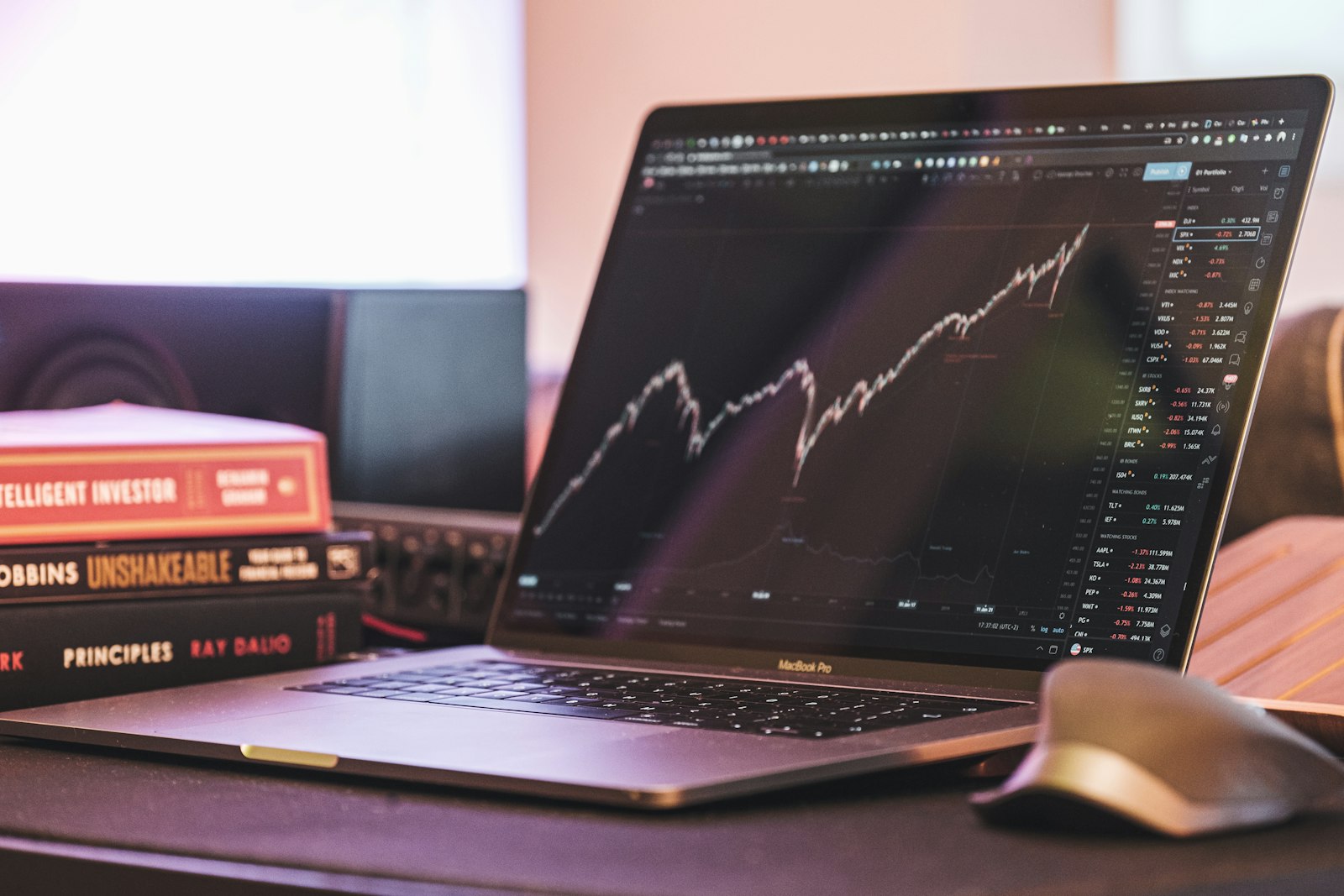
Tuesday, June 30, 2026, written pre-bell, and it is the last session of the quarter and the first half. Wall Street comes in off a powerful Monday that put the Dow above 52,000 for the first time ever and dragged the S&P 500 back to a record close, with the Nasdaq Composite ripping more than 2 percent as the chips that led last week’s rout led the rebound. Futures are quietly higher again this morning, with the S&P up about 0.2 percent and the Nasdaq 100 around 0.3 percent, a continuation rather than a fresh surge. The tape is being carried by three currents at once: a genuine relief rally on the Iran de-escalation, a burst of dealmaking that has not let up, and quarter-end rebalancing that mechanically tilts money toward the winners. The thing to keep in mind is that all of it is happening two days ahead of a jobs report that has been pulled forward to Thursday, into a Fed that has turned openly hawkish. This is a melt-up with a catalyst sitting right behind it.
Top Call: Records on Light Air, With Thursday Doing the Real Work
The one thing PMs need to carry into the open is that the market is printing all-time highs on a thin mix of relief, deal flow, and quarter-end mechanics, not on anything that resolves the two problems that drove the prior week’s selloff. The AI complex is still being repriced on how its build-out gets financed, and the Fed is still staring at 3.4 percent core PCE with Kashkari already penciling a 2026 hike. Monday’s rally was real and broad, but it was also the kind of move that quarter-end flows exaggerate as managers chase the quarter’s winners into the close. Our read is to respect the trend and distrust the altitude. Records into a holiday-shortened week with the marquee macro print landing Thursday is a setup that rewards quality and punishes chasing. We stay constructive on cash-generative compute and memory leaders and treat today’s gap as a chance to upgrade the book, not to add beta two days before the number that decides the rate path.
The Dow Crosses 52,000 and Alphabet Walks In the Door
The headline number is the Dow above 52,000 for the first time, closing at 52,182.74, but the more durable story is who was standing in the index when it happened. Alphabet officially joined the Dow on Monday, replacing Verizon, and the stock rose about 3.7 percent on its debut to roughly $350. It is the fifth member of the so-called Magnificent Seven to sit in the 130-year-old benchmark, next to Nvidia, Apple, Microsoft, and Amazon, and at roughly 4 percent of the price-weighted index it carries about eight times the heft Verizon had shrunk to. This is not a cosmetic swap. It is the Dow formally admitting that the American economy it is built to represent now runs on cloud, AI infrastructure, and platforms rather than telecom wires.
The analysis worth making here is about concentration, not celebration. Swapping a low-multiple, high-yield telecom for a megacap that trades on AI optionality makes the Dow more correlated than ever with the same handful of names that already dominate the S&P 500 and the Nasdaq 100. The benchmark that PMs reach for as the steady, industrial counterweight just got a lot more sensitive to the AI financing debate that whipsawed everyone last week. So the record is a milestone and a warning in the same breath. The index is stronger when AI is bid and more fragile when it is questioned, and Alphabet walking in during what has been its own worst month in over a year is a reminder that even the new blue chips are not immune to the repricing.
Semis Lead the Bounce, but the Financing Question Is Only Paused
The cleanest tell that Monday was risk-on rather than defensive is that semiconductors led it. The group that took the worst of the prior week’s damage, the same names that were sold even on good news because the worry had shifted from AI demand to AI financing, was out front on the way back up. The fundamental backdrop under the bounce remains strong where it counts. Nvidia’s most recent fiscal year put revenue near $216 billion, up about 65 percent, Micron is fresh off a record quarter that carried it across a trillion-dollar market value, and the demand signal in high-end memory and compute is not the thing in doubt. What is in doubt is the part the market spent last week obsessing over, which is how the broader build-out gets paid for, and a one-day rally does not answer it.
Our take is to treat this rebound as a sentiment trade riding de-escalation and deal flow, and to use it the way you use any generous tape. The leaders to own are the ones that self-fund, with pricing power and real cash generation, and Micron is the obvious example. The cohort to watch is the one that depends on a steady drip of outside capital, because those are exactly the names that rally hardest on a green day and tell you the least about whether the underlying financing problem has eased. Generosity is not the same as resolution. We would lean into the cash-rich compute and memory names and fade strength in the capital-hungry corners.
Nike Reports Tonight: The Consumer and China Tell
The one earnings event that matters today lands after the close, and it is Nike’s fiscal fourth quarter. The Street is looking for something soft, with revenue near $10.9 billion, down about 2 percent year over year, and earnings around 11 cents a share, down more than 20 percent. The stock is barely moving pre-market near $41.60, which tells you expectations have already been beaten down to the floor. The story inside the print is not really the headline beat or miss. It is China and the transition. Greater China has been the persistent sore spot, with management cleaning up the marketplace, cutting sell-in, and absorbing the cost of its Win Now reset on top of tariffs and heavy promotion.
Our take is that Nike is a low-bar, high-context print and the read-through is what matters more than the number. As a consumer bellwether and one of the most China-exposed names in the megacap complex, a worse-than-feared China commentary would ripple straight into luxury, apparel, and the broader China-demand trade just as Hong Kong and the mainland are trying to stabilize. A reassuring tone on China inventory and a credible path to fiscal 2027 stabilization could let a beaten-down stock pop on relief alone. We see the risk as skewed to the read-through rather than the EPS line, and we would watch the China segment and the forward gross-margin guide far more closely than the consensus print.
Dealmaking Refuses to Cool
The M&A engine that helped turn the tape green has not slowed into quarter-end, and the pattern is unmistakably AI and connectivity. Qualcomm’s roughly $4 billion purchase of Modular is a straight play to deepen its AI software and compute stack, the latest sign that the chip names are buying their way up the stack rather than waiting to build. In Europe, Safran is paying about 2.19 billion euros for Exail to push into autonomous naval systems and advanced navigation, and Bridgepoint’s $1.39 billion deal for Kayne Anderson Real Estate sent the buyer up more than 16 percent in London, a rare case of the market cheering the acquirer outright. Layer those on top of yesterday’s Rocket Lab bid for Iridium and the Comcast breakup, and the throughline is clear.
The analysis is that strategic buyers are looking at these levels, even after a record Monday, and seeing value rather than froth. That is constructive, because it says the people with the best information and the longest horizon are deploying capital, not hoarding it. The caution is that an index rallying partly on takeover premiums is borrowing some of its strength from one-time events, and premiums do not compound. We read the deal wave as a genuine vote of confidence in the AI, space, and connectivity themes, and as a reminder that the bid under this market is part fundamental and part event-driven, which is exactly the kind of support that can thin out fast if the macro turns.
Iran: A Meeting Washington Confirms and Tehran Will Not
The geopolitical story is the one that can still hijack everything, and this morning it sits in an uncomfortable limbo. After the weekend exchange of strikes broke and then patched the ceasefire, both sides agreed to stand down, keep the Strait of Hormuz open, and meet for technical talks in Doha. The catch is the choreography. Washington says the meeting is on for today and the US envoy is already in the region, while Iran’s senior negotiator Gharibabadi says reports of Doha talks are simply not confirmed. The agenda has narrowed from the nuclear file to the strait itself, which tells you what actually drove the weekend, and the 60-day framework signed in mid-June is the thin thread holding it all together.
The reason markets can keep rallying through this is the only variable that moves the real economy, which is the strait, and it is open with vessels moving freely this morning. But the gap between what each capital is saying is a live risk, not background noise. We just watched this ceasefire break in a single weekend. Our read is that the market is right to price de-escalation as the base case and wrong to treat it as settled, and oil firming about half a percent this morning is the tape quietly agreeing. A meeting that one side will not even confirm is not a resolution, and a second breakdown before or during Doha is the single headline that would put a fast bid back under crude and gold.
Oil: Firmer, but the Bear Case Is Intact
Crude is the cleanest gauge of how seriously to take the weekend, and it is sending a measured signal. WTI is up around half a percent near $70.30 and Brent near $73.70, firmer because the strikes were real, but sitting close to levels last seen before the war began, because the strait stayed open and both sides stood down. Underneath the geopolitical noise the structural bear case has not changed. OPEC keeps adding barrels, Saudi Arabia is visibly ramping exports, Iraq is agitating for a higher quota, and Iranian crude keeps finding a path to market. Oil handed back essentially its entire spring war premium over the prior two weeks, and this morning’s firmness is a small rebuild of risk premium, not a trend change.
For portfolios the implication is steady. Cheap energy is still quietly doing the Fed’s disinflation work, and a modest bid back into crude on an unconfirmed meeting does not undo that. It simply reminds you the premium can snap back quickly if Doha falls apart, which is why the cheapest hedge in the market remains the one nobody wants to pay for on a morning when stocks are at records.
The Fed and Thursday: The Number That Caps the Upside
The macro ceiling on all of this enthusiasm has not moved. Core PCE printed 3.4 percent in May, the hottest in well over a year, and Minneapolis Fed President Kashkari became the first official to openly pencil a 2026 hike, citing broad inflation rather than the war. Into that backdrop the calendar front-loads the one print that matters. Because July 4 falls on Saturday and the market closes early Friday, the June jobs report is pulled forward to Thursday, July 2, with consensus looking for a clear cooling in hiring. That number now sits at the center of the rate debate. A soft print revives the cut narrative and validates these records. A hot print hands the hawks their evidence, and the long-duration tech names leading today give a chunk of it back. ISM Manufacturing and ADP on Wednesday are the warm-up acts, and with Nike the only marquee earnings name, the macro print is unusually dominant this week. Treasuries are quiet ahead of it, the ten-year near 4.41 percent and the two-year around 4.15 percent, the curve’s way of saying cheaper oil is offsetting hawkish talk for now.
Asia and Europe: Asia Leads the Repair, Europe Hesitates
The overnight tape abroad split along a familiar line. Asia leaned into the recovery, with Japan’s Nikkei 225 climbing about 1.5 percent as the chip and exporter names that were hit hardest bounced, and Greater China firmer, the Shanghai Composite holding just above 4,079 and Hong Kong’s Hang Seng inching higher as US-Iran de-escalation steadied sentiment. Europe was the laggard and the more honest read on conviction. The Stoxx 600 opened essentially flat, the DAX slipped about 0.2 percent, and the FTSE eased a touch, as technology strength offset weakness elsewhere. ASML rose about 2 percent on the chip rebound and Bridgepoint jumped on its real estate deal, but Deutsche Telekom fell more than 5 percent on fears that SpaceX could disrupt mobile, the same satellite-versus-terrestrial anxiety that ran through yesterday’s Rocket Lab and Charter moves, and Heidelberg Materials dropped sharply on weak revenue. The pattern says Asia is willing to chase the bounce and Europe wants to see Thursday’s number first. With New York reopening into records, the early read is a market happy to keep grinding higher until the data gives it a reason not to.
Geopolitical Tracker
US-Iran: The patched ceasefire holds in practice but not in messaging. Washington says technical talks are on for today in Doha with its envoy already in the region, while Tehran’s lead negotiator says the meeting is not confirmed. The agenda has narrowed from the nuclear file to the Strait of Hormuz, which is open with vessels moving freely. This remains the single largest swing factor for oil and risk appetite, and a second breakdown is the live tail.
Ukraine-Russia: Structurally unresolved and again overshadowed by the Gulf. Combat continues along the eastern axes and a pending US security-assistance package is the open item for fresh headline risk.
Taiwan Strait and South China Sea: PRC coast guard pressure near the Pratas Islands continues at a low simmer with no major escalation. The pattern of incremental activity persists but stays contained.
Quick Take: Alphabet (GOOGL) Joins the Dow, Replacing Verizon
| Item | Detail | Read |
|---|---|---|
| Change | GOOGL in, VZ out, effective Mon Jun 29 | First Dow change since Nov 2024 |
| Debut | GOOGL +3.7% to ~$350 on day one | Fifth Mag 7 in the index |
| Weight | ~4% of the price-weighted Dow | ~8x Verizon’s shrunken heft |
| Context | Lands in GOOGL’s worst month in over a year | New blue chip, old AI risk |
Our Take: The Dow formally admits the economy runs on AI and platforms, not telecom wires, and the price is a benchmark now far more correlated to the same megacap cluster that already drives the S&P and Nasdaq. The record close is a milestone and a concentration warning at once. The steady industrial counterweight just got more sensitive to the AI financing debate that whipsawed the tape last week.
Quick Take: Nike (NKE) Q4 FY26 Preview, After the Close
| Metric | Consensus | Prior Year | Read |
|---|---|---|---|
| Revenue | ~$10.9B | ~$11.1B (-2% y/y) | Soft, already discounted |
| EPS | ~$0.11 | ~$0.14 (-21% y/y) | Margin and tariff drag |
| Greater China | Decline expected | Persistent weakness | The real swing factor |
| Guidance | FY27 stabilization path | Win Now reset ongoing | Tone matters most |
Our Take: This is a low-bar, high-context print where the read-through beats the number. Nike is a consumer bellwether and one of the most China-exposed megacaps, so a worse-than-feared China commentary ripples into luxury and the broader China-demand trade, while a credible stabilization path could pop a beaten-down stock on relief alone. We would watch the China segment and the forward gross-margin guide far more closely than the EPS line.
Key Events Ahead
| Date | Event | Why It Matters |
|---|---|---|
| Tue Jun 30 | Quarter-End and H1 Close | Rebalancing flows amplify the quarter’s winners |
| Tue Jun 30 | Nike Q4 FY26 (NKE), after close | Consumer and China read; Street ~$0.11 EPS, ~$10.9B revenue |
| Tue Jun 30 | US-Iran talks set for Doha (unconfirmed by Tehran) | Tests whether the patched ceasefire holds |
| Wed Jul 1 | ISM Manufacturing (Jun), ADP | First hard read on the second half |
| Thu Jul 2 | June Jobs Report (pulled forward) | The week’s dominant catalyst for the Fed path |
| Fri Jul 3 | Early close; July 4 holiday Saturday | Thin, headline-sensitive tape |
| Tue Jul 7 | SpaceX (SPCX) joins the Nasdaq-100 | Forced passive buying into a small float |
Tuesday pre-bell note, June 30, 2026, the last session of the quarter and first half. Futures are modestly higher (S&P ~+0.2%, Nasdaq 100 ~+0.3%, Dow ~+0.1%) after a record Monday in which the Dow closed above 52,000 for the first time at 52,182.74, the S&P 500 set a record at 7,440.43 (+1.18%), and the Nasdaq Composite jumped 2.07% to 25,820.14 as chips led the rebound. Alphabet (GOOGL) joined the Dow on Monday, replacing Verizon, and rose ~3.7% to ~$350, the fifth Mag 7 name in the index. Today’s drivers: quarter-end rebalancing into the winners, Nike (NKE) Q4 FY26 after the close (Street ~$10.9B revenue, ~$0.11 EPS, with Greater China the swing factor), and US-Iran technical talks set for Doha that Washington confirms and Tehran does not, with the Strait of Hormuz open. M&A stays hot: Qualcomm-Modular (~$4B, AI), Safran-Exail (~€2.19B), Bridgepoint-Kayne Anderson RE ($1.39B). WTI firmed ~0.5% to $70.30 and Brent to $73.70; gold ~$4,050, Bitcoin ~$59,800, 10Y 4.41%, 2Y 4.15%, DXY ~100.5. Core PCE ran 3.4% in May and Kashkari has penciled a 2026 hike; the June jobs report is pulled to Thursday, July 2. Overnight: Nikkei +1.5%, Hang Seng +0.3%, Shanghai Composite just above 4,079; Europe mixed with the Stoxx 600 flat and the DAX -0.2%. For internal use only. Not investment advice.