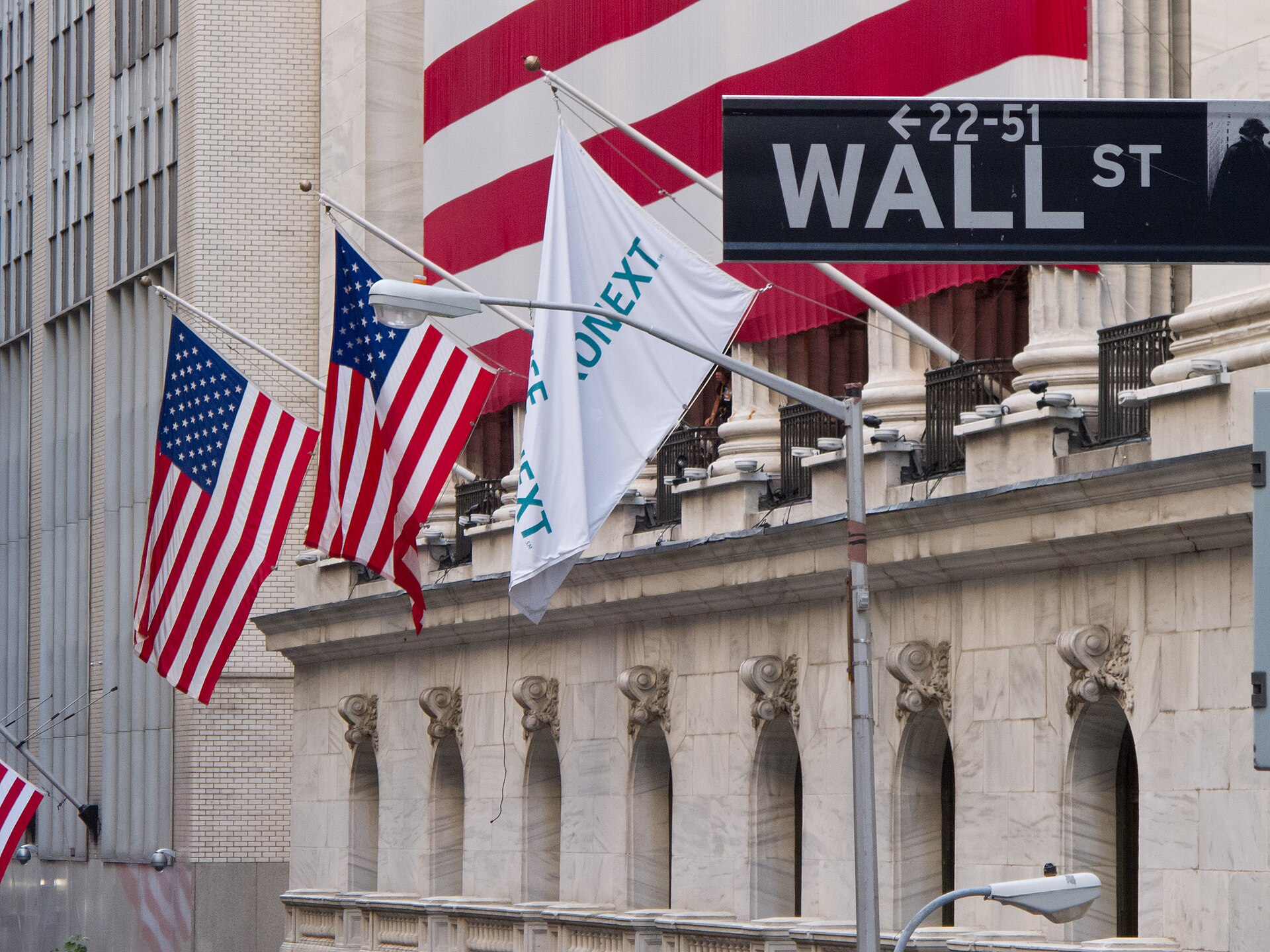
Monday, July 6, 2026, written pre-bell. Wall Street reopens this morning for the first time since Thursday, after a three-session break for the Independence Day holiday, and it reopens into a global tape that already made up its mind while New York was closed. The memory-chip rout that terrified the market mid-week fully reversed by Friday, with Asia and Europe staging the recovery that US cash could not, and this morning’s futures are catching up to it. Nasdaq 100 futures lead by about 1.2 percent, the semiconductor ETF is up more than 2 percent before the bell, the S&P 500 is up roughly 0.4 percent, and Dow futures sit just below the flatline after the index closed at a record 52,900 on Thursday. The backdrop is the same dovish jobs report that reset the Fed debate, and the setup into the open is a chip-led relief extension layered on top of a rotation that has quietly broadened the whole market.
Top Call: The Rebound Is Real, but Meta Compute Is the Question It Did Not Answer
The one thing PMs need to carry into the open is that this week produced one genuine new worry and one fake one, and the reopen is pricing the fake one away while leaving the real one open. The fake worry was that the AI-memory thesis had broken. A group that round-tripped a double-digit two-session crash inside a single Friday, right after Micron printed a blowout quarter, was never trading on fundamentals on the way down, so the snapback is deserved. The genuine worry is Meta Compute. When the largest AI spender in the world announces it will rent out excess capacity, it signals that the supply of compute is starting to catch up with demand, and that is a legitimate second-half question for everything levered to the buildout. Our read is to lean into the rebound but stay selective about where. We would rather own the scarcity that cannot be commoditized overnight, high-bandwidth memory and high-end storage, than the raw compute that Meta is now signaling could turn into a commodity. Add the dovish Fed on top and the cleanest posture is constructive on breadth, cautious on the crowded mega-cap names everyone already owns.
Chips Lead the Reopen: The Memory Rout Fully Reversed
The clearest tell this morning is that semiconductors are leading, which confirms the reversal that Asia and Europe staged on Friday. The panic peaked mid-week, when a memory selloff crushed the Kospi by nearly 8 percent, dragged Samsung down about 9 percent and China’s SMIC more than 11 percent, and sent Micron under 1,000 dollars even after a monster print. By Friday it had all come back, with SK Hynix ripping almost 11 percent, Samsung up more than 8 percent, Kioxia up over 9 percent, and the Kospi rebounding roughly 5 percent. This morning US chips are extending that move, with the VanEck Semiconductor ETF up about 2.4 percent premarket and Nasdaq futures pulling the tape higher.
The fundamental anchor underneath the noise is Micron, which reported a blowout fiscal third quarter, with revenue near 41.5 billion dollars against a 35.7 billion consensus and adjusted earnings of 25.11 dollars a share versus 20.49 expected, and still fell more than 9 percent on the day it printed. Three things turned that beat into a selloff, and all three are worth carrying forward. A late-June federal price-fixing suit accuses Micron, Samsung, and SK Hynix of colluding to keep DRAM artificially scarce, which puts a regulatory cloud over the exact pricing power that made the trade work. Planned Korean capacity expansions revived the oldest fear in memory, an oversupply cycle. And SK Hynix’s roughly 29 billion dollar Nasdaq listing, set to begin trading Friday, threatens to pull capital straight out of the incumbents. Our take is that this remains a positioning unwind rather than a thesis break. The capacity crunch is real and Micron’s numbers prove it, but the group had become a consensus long at rich multiples, and consensus longs are precisely what get sold first and bought back fastest. We stay long the pricing power and treat the price-fixing suit and the Korean capex as the two things that could turn a positioning wobble into something structural.
The Rotation: A Dow Record and Small Caps Broaden the Rally
What makes this more than a chip bounce is the breadth underneath it. On Thursday the Dow closed at a record 52,900 while the Nasdaq fell more than a percent, and it did so on financials and defensives rather than tech, with the Russell 2000 rising more than twice the Nasdaq. That is the signature of a market taking the rate-cut gift from the jobs report and using it to fund a move out of the crowded AI winners and into the rate-sensitive laggards it had left behind. This morning small caps are firmer again, which is exactly what a dovish-Fed tape rewards, because smaller companies carry more floating-rate debt and lever most directly off cheaper financing.
Our read is that this broadening is the healthiest feature of the setup. A market led only by a handful of megacaps is fragile, and the past week has spread the leadership down the cap scale and across sectors. The caution is that the same catalyst powering the breadth, a labor market cooling fast, is a double-edged sword. If the coming data confirm a soft landing, the rotation has real legs. If they confirm hiring has stalled, the small caps that lead on the way up tend to lead on the way down.
Macro: A Dovish Jobs Miss Against a Hawkish Fed
The report that reset everything was Thursday’s June payrolls. The economy added just 57,000 jobs against expectations near 115,000, April and May were revised down by a combined 74,000, and the unemployment rate held at 4.2 percent only because the participation rate fell to its lowest since early 2021. That is soft on every line, and it lands directly against a Fed that has spent the past two weeks leaning hawkish. Chair Kevin Warsh said flatly at the Sintra forum that inflation is still too high, and nine of his eighteen colleagues have signaled support for higher rates this year, six of them for two hikes. The market resolved that collision in favor of the data, pricing a September cut back in, pulling the two-year toward 4.02 percent and the ten-year to about 4.36 percent on Thursday, and knocking the dollar lower. This morning yields tick up a touch as risk appetite returns, but the direction of travel is set.
Our take is that the clean read is dovish and the tape believed it, while the messier read is that a labor market adding under 60,000 jobs, with the prior two months revised lower, is the exact cooling that eventually shows up as a growth scare rather than a soft landing. The burden of proof now shifts to Wednesday’s FOMC minutes and the July data, and the risk is that the market is celebrating a number that is friendlier for multiples than it is for earnings.
Oil: Below $68 and Still Doing the Fed’s Disinflation Work
Crude keeps grinding lower and remains the friendliest crosscurrent in the picture. WTI is near 67.60 this morning and Brent is around 71, extending a slide that has taken crude down almost 30 percent over the past month. The drivers are structural and unchanged. Iran says it has shipped more than 40 million barrels since the naval blockade came off, Russian exports are running at record levels, OPEC keeps adding supply, and the market no longer prices any real risk of a Hormuz closure, so analysts are openly warning about a glut in the back half of the year. For portfolios this is straightforward disinflation. Cheap energy feeds directly into the numbers the Fed watches and reinforces the rate-cut case that a soft jobs report just strengthened. The only caution worth naming is the familiar one, that oil this weak is partly a peace-and-supply story and partly a demand story, so a market cheering the disinflation should at least ask whether crude is also flagging that growth is cooling faster than record-adjacent equities assume.
Iran: Talks Grind On in Doha and the Strait Stays Open
The geopolitical file stayed quiet enough to keep pressuring oil rather than supporting it. Indirect technical talks between Washington and Tehran continue in Doha with Qatar and Pakistan mediating, building on the 60-day memorandum the two presidents signed in mid-June, with Vice President Vance calling the process constructive but early. Ship-tracking data counted more than thirty verified crossings through the Strait of Hormuz on the latest read, so the lanes are operationally open even if routing has not fully normalized. The two sides remain apart on the issues that matter most, including the return of nuclear inspectors, which Iran publicly disputes, the fate of the enriched-uranium stockpile, and the specifics of sanctions relief, and Iran keeps insisting it will charge service fees for passage rather than guarantee toll-free transit. Complicating the calendar, Iran is holding funeral ceremonies for its former supreme leader through July 9, and the next technical round is not expected to convene until those observances conclude. Our read is unchanged. Open lanes are the correct base case because that is the only variable that moves the real economy, but a framework paused for a leadership transition is still the cheapest tail nobody wants to pay for with the VIX near 16.
The Week Ahead: Passive Flows, a New Listing, and the Minutes
The reason this week matters more than most is what sits on the calendar. Tomorrow, Tuesday July 7, SpaceX officially joins the Nasdaq-100, and every index fund tracking the benchmark has to buy the stock into a limited float, a wave of mechanical, price-insensitive demand into a name that just upsized its debut investment-grade bond to 25 billion dollars to fund its AI ambitions and has stacked roughly 26 billion dollars in annualized AI-infrastructure revenue through deals with Alphabet, Anthropic, and a fresh contract with Reflection AI. Then Friday, July 10, SK Hynix debuts its roughly 29 billion dollar Nasdaq listing, dropping a new mega-cap memory name into a market that just spent a week fighting over exactly this group. Between those two events, capital will get pulled around inside the AI complex, and a passive bid for SpaceX plus a fresh supply of SK Hynix paper can distort the tape well beyond what the fundamentals justify.
The macro layer is lighter but pointed. This morning brings June ISM services, the first real read on the dominant part of the economy in the second half, and Wednesday delivers the June FOMC minutes, which the market will comb for how divided the committee is between the data pushing for cuts and the hawks who keep signaling hikes. Earnings are quiet until later in the week, when Delta, PepsiCo, and Hyatt give a read on the consumer and travel, but the prints that actually move this market start next week, when the big banks kick off the second-quarter season on July 14 alongside June CPI. Our take is that a market rallying on a weak jobs number into a week dominated by flows and supply rather than fundamentals is running on liquidity and positioning, which can carry it further than it should and unwind quickly when the hard data arrive.
Asia and Europe: The Rebound Went Global First
The overnight and Friday tape abroad led the recovery that Wall Street is only now joining. Japan’s Nikkei 225 held near a record around 71,800, its leadership broad enough to sidestep the worst of the memory panic, while South Korea’s Kospi, ground zero for the crash, staged its sharp rebound as SK Hynix and Samsung ripped. Greater China firmed, with Hong Kong’s Hang Seng up about 0.6 percent and the mainland CSI 300 adding roughly 0.3 percent as the chip supply chain steadied. Europe is opening from a position of real strength after Friday, when the Stoxx 600 printed a record on its best week in over a month and Germany’s DAX set an all-time high, both lifted by cyclicals, defence, and chip names as investors pushed back on the idea of an imminent US rate hike. The picture into the New York open is a synchronized advance that started overseas, with the reopening US tape catching down to a rebound the rest of the world already staged.
Geopolitical Tracker
US-Iran: Indirect talks continue in Doha through Qatari and Pakistani mediators, described as constructive but early, with the sides still apart on inspectors, the enriched-uranium stockpile, sanctions relief, and Iran’s insistence on charging Hormuz service fees. The next technical round is on hold until funeral ceremonies for Iran’s former supreme leader conclude July 9, a multi-day pause during a leadership transition. Hormuz stays open and oil keeps falling, which is why markets price calm, but a stalled process is the largest swing factor left for crude.
Ukraine-Russia: Structurally unresolved and overshadowed by the Gulf. Combat continues along the eastern axes, with a pending US security-assistance package as the live source of fresh headline risk, and record Russian oil exports quietly reinforcing the global crude glut.
Taiwan Strait and South China Sea: Low-simmer coast guard pressure continues with no major escalation, a contained pattern that stays in the background for now.
Quick Take: The Memory Complex (Micron, SK Hynix, Samsung)
| Item | Detail | Read |
|---|---|---|
| Micron fiscal Q3 | Rev ~$41.5B vs $35.7B; EPS $25.11 vs $20.49 | Blowout, ignored on print day |
| Midweek panic | Kospi ~-8%, Samsung ~-9%, MU under $1,000 | Positioning flush |
| Friday reversal | SK Hynix +10.9%, Samsung +8.2%, Kospi +5% | Fundamentals reasserted |
| The overhangs | DRAM price-fixing suit; Korean capex; SK Hynix Jul 10 listing | What could turn a wobble structural |
Our Take: The best fundamental news of the week produced the worst one-day reaction and then fully reversed, which tells you the crash was crowding, not a broken thesis. High-bandwidth memory is genuinely supply-constrained in a way raw compute is not, so we stay long the pricing power. The two risks to respect are the price-fixing suit, which targets the exact scarcity the trade relies on, and Friday’s SK Hynix listing, which adds fresh mega-cap memory supply into an already-jittery group.
Quick Take: June Jobs Report (Released Thu, Jul 2)
| Metric | Consensus | Actual | Read |
|---|---|---|---|
| Nonfarm Payrolls | ~115K | +57K | Clear miss |
| Unemployment | 4.2% | 4.2% | Flat, on falling participation |
| Prior Revisions | n/a | -74K (Apr+May) | Softer than the headline |
| Sept Cut Odds | priced out | back in play | Data beats the hawks |
Our Take: This is the number that reset the tape. A 57,000 print with downward revisions and participation at a multi-year low is soft enough to put a September cut back on the table against a Fed still talking about hikes. It is bullish for multiples right up until it starts to look like the economy is cooling too fast, and Wednesday’s minutes and next week’s CPI are the tests of which it is.
Key Events Ahead
| Date | Event | Why It Matters |
|---|---|---|
| Mon Jul 6 | US Markets Reopen; ISM Services (Jun) | First read on the services economy post-holiday |
| Tue Jul 7 | SpaceX (SPCX) joins the Nasdaq-100 | Forced passive buying into a limited float |
| Wed Jul 8 | June FOMC Minutes | How divided is the Fed after the hawkish hold |
| Thu Jul 9 | Delta (DAL) earnings; Iran funeral rites end | Consumer read; Doha talks can resume after |
| Fri Jul 10 | SK Hynix ~$29B Nasdaq listing | New mega-cap memory supply into a jittery group |
| Mon Jul 14 | Big banks kick off Q2; June CPI | First fundamental verdict and the next rate test |
Monday pre-bell note, July 6, 2026. Wall Street reopens after the July 4 holiday weekend into a chip-led extension of Friday’s global memory-rout reversal: Nasdaq 100 futures roughly +1.2%, S&P 500 +0.4%, Dow futures near -0.1% after Thursday’s record 52,900.07 close, with the SMH chip ETF up about 2.4% premarket. Thursday’s cash levels were S&P 500 7,483.24 (flat), Nasdaq Composite 25,832.67 (-0.8%), Dow 52,900.07 (record), Russell ~3,050. The week’s defining events were Meta Compute reframing AI from scarcity toward glut, and a mid-week memory rout (Kospi ~-8%, Samsung ~-9%, Micron under $1,000 despite a blowout fiscal Q3 of ~$41.5B revenue and $25.11 EPS) that fully reversed by Friday as SK Hynix jumped ~10.9%, Samsung ~8.2%, and the Kospi rebounded ~5%. The June jobs report released July 2 came in at just +57K versus ~115K expected, with April and May revised down a combined 74K and participation at its lowest since early 2021, putting a September cut back in play against a Fed where Chair Warsh and nine of eighteen members still lean toward hikes. The Dow’s record and firmer small caps reflect a rotation into rate-sensitive and value names. Oil is lower, WTI near 67.60 and Brent near 71, down almost 30% in a month on an emerging glut as Iran ships 40M+ barrels and OPEC and Russia add supply; US-Iran talks in Doha continue but the next round waits until funeral rites for Iran’s former supreme leader conclude July 9. Gold about $4,153, Bitcoin about $61,600 (-1.8%), VIX ~15.8, 10Y 4.38%, 2Y 4.03%, DXY ~99.9. The loaded week ahead: ISM Services today, June FOMC minutes Wednesday, SpaceX joining the Nasdaq-100 Tuesday, SK Hynix’s ~$29B listing Friday, and Q2 earnings plus June CPI starting July 14. Overnight: Nikkei near a record around 71,800, Hang Seng +0.6%, CSI 300 +0.3%; Europe opens from Friday’s record highs in the Stoxx 600 and DAX. For internal use only. Not investment advice.