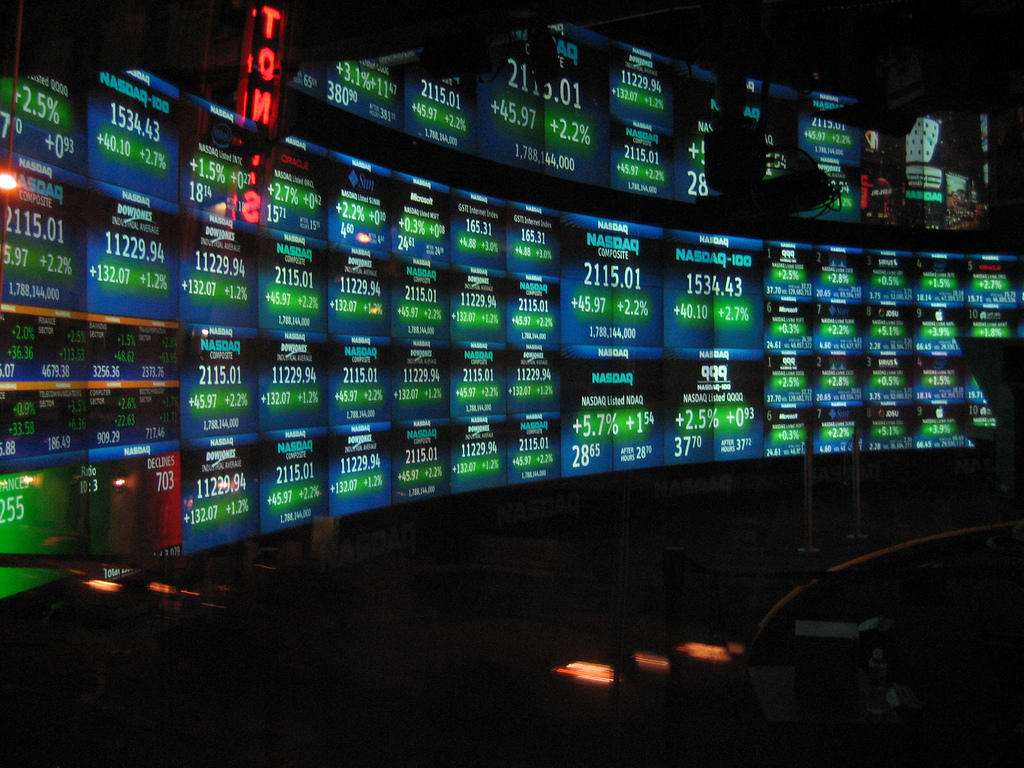
Thursday, July 9, 2026, written pre-bell. Twenty-four hours after the war came roaring back, the market has decided to look the other way. Overnight US forces widened the campaign, striking roughly 90 targets across Iran, including the ocean-facing commercial port at Chabahar and an IRGC Aerospace installation near Bushehr, and Iran again answered with missile and drone attacks on US-linked sites around the Gulf. Yet the pre-bell tape is the opposite of yesterday’s risk-off. US futures are higher, led by the Nasdaq 100 up about 0.7 percent, with the S&P slightly positive and the Dow roughly flat. Oil is firmer but calm, Brent near 79 dollars and WTI around 74, extending Wednesday’s surge without spiking. Gold is lower again near 4,030, the dollar is bid at 101, and the 10-year sits around 4.53 percent. The story of the morning is not the strikes. It is that a market staring at a two-front military exchange has already turned its full attention to tomorrow, when SK Hynix lists on the Nasdaq in a roughly 29 billion dollar debut that will serve as a live referendum on the AI memory trade that runs this tape.
Top Call: The Market Is Trading the Listing, Not the War, and That Is the Setup to Respect
The one thing PMs need to carry into the open is that the war just escalated and the market shrugged, and both halves of that sentence matter. US forces hit close to 90 targets overnight and Iran struck back, and the reaction was green futures led by chips, firmer but orderly oil, and a gold market that fell rather than rallied. That is not a fear tape. It is a market that has taught itself the strait stays physically open, tankers keep moving, and each headline fades within a session, so it is pricing the escalation as known and putting its risk budget into the thing it actually cares about, the AI memory complex and Friday’s SK Hynix listing. We think the rotation back into chips is the correct read of where the alpha is, because the memory cycle is real and a 60 percent HBM leader coming to the deepest equity market on earth is a genuine legitimizing event for the whole trade. But we would not confuse the calm with safety. The same cross-asset print that says do not fear the war, gold down and yields up, also says the cost of money is rising into a Fed that just told you it is not cutting until 2027, and that is the one thing the AI buildout cannot easily absorb. Our posture is constructive on the memory and storage names into the listing and cautious on everything levered purely to cheap capital and long duration. Trade the rotation, keep a hedge on for the strait, and remember that a market this willing to ignore an active shooting war is a market with very little margin for a headline that does not fade by lunch.
Iran: The Campaign Widens, and the Market Decides It Is Priced
The strategic picture kept escalating overnight and the market kept discounting it. The US moved beyond the opening salvo of two days ago, striking about 90 targets and reaching outside the Persian Gulf for the first time by hitting Chabahar, Iran’s only ocean-facing commercial port, while regional reports put an IRGC Aerospace site near Bushehr on fire. Iran retaliated across US-aligned Gulf states and its chief negotiator drew the real line of the morning, saying the Strait of Hormuz will reopen only under Iranian arrangements. That is not the language of a country looking for an exit. It is Tehran telling the world it intends to keep its hand on the chokepoint even as the strikes land. The human cost is now visible in the tape’s blind spot, with the International Maritime Organization saying roughly 6,000 seafarers are trapped around the strait and condemning both sides.
Our take is that the market has made a specific and dangerous bet, that this is a contained exchange rather than the reopening of the war, and so far the price action rewards it. Crude is up but not vertical, equities are higher, and the peace framework from June, though torn up on paper with the export waiver revoked, is being treated as a floor that both sides eventually return to. We are less sure. The escalation from 80 targets to 90 and from Gulf coast to an ocean port is the wrong direction, and a negotiator who conditions the reopening of a fifth of the world’s oil on his own terms is not signaling de-escalation. We would keep the strait hedge on precisely because it is cheap right now, and it is cheap because nobody wants it.
Oil: A War Premium That Refuses to Panic
Crude is the clearest evidence of the market’s mood. Brent touched about 79.25 this morning and WTI is near 74, both firmer, but the move is a controlled extension of Wednesday’s roughly 5 percent surge rather than a fresh spike, even as the US widened the strikes and revoked the waiver that had let Iranian barrels flow legally. The restraint tells you two things. First, the physical strait is still open and cargoes are still transiting, so the market is pricing risk to supply, not an actual loss of it. Second, coming into this week crude was priced for a glut, near four-month lows, with OPEC-plus adding quota and Russian exports near records, which means even a widening war is fighting a genuinely oversupplied backdrop.
Our take is that this is still a repricing worth being long into, because the asymmetry favors the upside. The bearish glut story has not vanished, and if the exchange proves brief, crude can hand back much of the premium. But the loss of legal Iranian supply plus a live combat zone over the waterway is a real tightening, and with the market having carried almost no war premium a week ago, there is still room to run before it is crowded. We would stay long energy as both a directional call and the cheapest chokepoint hedge available, and we would treat any pullback toward the low 70s in WTI as the market briefly forgetting there is a shooting war over the tankers.
Chips and the SK Hynix Listing: The Trade the Market Actually Cares About
Here is where the risk budget is going. After a brutal stretch that knocked Nvidia below a 5 trillion dollar cap on a 6 percent drop and took Micron, AMD, and Qualcomm down by high single digits, the complex is stabilizing and leading the pre-bell bounce, with Nasdaq futures up 0.7 percent. The catalyst is tomorrow. SK Hynix lists on the Nasdaq in a roughly 29 billion dollar offering, one of the largest ever by a foreign issuer, and it arrives holding about 60 percent of the high-bandwidth memory market that every AI accelerator depends on. The company is guiding to net income near 144 billion dollars in 2026, a jump of more than 400 percent, on the back of the same memory shortage that has driven Micron up 229 percent and SanDisk up more than 500 percent this year.
Our take is that this listing is the single most important event of the week and possibly the tell for the second half. The bull case is that the deepest equity market on earth finally gets direct access to the purest HBM play, narrowing the long-standing discount to Micron and re-rating the entire memory and storage stack that is the scarce, hardest-to-replicate layer of the AI build. The bear case is that a 29 billion dollar supply of new stock into a jittery, richly valued group is exactly the kind of event that marks a top, and the worry that AI spending cannot keep pace with skyrocketing memory prices has not gone away. We lean constructive because the HBM scarcity is fundamental and the demand is not in doubt, but we would size for the possibility that the listing is a liquidity event the group has to digest rather than a launchpad. On the rockets side of the scheme, SpaceX remains the cautionary tale, having shed more than 900 billion dollars from its peak near 225 after a near 17 percent Monday, even as its Terafab venture with Tesla and xAI keeps Intel’s 18A roadmap firmly in the AI-supply conversation.
Macro: A Hawkish Fed Meets a Market That Wants to Believe in Cuts
The scheduled backdrop hardened against risk yesterday afternoon. The June FOMC minutes, covering Kevin Warsh’s first meeting as chair, landed clearly hawkish, signaling no rate cuts until 2027 and showing a committee split down the middle, nine participants penciling at least one hike this year against eight for no change and one for a cut, with Warsh himself declining to submit a projection. The reignited war did the rest. With oil spiking into an already sticky above-3-percent inflation picture, the implied odds of a September hike jumped to nearly 69 percent by Wednesday afternoon from 62 percent the prior day, and December odds pushed above 85 percent. Today the only real data point is weekly jobless claims, a thin catalyst next to the policy repricing.
Our take is that the market is trying to hold two incompatible ideas at once, that the June payrolls miss of 57,000 keeps a cut alive, and that a hawkish Fed plus an oil shock is pushing the next move toward a hike. The minutes and the crude spike both argue for the second, and the futures curve is quietly agreeing even as equities rally. That is the real overhang on the leadership. The AI and memory trade is priced for a multi-year buildout financed cheaply, and a Fed that will not cut until 2027 while it leans against energy-driven inflation is the slow, grinding headwind under an otherwise exuberant tape. We would treat the rally as real but rate-fragile, and we would be quick to fade any equity pop that leans on a dovish story the Fed just took off the table.
Asia and Europe: Steadier Than the Headlines Suggest
Asia largely held together despite the overnight strikes, a mirror of the US futures calm. Japan’s Nikkei firmed modestly toward 70,950 as the chip complex stabilized and the yen stayed soft, while Korea was the one to watch, with the Kospi trying to steady after a punishing stretch as investors positioned into tomorrow’s SK Hynix listing that will pull a marquee name off the Seoul board and onto the Nasdaq. China was the soft spot, the CSI 300 easing about 0.8 percent and the Hang Seng off around 0.6 percent, weighed by the stronger dollar and higher oil that squeeze the region’s importers. The read across Asia was orderly rather than fearful, which is itself the signal that the war is being treated as a known risk.
Europe opened mixed to slightly firmer, the Stoxx 600 up about 0.2 percent with energy leading as crude held its bid, offset by softer autos and rate-sensitive growth, while Germany’s DAX slipped roughly 0.3 percent. The picture into the New York open is a global tape that has decided, for now, that a widening Gulf war and a hawkish Fed are things to trade around rather than run from, with the oil bid the one consistent thread and the AI complex the one consistent magnet for money.
Geopolitical Tracker
US-Iran: The defining and still-escalating event. Overnight US strikes hit roughly 90 targets, widening beyond the Gulf to the ocean port of Chabahar and reportedly setting an IRGC Aerospace site near Bushehr ablaze, and Iran again retaliated across US-aligned Gulf states. The oil-export waiver has been revoked, the June peace framework is torn up on paper, and Tehran’s negotiator says Hormuz reopens only under Iranian terms. The strait stays physically open and tankers are still transiting, but with 6,000 seafarers trapped and the campaign widening, the next 48 hours decide whether the market’s contained-exchange bet holds.
Ukraine-Russia: Structurally unresolved and fully overshadowed by the Gulf. Combat continues on the eastern axes and a pending US security package remains a live headline risk, while record Russian crude exports keep complicating the supply math the Iran shock just tightened.
Taiwan Strait and South China Sea: Quiet, a low-simmer coast-guard standoff with no fresh escalation while the market’s attention stays fixed on the Persian Gulf.
Quick Take: The SK Hynix Listing Setup (Friday)
| Item | Detail | Read |
|---|---|---|
| Deal size | ~$29B Nasdaq debut, ticker SKHY | One of the largest ever by a foreign issuer |
| Positioning | ~60% of the HBM market | Purest large-cap AI memory play listed in the US |
| Fundamentals | 2026 net income guided ~$144B, up 400%+ | Memory shortage is real, not a story |
| The risk | New supply into a richly valued, jittery group | Could re-rate the stack or mark a top |
Our Take: This is the event of the week. Direct US access to the dominant HBM maker can narrow the discount to Micron and re-rate the whole memory and storage layer, the scarce part of the AI build. But 29 billion dollars of fresh stock into a group already worried that AI spend cannot keep pace with memory prices is a real digestion risk. We lean long the scarce parts of the stack into it, with a hedge on.
Quick Take: The Cross-Asset Tell (Pre-Bell)
| Asset | Move | What It Says |
|---|---|---|
| Nasdaq 100 Fut | +0.7% | Risk budget rotates back to AI, war discounted |
| Oil (Brent/WTI) | $79 / $74, firmer | War premium priced but not panicking |
| Gold | -1.3%, $4,030 | Not a fear bid; dollar and rates still win |
| 10Y | 4.53% | Hawkish minutes, September hike odds ~69% |
Our Take: A market that rallies chips while the war widens and gold falls is a market betting the escalation is contained and the memory trade is the real game. We agree with where the money is going, but the rising cost of capital under a no-cuts-until-2027 Fed is the quiet counterweight the tape is not pricing.
Notable Earnings
No coverage-relevant name in the AI, memory, storage, or space complex reports today, which leaves the tape’s marquee catalysts to tomorrow: the SK Hynix listing and Delta’s Q2 print. On the calendar today, PepsiCo headlines a light staples slate alongside WD-40 and PriceSmart. PepsiCo is the one worth a glance as a read on the consumer and on input costs, but none of it moves the market scheme, and the group is trading the memory rotation and the war, not a soda maker’s volumes.
On Delta, which reports Friday before the open, consensus sits near 1.48 dollars of EPS on about 18.8 billion dollars of revenue, an earnings decline of roughly 32 percent year on year even off what management has framed as its biggest summer. Our quick read is that Delta is now a two-sided macro tell rather than a simple travel-demand story, because a fresh oil spike lifts jet-fuel costs into the exact quarter the Street already expected to shrink. A beat on premium and loyalty revenue with cautious fuel guidance would fit the pattern of a resilient high-end consumer meeting a rising cost line, and it matters here mostly as a live check on whether the energy shock is starting to bite the real economy the AI trade keeps ignoring.
Key Events Ahead
| Date | Event | Why It Matters |
|---|---|---|
| Thu Jul 9 | Weekly jobless claims | Thin data next to the policy and war repricing |
| Thu Jul 9 | US-Iran exchange develops | Contained salvo or a widening campaign decides the week |
| Fri Jul 10 | SK Hynix ~$29B Nasdaq listing (SKHY) | The referendum on the AI memory trade |
| Fri Jul 10 | Delta (DAL) Q2 before open | Consumer and jet-fuel read into an oil spike |
| Mon Jul 14 | Big banks kick off Q2; June CPI | First fundamental verdict, now with an oil overlay |
Thursday pre-bell note, July 9, 2026. The war widened overnight and the market looked away. US forces struck roughly 90 targets across Iran, reaching beyond the Gulf to the ocean port of Chabahar and reportedly setting an IRGC Aerospace site near Bushehr on fire, and Iran again retaliated across US-aligned Gulf states while its negotiator said Hormuz reopens only under Iranian terms. Yet futures are higher, led by the Nasdaq 100 up about 0.7%, with the S&P slightly positive and the Dow near flat, after Wednesday’s close left the S&P at 7,482.71 (-0.30%), the Dow at 52,348.39 (-1.10%), and the Nasdaq Composite at 25,870.65 (+0.20%). Oil is firmer but orderly, Brent near $79.25 and WTI around $74, extending Wednesday’s roughly 5% surge without spiking. Gold fell again to about $4,030 (-1.3%), the dollar held 101.13, and the 10-year sat near 4.53% after hawkish June FOMC minutes signaled no cuts until 2027 and pushed September hike odds to nearly 69%. Bitcoin eased about 2% to $61,600 and the VIX slipped toward 17.6. The reason for the calm is tomorrow: SK Hynix, holder of roughly 60% of the HBM market, lists on the Nasdaq in a ~$29B debut that will serve as a referendum on the AI memory trade, with Micron up 229% and SanDisk up more than 500% this year, while SpaceX has shed more than $900B from its peak. Delta reports Friday before the open with consensus near $1.48 EPS on ~$18.8B revenue, now with a fresh jet-fuel headwind. Overnight, Asia was steadier than the headlines, the Nikkei firming modestly and Korea positioning into the listing, while China eased; Europe opened mixed with energy leading. Ahead: weekly jobless claims today, the SK Hynix listing and Delta Friday, and Q2 bank earnings plus June CPI from July 14. For internal use only. Not investment advice.