Thursday, July 16, 2026, written pre-market with US futures lower as the last big AI verdict of the week landed strong on the numbers and weak in the tape. TSMC, the foundry that manufactures nearly every leading-edge chip on the planet, posted its fifth consecutive record quarter, beat on both lines, and raised its outlook, yet the stock fell almost 4 percent before the bell because it also lifted its 2026 capital-spending plan by roughly 15 percent. That single decision flipped a blowout into a selloff, dragged the Nasdaq futures down about a percent, and set off a fresh chip rout across Asia that erased yesterday’s memory revenge rally, with the Kospi down 6 percent, SK Hynix off 9 percent, and Samsung lower by nearly 7. The offsets from the rest of the week are intact. Oil is pinned near a one-month high as Washington escalates around Hormuz, and two events still sit ahead, June retail sales this morning and Netflix after the close.
Top Call: TSMC’s Record Quarter Is a Bull Signal the Tape Is Reading as a Bear One
The one thing to carry into the open is that today’s selloff is a valuation and positioning reaction, not a demand verdict, and the two are pointing in opposite directions. TSMC did exactly what ASML did yesterday. It told the market that AI demand is so strong it has to spend more to keep up, raising its 2026 capex range to 60 to 64 billion dollars from 52 to 56 billion, a roughly 15 percent jump. In a calmer market that is a green light, because the company at the physical chokepoint of the entire industry only commits that kind of money when it can see the orders. The tape is choosing to read it the other way, focusing on the near-term margin dilution from new overseas fabs and the free-cash-flow hit, and it is using the record print as an excuse to take profits in a chip complex that had just ripped in a straight line. Our read is that the fundamental story got stronger this morning, not weaker, and the second chokepoint supplier in two days has now confirmed the buildout is accelerating rather than rolling over. What it also confirms is that this trade is still wound far too tight to trade cleanly on fundamentals, because a market that trips circuit breakers in both directions inside a week and now sells a fifth straight record on a capex line is being driven by positioning, not earnings. We would treat the dip in the equipment and foundry names as opportunity rather than warning, while respecting that the volatility itself is the risk and that oil and today’s data can still overwhelm the print.
TSMC: A Fifth Straight Record, and a Capex Number That Says the Buildout Is Real
Start with the quarter, because it was excellent. TSMC reported second-quarter revenue of 40.2 billion dollars, up 36 percent from a year ago and above the top of its own guidance, with net income rising 77 percent and diluted EPS of 4.31 dollars per ADR that beat the street by 37 cents. Gross margin came in at 67.7 percent and operating margin above 60, extraordinary numbers for a manufacturer, and advanced nodes accounted for 77 percent of wafer revenue, the clearest tell that the leading edge is where all the money is going. The company guided the third quarter to 44.6 to 45.8 billion dollars, another sequential record, and then delivered the headline that moved the stock, raising full-year capex to 60 to 64 billion dollars and cautioning that new fabs abroad will temporarily weigh on margins as they ramp. The shares fell about 3.8 percent to near 404 dollars in pre-market even as the Taipei listing closed slightly higher.
Our take is that the capex hike is the most important thing TSMC said, and the market has it backwards for now. You do not raise your spending plan by 15 percent in a single quarter unless customer commitments force your hand, and TSMC has the best visibility in the world into what the hyperscalers and chip designers are actually ordering. Read alongside ASML raising its own outlook and planning 30 percent more lithography capacity yesterday, the two companies that sit at the narrowest points of the supply chain have now both told the market, in the same week, that they are racing to add capacity because demand is running ahead of them. That is a coherent, hard-numbers refutation of the bubble thesis that dominated the last two weeks. The honest counterpoint is the one the tape is trading, that heavier capex compresses free cash flow and the overseas fabs dilute the sector’s best-in-class margins, so the profitability of the boom gets pushed out even as its scale gets confirmed. Our lean is that scale confirmed beats margin deferred, and that the selloff is a chance to own the picks-and-shovels layer of AI at a discount created by positioning rather than fundamentals.
Memory: Yesterday’s Revenge Rally Reverses Just as Violently
The whiplash in Korea is the story underneath the story. Only a day after the Kospi surged 7 percent and tripped a buy-side sidecar in a memory revenge rally, it reversed hard, falling roughly 6 percent as the chip selloff swept back through Seoul. SK Hynix dropped about 9 percent, unwinding a chunk of yesterday’s 13 percent pop, Samsung fell 6.6 percent, and the Nikkei sank 3 percent in sympathy. Hong Kong was the notable exception, with the Hang Seng up 1.8 percent as Chinese names bucked the regional chip weakness. The proximate trigger was TSMC’s stock dropping despite its beat, which pulled the entire semiconductor complex down with it regardless of each name’s own fundamentals.
Our take is that this is the same lesson Monday’s Black Monday taught, delivered in reverse, and it is the single most important thing to understand about this trade right now. The memory and AI names are being moved by flows and positioning far more than by earnings, and a group that can rally 13 percent and give back 9 percent in consecutive sessions is not trading on its book of business. Nothing about the memory-scarcity thesis actually changed overnight. IBM’s warning that customers are diverting budgets to lock up scarce chips still stands, ASML’s bookings still confirm it, and TSMC’s capex hike arguably strengthens it. What changed is that a crowded, leveraged trade got an excuse to de-risk after a vertical two-day bounce. We stay constructive on the underlying thesis and read today as noise around a rising trend, but we would size for the volatility, because the round trips are enormous and a market this reflexive can overshoot in either direction before the fundamentals reassert.
Macro: Retail Sales Is the Consumer Tell, and the Data Has Been on the Bulls’ Side
The morning’s macro event is June retail sales, and it lands with the consumer under a microscope after two cool inflation prints reopened the rate-cut conversation. Consensus looks for headline sales up about 0.3 percent following a strong 0.9 percent gain in May, with the ex-autos line seen roughly flat. Early private trackers pointed to another solid month, the ninth consecutive monthly increase, helped by summer sales events and early back-to-school buying. Alongside it come initial jobless claims, which have been holding near 215 thousand, the Philadelphia Fed manufacturing index, and housing data, a full slate of second-tier releases that together sketch how much the economy is actually slowing.
Our take is that retail sales is the one number today that can move the rate debate, and the bar cuts both ways after the week the bulls just had. A print in line with or above the 0.3 percent estimate says the consumer is still spending into a soft-landing, which is good for earnings but complicates the disinflation story the CPI and PPI just told, because a strong consumer gives the new Fed chair a reason to keep the September hike on the table. A soft print does the opposite, reinforcing the cooling narrative and the case for patience. Our lean is that a resilient consumer is the base case given the labor market and the private trackers, and that the more interesting tension this morning is not growth but the collision between still-solid demand and an oil price that keeps the inflation tail open. Claims and the Philly Fed are worth a glance for any crack in the labor or manufacturing picture, but retail sales is the print that matters.
Oil and Iran: The War Premium Hardens as Washington Eyes Kharg Island
The offset that has shadowed every session this week is still crude, and it got more serious overnight. Brent is holding near 84.63 dollars, just off a one-month high, and WTI is around 79.60, after US forces struck Iranian missile-storage and launch sites near the Strait of Hormuz on Wednesday. The escalation that matters most is a report that President Trump is weighing a widening of the campaign that could include seizing Kharg Island, the terminal that handles the overwhelming majority of Iran’s crude exports. That would move the conflict from a shipping-risk premium toward an actual supply loss, a categorical shift the paper market has not fully priced.
Our take is that the distinction between a blockade and a seizure of Kharg is the whole game for oil from here. Everything the market has absorbed so far has been a risk premium layered onto a physically open strait, which a well-supplied global balance can partly offset, which is why Brent has been sticky near 85 rather than spiking through it. Taking Kharg Island offline would remove real barrels, roughly a million and a half a day, and turn a premium into a shock, and that is the tail that keeps this from being a clean disinflation story no matter how cool the June prints were. We saw the read-through in United Airlines last night, which beat but guided for nearly 6 billion dollars in extra fuel costs this year and fell after hours, a concrete example of oil eating into forward earnings. As long as the strait stays open and Kharg stays online, we treat this as an inflation-and-rates overhang rather than a growth shock, but the Kharg headline is the one to watch today, because it is the switch between the two.
Netflix: The After-Hours Event and the Read on the Consumer’s Wallet
The other scheduled catalyst comes after the close, when Netflix reports second-quarter results. The street is looking for EPS near 0.79 dollars, up about 10 percent from a year ago, on revenue around 12.58 billion dollars, up roughly 13.5 percent, with management having guided to a 32.6 percent operating margin. Since the company stopped disclosing quarterly subscriber counts, the focus falls on engagement, the ramp of the advertising tier that is targeting 3 billion dollars in revenue this year, and above all the second-half outlook.
Our take is that Netflix is less an AI-scheme name than a clean read on the discretionary consumer and the health of the ad market, and it arrives at a useful moment given retail sales this morning. If the ad tier is scaling and management sounds confident on the back half, it corroborates the resilient-consumer picture and the soft-landing tape the banks validated this week. A cautious guide or any wobble in engagement would land harder than usual into a jumpy market that is already selling record prints. We would not let a single streaming quarter reshape the macro view, but as a same-day pairing with the retail-sales number it is a decent triangulation on whether the consumer is still spending, and the options market is bracing for a move of around 8 percent either way.
Sector Spotlights
AI and Semiconductors: The center of the action and the source of the pain. TSMC’s record quarter and 15 percent capex hike confirmed the buildout is accelerating from the industry’s chokepoint, yet the stock fell nearly 4 percent on margin and free-cash-flow worries and dragged the whole complex down, reversing yesterday’s memory bounce with SK Hynix off 9 percent and the Kospi down 6. We read the fundamentals as strengthening and the selloff as positioning.
Consumer and Retail: June retail sales this morning is the tell, with consensus near 0.3 percent and private trackers pointing to a ninth straight monthly gain. A resilient print supports the soft-landing case but complicates disinflation, and Netflix after the close offers a same-day cross-check on discretionary spending and the ad market.
Energy and Airlines: Crude is holding near a one-month high on the Hormuz escalation and the Kharg Island threat, and the cost is already visible in earnings. United Airlines beat but guided for nearly 6 billion dollars in added fuel costs and fell after hours, a clean example of the oil overhang bleeding into forward numbers even as demand holds.
Financials: The quieter winner of the week. After JPMorgan, Morgan Stanley and BlackRock all beat, the group has validated an accelerating real economy under the narrow index, and it is one of the few pockets not hostage to the chip tape this morning, which is part of why the Dow is holding while the Nasdaq slides.
Geopolitical Tracker
US-Iran: The dominant macro risk and it escalated overnight. US strikes hit Iranian missile sites near Hormuz, and the new wrinkle is a report that Trump is weighing the seizure of Kharg Island, Iran’s main oil-export terminal. That would convert a shipping-risk premium into a genuine supply loss, the single most important switch for oil and, through it, for the September rate decision.
Ukraine-Russia: Still the loose counterweight. Record Russian crude exports are a big reason the global balance stays long on paper even with Hormuz contested, which has capped how far the premium can run so far and is the main thing standing between a sticky 85-dollar Brent and a true spike.
Taiwan Strait: Back in focus on TSMC day. The print itself was a reminder of how much of the world’s advanced-chip supply sits in one place, and while the tape sold the capex line, the concentration risk under the AI trade is the quiet structural story every one of these earnings underscores.
Quick Take: TSMC Q2 Scorecard
| Metric | Consensus | Actual | Read |
|---|---|---|---|
| Revenue | ~$39.3B | $40.2B (+36% YoY) | Fifth straight record, above own guide |
| EPS (ADR) | $3.94 | $4.31 | Beat by 37 cents; net income +77% |
| Gross margin | ~66% | 67.7% | Best-in-class for a manufacturer |
| 2026 capex | $52-56B | $60-64B | The 15% hike that sank the stock |
Our Take: A blowout quarter and a bullish capex signal that the tape is trading as bearish. The spending jump says demand is running ahead of supply, the same message ASML sent yesterday. The margin and free-cash-flow dilution is real but it is the price of a boom being confirmed, not denied.
Quick Take: Earnings Around the Print
| Company | Result | Read |
|---|---|---|
| TSMC | Q2 $40.2B, EPS $4.31 beat; capex raised to $60-64B | AI buildout accelerating; stock sold on capex |
| United Airlines | EPS $1.99 vs $1.85 beat; ~$6B added fuel cost, fell ~4% | Oil is eating forward earnings even as demand holds |
| Netflix (tonight) | Est. EPS $0.79, rev ~$12.58B (+13.5%) | Read on the discretionary consumer and ad market |
Our Take: The chokepoint supplier confirmed the boom while the tape sold it, and United showed the oil overhang landing in real numbers. Netflix tonight rounds out a day that is really about whether strong demand can outrun a sticky oil price.
Notable Earnings
The scheme-relevant print of the morning is TSMC, and like ASML yesterday it delivered the fundamentals and lost the tape. The maker of essentially every leading-edge chip in the world posted a fifth consecutive record quarter, with 40.2 billion dollars in revenue up 36 percent, net income up 77, a 67.7 percent gross margin, and advanced nodes at 77 percent of wafer sales. It guided the third quarter to another record and then raised full-year capital spending to 60 to 64 billion dollars, a 15 percent increase that says the orders in front of it demand more capacity. The stock fell almost 4 percent anyway, on the near-term margin dilution from overseas fabs and the free-cash-flow hit, and that reaction is the whole point of the morning.
Our quick take is that the earnings and the price action have decoupled, and the earnings are the truth. Two supply-chain chokepoints, ASML and TSMC, have now told the market in the same week that they are spending aggressively to keep up with AI demand, which is the opposite of what a bursting bubble looks like. United Airlines beat but flagged 6 billion dollars in extra fuel costs and slipped, a reminder that the oil premium is a genuine drag on forward earnings across the tape. Netflix reports tonight as a read on the consumer rather than the AI trade. The through-line is that the fundamentals are still validating the buildout while the market, wound tight by two weeks of circuit breakers in both directions, keeps selling the confirmation. For now we read the chip weakness as positioning around a strengthening story, not a top.
Key Events Ahead
| Date | Event | Why It Matters |
|---|---|---|
| Thu Jul 16 | June retail sales; jobless claims; Philly Fed | The clearest read on whether the consumer is still spending |
| Thu Jul 16 | TSMC (beat, capex raised); Netflix after the close | The last AI-capex verdict and a same-day consumer cross-check |
| Thu Jul 16 | US-Iran / Kharg Island | Whether the oil premium becomes an actual supply loss |
| Fri Jul 17 | Bank earnings tail; import prices; consumer sentiment | Whether the soft-landing read holds across the group |
| Jul 28-29 | FOMC meeting | Warsh’s first decision; September-hike odds hinge on oil |
Thursday pre-market, July 16, 2026, written with US futures lower as chips led the tape down. TSMC posted a fifth straight record quarter, with 40.2 billion dollars in Q2 revenue up 36 percent, net income up 77 percent, EPS of 4.31 dollars per ADR that beat by 37 cents, a 67.7 percent gross margin, and advanced nodes at 77 percent of wafer sales, then guided Q3 to another record. The stock fell about 3.8 percent to near 404 dollars anyway because it lifted 2026 capex to 60 to 64 billion dollars from 52 to 56, a roughly 15 percent jump we read as a bullish demand signal that the tape traded as a margin worry, the second chokepoint supplier after ASML to say the AI buildout is accelerating. The selloff reversed yesterday’s memory rally as the Kospi fell 6 percent, SK Hynix dropped 9, Samsung lost 6.6, and the Nikkei sank 3, while the Hang Seng bucked the trend up 1.8. Oil stayed sticky with Brent near a one-month 84.63 and WTI around 79.60 as US strikes hit Iranian missile sites and Trump weighed seizing Kharg Island, Iran’s main oil-export terminal, a move that would turn a risk premium into a real supply loss. United Airlines beat but guided for nearly 6 billion dollars in added fuel costs and fell after hours, a clean read on the oil drag. June retail sales, seen up about 0.3 percent, arrives this morning as the consumer tell, and Netflix reports after the close with the street near 0.79 dollars EPS. Gold held near 4,038, bitcoin eased near 64,000, the dollar firmed to about 100.9, the 2-year pushed toward a 2026 high near 4.16 percent, and the 30-year sat above 5 percent. The fundamentals keep confirming the buildout while a market wound tight by two weeks of two-way circuit breakers keeps selling the confirmation. For internal use only. Not investment advice.
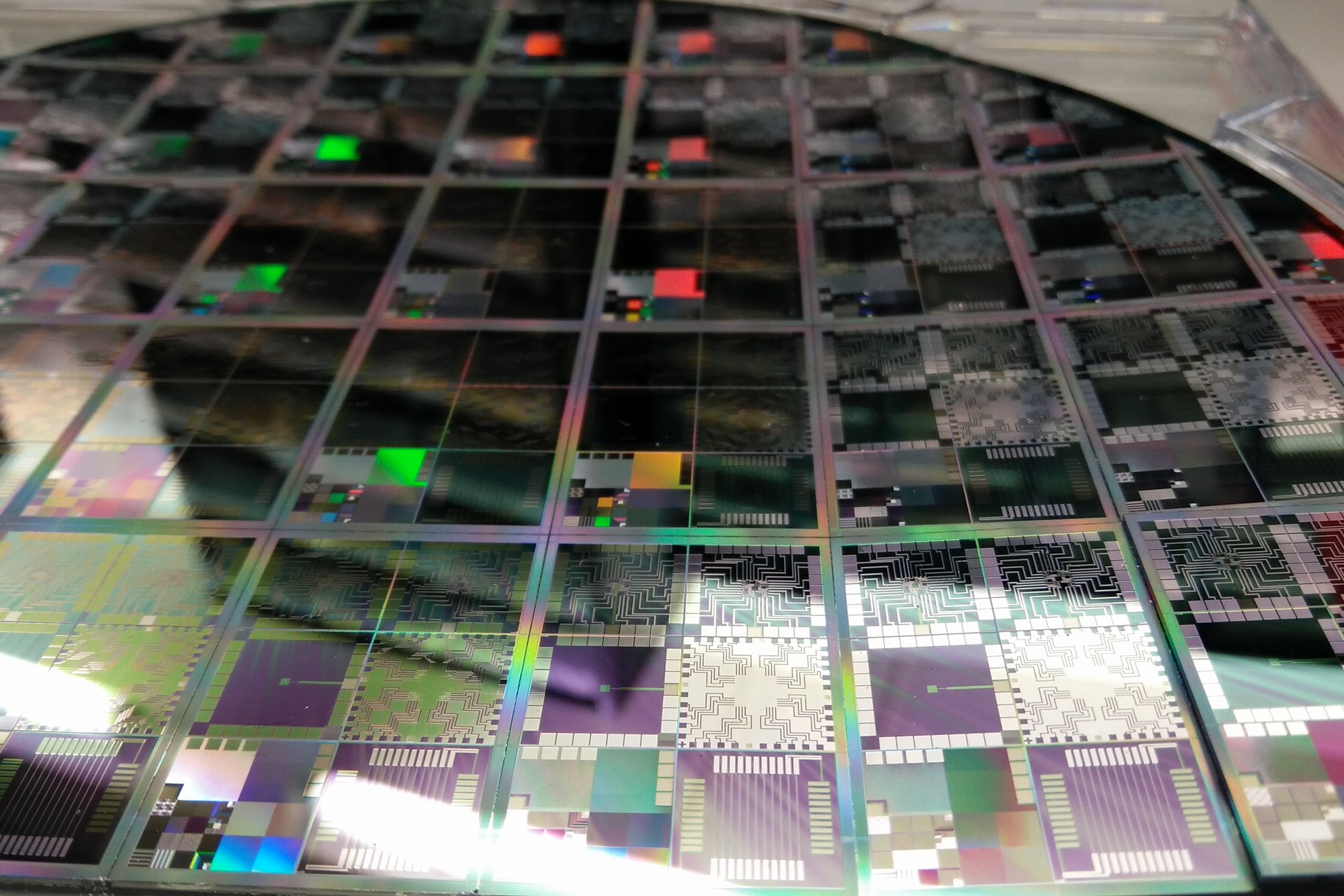
Cover image: 12-inch semiconductor wafer, by DrHughManning, CC BY-SA 4.0, via Wikimedia Commons.