Friday, July 17, 2026, written pre-market with US futures lower and the AI trade on the back foot again, only this time the blow came from software rather than from a capex line. Overnight China’s Moonshot AI released Kimi K3, described as the largest open-source model ever built at roughly 2.8 trillion parameters, timed to land just before the World Artificial Intelligence Conference in Shanghai, and a separate report said DeepSeek is quietly developing its own inference chip. Together they revived the fear that first hit the market in early 2025, that cheap and highly capable open models could undercut the enormous US spending on AI hardware. Nasdaq futures fell about 1.6 percent, chips led the way down, and the selloff tore through Asia, with the Kospi off as much as 7.6 percent into a Seoul holiday and the Nikkei down 2.9. Netflix added to the gloom after beating on its quarter but guiding the current one below the street, and oil rose for a fourth straight day as the Iran standoff kept a supply premium in the tape.
Top Call: The AI Selloff Is Software Efficiency, Not Demand Destruction, but the DeepSeek Chip Report Is the Part That Actually Matters
The one thing to carry into the open is that this morning’s chip rout is being driven by a real development, not a phantom, and yet the market is drawing the wrong conclusion from it. Moonshot’s Kimi K3 is a frontier-class open model, roughly 75 percent larger than DeepSeek’s V4 Pro, and its arrival alongside a report that DeepSeek is building its own inference silicon has resurrected the January 2025 anxiety that the world may not need as much expensive American hardware as the bulls assume. Our read is that a cheaper and more capable model layer is an efficiency story, and efficiency in computing has almost always expanded demand rather than shrunk it, because when the cost of running a workload falls the number of workloads explodes. That is the same lesson the original DeepSeek scare taught after the initial panic faded, and it is why ASML and TSMC could raise their spending and pricing plans two days ago even as open models kept improving. The part we do take seriously is the DeepSeek chip report, because a credible move by the most disruptive lab in open AI to design its own inference processor is a genuine, if early, threat to the one moat everyone assumes is unassailable, and it hints that the value in the AI stack may be shifting away from training hardware and toward the model and inference layer where China now sits at the frontier. Our lean is to treat the memory and equipment selloff as an over-positioned tape finding an excuse, while respecting that this catalyst has more structural substance than the capex wobble that hit yesterday, so we would add with more discrimination than conviction and keep the position sized for a market that is still swinging violently in both directions.
Kimi K3 and the Open-Model Shock: A Chinese Win That the US Chip Complex Is Trading as a Loss
Start with what actually happened, because the headline is bigger than the price reaction suggests. Moonshot AI, the Chinese lab behind the Kimi family, released K3 with roughly 2.8 trillion total parameters, making it the largest set of open weights ever shipped and a model the company positions as rivaling the best closed systems from OpenAI and Anthropic. It lands days ahead of the World Artificial Intelligence Conference in Shanghai, a deliberate piece of timing that frames it as a statement of national capability as much as a product launch. On its own that would be a story about the open-source movement catching the frontier. Paired with the report that DeepSeek is designing an inference chip to reduce its dependence on Nvidia and Huawei, it became a story about the entire economics of the AI buildout, and the US semiconductor complex sold off hard in response.
Our take is that the market is conflating two very different things, and only one of them should worry a hardware bull. A better and cheaper open model is a demand tailwind dressed as a threat, because the cost to serve intelligence keeps falling while the appetite for it keeps rising, and every prior compute cycle has resolved that tension in favor of more silicon, not less. What is legitimately new is the direction of travel, that the most important model advances this year have come out of China and are open rather than closed, and that DeepSeek is now reaching toward its own chips. That does not dent near-term demand, which ASML’s bookings and TSMC’s capex hike just confirmed is accelerating, but it does raise a longer-dated question about who captures the profit of the boom and whether Nvidia’s pricing power is as permanent as the tape has assumed. We stay constructive on the buildout because the physical evidence still points up, and we read today as the market punishing a crowded trade on a headline it has misjudged, but we would not dismiss the DeepSeek chip angle as noise, because it is the first credible crack in the single most consensus assumption in the market.
Memory and Nvidia: Yesterday’s Rout Deepens as Korea Sinks Into a Holiday
The pain concentrated where it always does, in the memory names and the semiconductor complex that had already been reeling from TSMC’s sell-the-news reversal a day earlier. Nvidia fell about 1.5 percent in pre-market on the DeepSeek chip report, and the memory group took the brunt of it, with Micron down roughly 4.7 percent, Western Digital off about 6.3, and SanDisk lower by 4.6. In Asia the damage was far worse. The Kospi slumped as much as 7.6 percent, with SK Hynix and Samsung leading the losses into a Friday holiday in Seoul, and the Nikkei dropped 2.9 percent as Japanese chip-equipment suppliers followed. A report that ASML plans to raise prices, rather than reassuring the market that demand is strong, was read as another cost pressure, and Korea’s financial regulator said it will soon announce measures on the leveraged ETFs tied to Samsung and SK Hynix that have amplified the daily swings.
Our take is that the leveraged-ETF detail is the tell for how much of this is mechanics rather than fundamentals. Those products launched only two months ago, they multiply the daily moves in the two most important memory names by two times, and their forced daily rebalancing pours fuel on exactly the kind of vertical moves we have watched all week, a 13 percent pop one session and a 9 percent drop the next. When a national regulator publicly signals it is about to intervene in a single group of ETFs, that is a market telling you the price action has decoupled from the book of business. Nothing about the memory-scarcity thesis actually changed overnight. IBM’s warning that customers are diverting budgets to lock up scarce chips still stands, ASML’s bookings still confirm it, and even the ASML price-hike report, read correctly, is a supplier with enough demand to charge more. We remain constructive on the underlying names and read the Korean rout as a positioning and structural-flow event rather than a fundamental one, while acknowledging that a group this reflexive can overshoot violently before the earnings reassert.
Netflix: A Beat That the Market Ignored for a Soft Guide
The marquee earnings print came after the close, and it disappointed on the only line that mattered. Netflix beat the quarter, reporting EPS of 0.80 dollars against a 0.79 consensus and revenue of 12.56 billion dollars that was fractionally below the 12.58 billion estimate, with an operating margin of 33 percent and net income of 3.40 billion. The problem was the outlook. Management guided third-quarter revenue to 12.86 billion dollars, or about 11.7 percent growth, undershooting the roughly 13 billion the street had penciled in, and it narrowed the full-year revenue range to 51.0 to 51.4 billion while holding the operating-margin target at 31.5 percent. The stock fell more than 8 percent in pre-market as investors focused on the light forward number rather than the in-line quarter.
Our take is that this is the second quarter in a row where a perfectly respectable print got punished for a cautious guide, and the reaction says more about the tape than about Netflix. The engagement trends are fine, with view hours up in the first half despite a schedule crowded by the Winter Olympics and the World Cup, and the advertising tier continues to scale toward its revenue target. What the market wanted was a back-half raise, and it did not get one, so a stock that trades at a premium multiple gave some of it back. We would separate the company from the signal. Netflix is a clean read on the discretionary consumer and the health of the ad market rather than an AI-scheme name, and a merely solid guide from it, paired with yesterday’s soft retail headline, sketches a consumer that is holding up but no longer accelerating. That is a fine backdrop for the soft landing and a poor one for stocks priced for reacceleration, which is the tension running under the whole tape this morning.
Macro: A Quiet Data Close to a Loud Week, With the Consumer Still the Question
The week ends with a lighter data slate than it began with, but two releases are worth watching. Import and export prices land this morning and will color the inflation picture after a run of cooler CPI and PPI prints, with import prices having climbed in each of the last several months and the tariff overhang keeping the goods pipeline warm. The preliminary University of Michigan consumer sentiment reading follows, and it matters less for the level, which remains depressed near 49 after the spring shock, than for the inflation expectations embedded in it, which sat at an elevated 4.6 percent last month. Yesterday’s June retail sales set the frame, rising only 0.2 percent against a 0.3 percent estimate, though a 5.3 percent drop in gasoline receipts did most of the damage and sales excluding gas rose a healthier 0.7 percent for a fifth straight monthly gain.
Our take is that the retail print was softer on the surface and solid underneath, which fits the picture the banks painted all week of a consumer that is still spending without running hot. The number that could actually move the rate debate today is the inflation-expectations line in the Michigan survey, because a new Fed chair who is trying to look credible on prices will not want to see households bracing for higher inflation while oil climbs and fresh tariffs hit the goods basket. A cool import-price read would reinforce the disinflation story that reopened the cut conversation, while any upside there, combined with a sticky expectations number, would hand the hawks a reason to keep the September hike on the table. Our lean is that the consumer base case is resilient but decelerating, and that the more important macro variable into next week is not the data at all but the oil price, which keeps threatening to reopen an inflation tail the June prints had begun to close.
Oil and Iran: A Fourth Day Higher as the Standoff Hardens
The overhang that has shadowed every session this week tightened again overnight. Brent climbed for a fourth consecutive day to near 85.9 dollars, just off a one-month high, and WTI traded around 79.7, after Iran warned it would target regional energy infrastructure if President Trump follows through on threats to strike its key facilities, an escalation that follows this week’s US strikes on Iranian missile sites and the reported consideration of seizing Kharg Island. Shipping traffic through the Strait of Hormuz, which normally carries about a fifth of the world’s seaborne oil, has fallen sharply since the latest flare-up, even as some vessels keep transiting.
Our take is unchanged from earlier in the week and only more pressing. The market is still pricing a risk premium layered onto a physically open strait, which a well-supplied global balance can partly absorb, and that is why Brent has been grinding higher in one-dollar steps rather than gapping through the mid-80s. The switch that would turn this from an inflation-and-rates overhang into an outright growth shock is a genuine loss of barrels, whether from a strike on Kharg Island or a real closure of Hormuz rather than the current thinning of traffic, and Iran’s threat to hit regional infrastructure moves that scenario a notch closer. As long as the strait stays open we treat crude as the reason the disinflation trade cannot fully take hold, the single variable most likely to keep a September hike alive, and the clearest live example of the risk is still United Airlines, which beat this week but guided for nearly 6 billion dollars in added fuel costs and sold off on it.
Sector Spotlights
AI and Semiconductors: The epicenter again, and the source is new. An open-model shock from China’s Kimi K3 plus a report that DeepSeek is building its own inference chip revived the efficiency fear and dragged Nasdaq futures down 1.6 percent, with Nvidia off about 1.5 in pre-market and the memory group down 4 to 6. We read the model news as a demand tailwind misread as a threat, but the DeepSeek chip effort as a real, early challenge to Nvidia’s moat worth watching.
Media and Consumer: Netflix beat the quarter but guided the current one light and fell more than 8 percent, the second straight guide-driven selloff and a read on a consumer that is steady rather than accelerating. Paired with yesterday’s soft retail headline, it points to a discretionary backdrop that supports the soft landing but not stocks priced for reacceleration.
Energy and Airlines: Crude rose for a fourth day toward 86 dollars Brent on Iran’s threat to hit regional infrastructure, and the cost keeps showing up in earnings, most visibly in United’s 6 billion dollar fuel-cost guide. Energy is the one sector where the geopolitical premium is a tailwind for the shares and a headwind for everyone downstream.
Financials: Still the quiet ballast under a noisy tape. After JPMorgan, Morgan Stanley and BlackRock all beat this week, the group has validated an accelerating real economy, and it is largely insulated from the chip and open-model drama, which is why the Dow is falling far less than the Nasdaq this morning.
Geopolitical Tracker
US-Iran: The dominant macro risk and it hardened overnight. Iran vowed to target regional energy infrastructure if the US strikes its facilities, following this week’s strikes on Iranian missile sites and the reported consideration of seizing Kharg Island, Iran’s main oil-export terminal. Hormuz traffic has thinned sharply, and the switch from a shipping-risk premium to an actual supply loss remains the most important variable for oil and, through it, for the September rate decision.
US-China Tech: Newly elevated by the open-model launch. Kimi K3 and DeepSeek’s chip ambitions arriving just before the Shanghai AI conference reframe the AI race as one where the frontier of open models and, potentially, of inference silicon is moving to China, a structural competitive story that sits underneath today’s US chip selloff.
Trade and Tariffs: A fresh wrinkle, with a planned 25 percent US tariff on some Brazilian imports raising questions about costs for companies tied to global trade and agriculture. It is a minor line item today but part of the same tariff overhang that keeps the goods-inflation pipeline warm into this morning’s import-price print.
Quick Take: Netflix Q2 Scorecard
| Metric | Consensus | Actual | Read |
|---|---|---|---|
| Revenue | ~$12.58B | $12.56B (+13% YoY) | Fractionally light, essentially in line |
| EPS | $0.79 | $0.80 | Small beat; net income $3.40B |
| Q3 revenue guide | ~$13.0B | $12.86B (+11.7%) | The miss that moved the stock |
| FY26 op margin | ~31.5% | 31.5% | Held; Q2 margin came in at 33% |
Our take: A good quarter overshadowed by a soft guide, the second time in a row. The business is healthy, with engagement up and the ad tier scaling, but the market wanted a back-half raise and did not get one, so a premium multiple gave ground. It is a read on a steady but decelerating consumer more than a change to the streaming thesis, and we would not let one guide reset the view on a company still compounding double-digit revenue at a 30-plus margin.
Key Events Ahead
| Date | Event | Why It Matters |
|---|---|---|
| Fri Jul 17 | Import/export prices; Michigan sentiment (prelim) | The inflation-expectations line is the tell after a cool week |
| Fri Jul 17 | Kimi K3 open weights; Shanghai AI conference run-up | Whether the open-model efficiency fear has real legs |
| Fri Jul 17 | US-Iran / Kharg Island; Brent near $86 | Whether the oil premium becomes an actual supply loss |
| Jul 22-23 | Tesla and Alphabet earnings | The first mega-cap AI-capex verdicts of the season |
| Jul 28-29 | FOMC meeting | Warsh’s first decision; September-hike odds hinge on oil |
Friday pre-market, July 17, 2026, written with US futures lower as the AI trade sold off on software rather than earnings. China’s Moonshot released Kimi K3, the largest open-weights model ever at about 2.8 trillion parameters, days before the Shanghai AI conference, and a report said DeepSeek is developing its own inference chip, together reviving the early-2025 fear that cheaper open models could undercut US AI hardware spending. Nasdaq futures fell about 1.6 percent, Nvidia slipped 1.5 in pre-market, and memory led lower with Micron off 4.7, Western Digital 6.3 and SanDisk 4.6, while the Kospi sank as much as 7.6 percent into a Seoul holiday and the Nikkei dropped 2.9. We read the model news as an efficiency tailwind misjudged as a threat and the DeepSeek chip report as the part with real substance, an early challenge to Nvidia’s moat and a sign the frontier of open AI has moved to China. Netflix beat with 0.80 dollars EPS and 12.56 billion in revenue but guided the third quarter to 12.86 billion against a roughly 13 billion estimate and fell more than 8 percent, a second straight guide-driven selloff and a read on a steady but decelerating consumer after June retail sales rose just 0.2 percent. Oil climbed a fourth day with Brent near 85.9 and WTI around 79.7 as Iran threatened to hit regional energy infrastructure and Hormuz traffic thinned. Import prices and preliminary Michigan sentiment close a heavy week this morning, with the survey’s inflation-expectations line the number to watch. Gold eased to about 4,007, bitcoin slipped under 63,000, the dollar firmed near 101, and the 30-year sat just above 5 percent. The buildout evidence still points up while a jumpy, over-positioned tape keeps selling every new catalyst. For internal use only. Not investment advice.
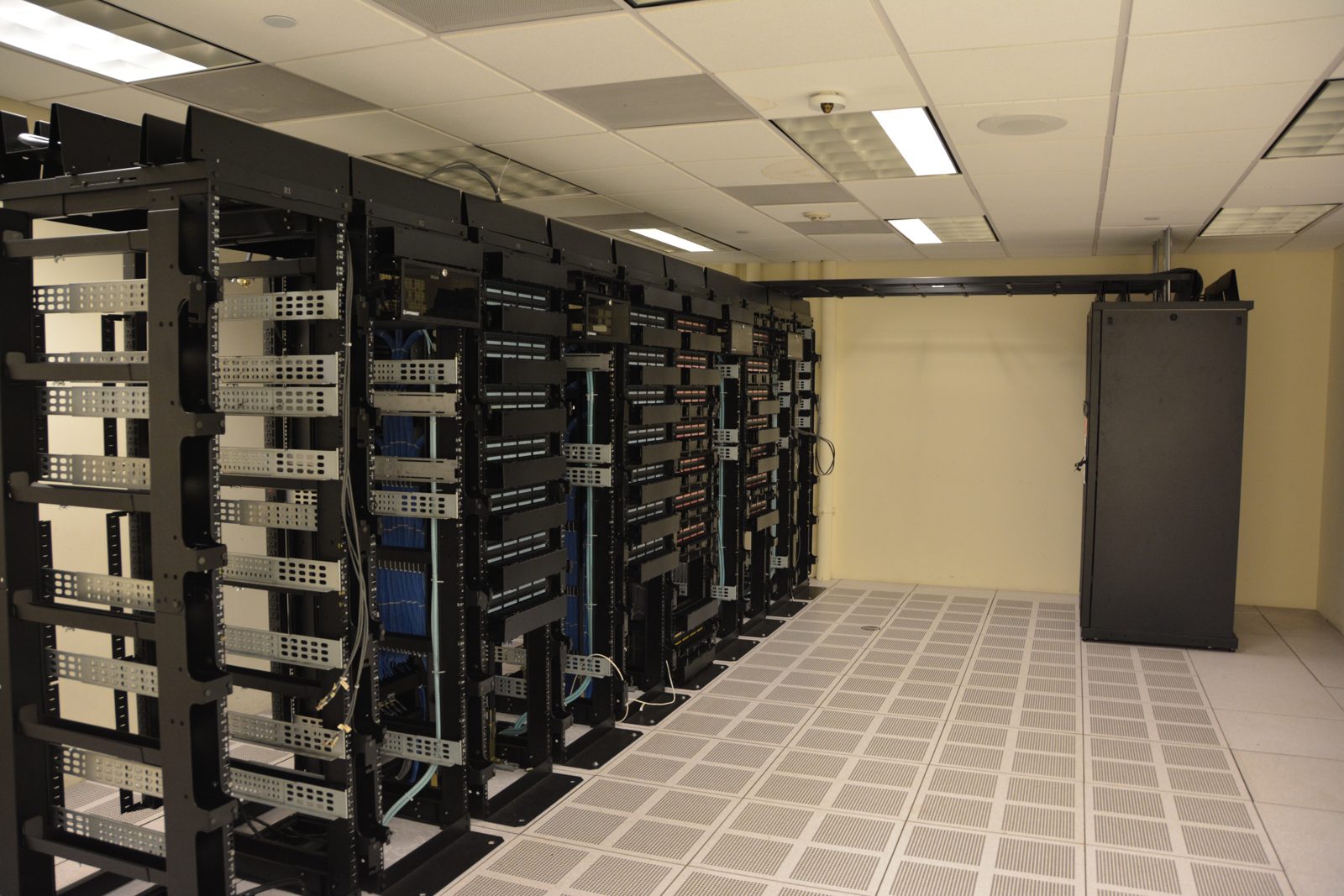
Cover image: data center server racks, by Carl Lender, CC BY 2.0, via Wikimedia Commons.