Monday, July 20, 2026, and the tape is trying to stand back up after a bruising week that pushed the chip complex into a bear market. US stock futures are firmer in choppy pre-market trade, with S&P 500 futures up about 0.3 percent, Dow futures up 0.2 percent, and Nasdaq 100 futures leading at roughly 0.7 percent as semiconductors attempt to claw back some of last week’s losses. The VanEck Semiconductor ETF is up more than 2 percent before the bell and the memory names are bouncing hardest, a mirror image of the selloff that dragged the Philadelphia Semiconductor Index some 20 percent below its June record. Oil is the swing factor again. Crude touched $90 a barrel overnight after the US carried out a fresh round of strikes on Iran through the weekend and confirmed the death of another American service member, then faded the spike, leaving Brent near $88.5 and WTI around $82.4. Into that backdrop lands the busiest earnings week of the season, with Alphabet, Tesla and Intel all on deck, and a new note from Citi arguing that the Magnificent Seven framing investors have leaned on for two years is now obsolete.
Top Call: A Chip Bounce Worth Buying With Discipline, but the Real Story Is Leadership Rewiring and Oil Refusing to Cool
The one thing to carry into the open is that last week’s damage was a positioning event wearing a fundamental costume, and this morning’s bounce is the first tell. Nothing in the physical buildout broke. ASML lifted guidance and TSMC raised capex two days before the rout, the SOX sits 20 percent off its high yet still holds a gain north of 60 percent on the year, and the memory group leading the rebound is the same group that whipsawed on flows, not on any change in the order book. We would add to quality chips into weakness with discipline rather than chase the first green candle. The more durable development is Citi retiring the Magnificent Seven label and reframing the winners as a broader Fab 10 that folds in SpaceX, Anthropic and OpenAI, because it captures something the tape has been groping toward all month. Market leadership is simultaneously widening beyond the familiar megacaps and concentrating in a handful of AI infrastructure owners, and that reshuffle raises the stakes on this week’s prints. Alphabet, Tesla and Intel will each test a different leg of the thesis, cloud and model monetization, capital discipline against an AI build, and whether a turnaround foundry can grow into the demand. The sharper near-term risk sits outside equities entirely. Crude just tagged $90 on a weekend escalation and is only fading, not breaking, which keeps an inflation tail live and is the variable most likely to keep a Fed hike on the table into the July 28-29 meeting. Written pre-market, so levels will move by the open.
Chips: The Rebound Confirms the Rout Was Mechanical
The bounce is broad and it is loudest where the pain was worst. The semiconductor ETFs are up roughly 2 percent before the bell, memory-linked funds are outrunning the group, and the Asian complex set the tone overnight even with Tokyo shut for a holiday. Hong Kong led the region higher, the Hang Seng closing up about 2.1 percent, and Korean chip names steadied after a stretch that had shredded the Kospi by nearly a quarter in four weeks. The rebound is the clearest evidence yet that last week’s selloff was crowded money heading for the exits on a software headline rather than a genuine break in demand.
Our take is that the setup into this rebound is more favorable than the bear-market label suggests, but conviction has to be selective. The confidence shock that triggered the rout, a cheaper and more capable open model out of China plus reports that DeepSeek is building its own inference chip, is a question about who captures the profit of the boom over the next several years, not about whether the boom needs silicon this quarter. On that near-term question the evidence still points up. What we would not do is treat every name in the complex as equal. The move has exposed how much of the leadership had narrowed into a few memory and accelerator names levered to the exact same trade, and the coming prints will start to separate the businesses that are compounding from the ones that were simply crowded.
The Fab 10: Citi Says the Magnificent Seven Framing Is Obsolete
The most interesting research note of the morning is a reframing rather than a rating change. Citi’s strategy team argues the Magnificent Seven tag is no longer a useful way to play the AI trade and points investors toward a broader set of equities that has driven the bulk of both earnings and price gains in the index. Alongside it, the desk elevates SpaceX to the center of a longer investment cycle built on launch dominance, Starlink, orbital compute and deep vertical integration, and the shorthand making the rounds bundles the old seven with SpaceX, Anthropic and OpenAI into a Fab 10. SpaceX shares, public only since the record June IPO that raised $75 billion and briefly carried the valuation above $2 trillion, are indicated up around 1.6 percent near $126 pre-market.
Our take is that this is more than a marketing rebrand. The Magnificent Seven was always a crude proxy, and the past month has pulled it apart from both ends, with Alphabet stumbling on a delayed Gemini flagship and Tesla judged on capital discipline rather than software promise, even as newer infrastructure owners like SpaceX pull capital toward launch and connectivity. The signal for a portfolio is that the AI trade is no longer one basket you can buy or sell wholesale. It is fragmenting into layers, hardware, models, launch and inference, and the returns from here will come from picking the layer, not the acronym. That is a healthier market than a seven-stock index, and also a harder one.
Earnings Week: Alphabet, Tesla and Intel Carry the Tape
This is the heaviest week of the season, with roughly 77 index members reporting and the marquee AI-scheme names clustered midweek. Alphabet and Tesla both print after Wednesday’s close, Intel follows Thursday, and the supporting cast runs deep with General Motors, Verizon, Lockheed Martin, AT&T, IBM, Philip Morris and Nokia. Expectations are set high. Alphabet is seen growing revenue and earnings more than 20 percent and has beaten for 13 straight quarters, Tesla is expected to post double-digit growth after a solid Q2 delivery number, and Intel is penciled in for revenue growth above 12 percent as its foundry pivot is scrutinized.
Our take is that after a week that questioned the durability of the whole AI trade, these prints matter more than the calendar would normally imply. Alphabet is the cleanest read on whether cloud and model monetization is finally catching up to the capex, and any color on the Gemini 3.5 Pro delay that helped spark the selloff will move the stock more than the headline beat. Tesla will be judged less on deliveries than on whether its own multibillion-dollar AI and compute build is disciplined, the same test the market is applying to every hyperscaler. Intel is the wildcard, a turnaround where a foundry that can actually grow would validate the reshoring bet and a stumble would confirm the skeptics. We would rather own the reactions than the anticipation into a tape this jumpy, and note that IBM already set a cautious bar last week when preliminary figures sent the stock sharply lower.
Geopolitical Tracker
US-Iran and Hormuz: Still the dominant macro risk and it ran hotter over the weekend. The US carried out another round of strikes on Iran and confirmed a second American service member killed in the campaign, while Iran continued to target US bases in neighboring states. Crude tagged $90 on the news before fading, and commercial traffic through the Strait of Hormuz stayed thin. The distinction that matters remains the switch from a shipping-risk premium to an actual barrel loss, which is the single most important input for oil and, through it, for the Fed into the FOMC.
US-China Tech: The open-model shock that triggered last week’s rout keeps a competitive edge under the tape. Moonshot’s Kimi K3 and DeepSeek’s move toward its own inference silicon, arriving just before the Shanghai AI conference, frame a race where the frontier of open models is shifting east, a structural question that this week’s US earnings will implicitly answer on the demand side.
M&A and Corporate: Deal flow stayed alive around the weekend, with ABB agreeing to buy UK actuator maker Rotork for about $5.5 billion the standout strategic transaction, a reminder that the industrial and automation complex keeps consolidating even as the AI names grab the headlines.
Quick Take: The Week’s AI-Scheme Prints (Preview)
| Company | Reports | Street Looks For | Why It Matters |
|---|---|---|---|
| Alphabet | Wed, after close | Rev & EPS +20%+; 13 straight beats | Cloud and model monetization vs. capex; Gemini delay color |
| Tesla | Wed, after close | Double-digit growth post-Q2 deliveries | Capital discipline on its AI/compute build is the tell |
| Intel | Thu, after close | Revenue +12%+ YoY | Foundry pivot: does the turnaround grow into demand |
| IBM | This week | Fuller Q2 after weak preliminary | Set a cautious bar; watch AI-services mix |
Our take: These four decide whether the chip bounce has legs beyond a positioning snapback. Alphabet is the demand read on AI monetization, Tesla is the discipline read on AI spending, and Intel is the supply read on whether reshored capacity is real. Beats confirm the buildout thesis that last week’s software scare tried to unwind; a soft guide from any of them hands the bears their second act. We favor buying confirmed reactions over anticipating them in a tape this reflexive.
Key Events Ahead
| Date | Event | Why It Matters |
|---|---|---|
| Wed Jul 22 | Alphabet & Tesla earnings (after close) | First mega-cap AI verdicts of the season |
| Thu Jul 23 | Intel earnings (after close) | Foundry turnaround and reshoring read |
| All week | US-Iran / Hormuz; Brent near $88 | Whether the oil premium becomes an actual supply loss |
| All week | Q2 season broadens (~77 names) | GM, Verizon, Lockheed, AT&T, IBM, Nokia |
| Jul 28-29 | FOMC meeting | Warsh’s first decision; hike odds hinge on oil |
Morning note, Monday July 20, 2026, written pre-market after a week that dragged semiconductors into a bear market. US futures are firmer with the S&P up about 0.3 percent, the Dow up 0.2 and the Nasdaq 100 leading near 0.7 as chips try to claw back losses, the semiconductor ETFs up more than 2 percent and memory names bouncing hardest, with Hong Kong up 2.1 percent overnight and Tokyo shut for Marine Day. Oil is the swing factor, tagging $90 on a fresh weekend of US strikes on Iran and a second American service member killed before fading to Brent near $88.5 and WTI around $82.4. Citi called the Magnificent Seven label obsolete and put SpaceX, indicated up 1.6 percent near $126, at the center of a broader Fab 10, a reframing we read as leadership fragmenting into layers rather than one basket. Alphabet and Tesla headline Wednesday after the close and Intel follows Thursday in the heaviest earnings week of the season, prints that will decide whether the chip bounce has legs. Gold eased to about $4,001, bitcoin held near $64,200, the dollar firmed around 100.8, the 2-year pushed a 2026 high near 4.18 percent and the 30-year stayed above 5 percent. We read the chip rebound as confirmation the rout was mechanical, worth adding to quality names with discipline, while crude, not silicon, remains the sharper near-term risk into the July 28-29 FOMC. For internal use only. Not investment advice.
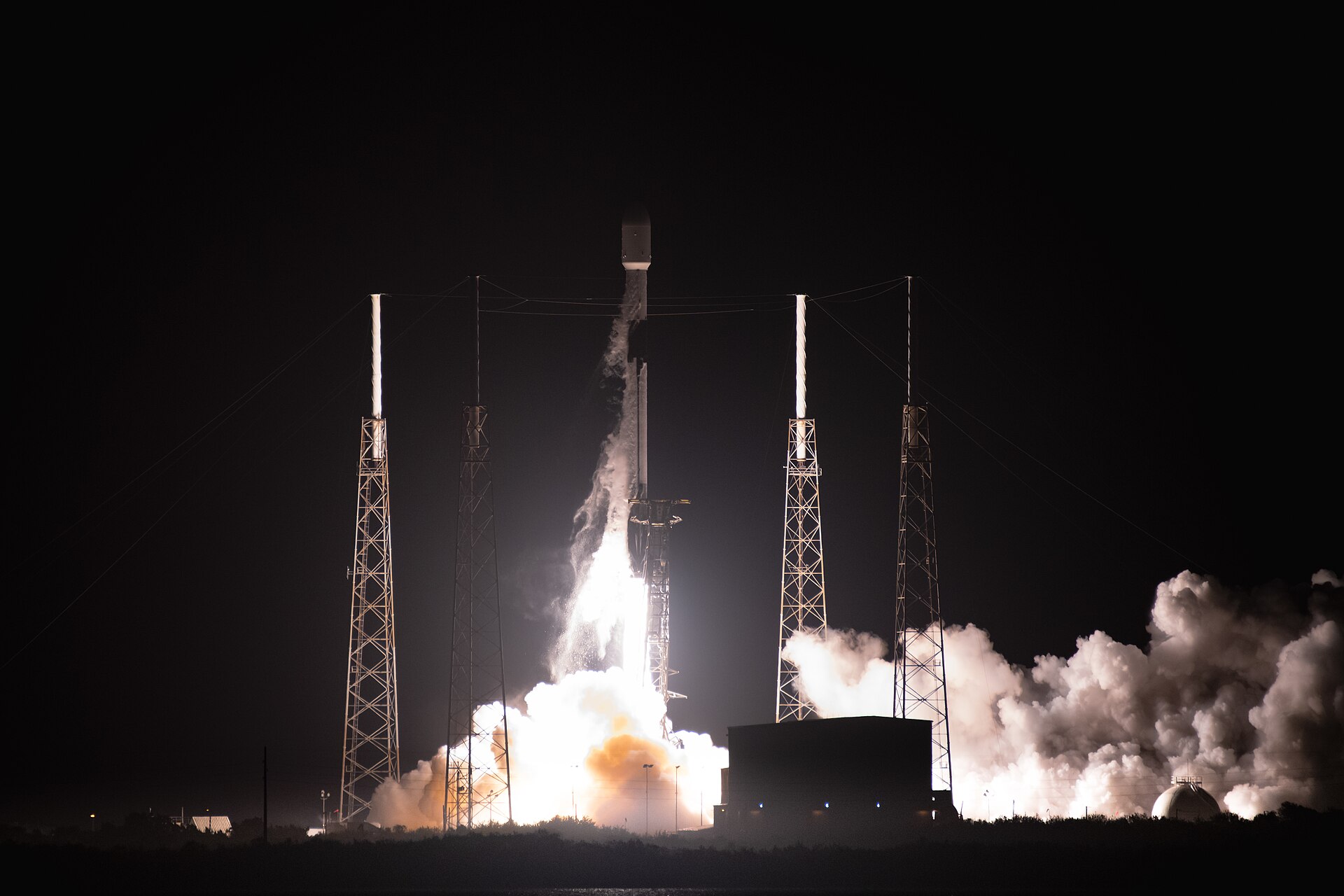
Cover image: a Falcon 9 carrying Starlink satellites launches from Cape Canaveral, US Space Force photo, public domain, via Wikimedia Commons.