Tuesday, July 21, 2026, and the tape is trying to turn the corner after a brutal stretch that shoved the chip complex into a bear market. US stock futures are firmer before the bell, with S&P 500 futures up about 0.4 percent, Dow futures up 0.3 percent, and Nasdaq 100 futures leading by roughly 1.4 percent as semiconductors and AI infrastructure names lead the charge back. The spark is corporate, not macro. Nvidia disclosed a 9.3 percent stake in Amsterdam-based neocloud Nebius, worth about $2 billion at the current market cap near $46 billion, and the stock jumped more than 6 percent pre-market. Alongside it, AI data center operator IREN ripped after locking in $2.8 billion of new cloud contracts with customers including Perplexity and Figure AI, following a nearly 20 percent surge the prior session. Asia set the tone overnight, with Korea’s Kospi up more than 3 percent and Japan’s Nikkei closing up 3.3 percent as the memory names steadied. Oil is the other swing factor and it is finally leaning the market’s way, fading a run at $90 after mediators floated a 10-day US-Iran ceasefire that would halt strikes and reopen the Strait of Hormuz. Into that setup lands a heavy earnings slate, with General Motors already out and Alphabet, Tesla and Intel on deck later this week.
Top Call: The Rebound Has a Fundamental Anchor for Once, but It Is Still Unconfirmed Into the Week’s Mega-Cap Prints
The one thing to carry into the open is that today’s bounce, unlike Monday’s reflex, comes with a fundamental receipt attached. Nvidia writing a check for a 9.3 percent slice of Nebius and IREN pulling in $2.8 billion of fresh cloud commitments are the clearest tells yet that demand for AI compute never actually cracked. Last week’s rout, which dragged the Philadelphia Semiconductor Index some 20 percent below its June record, was a positioning unwind on top of a 90 percent year-to-date run, not a demand break, and the supplier at the center of the whole trade just voted with its balance sheet. We would keep adding to quality compute and memory names into weakness with discipline rather than chase the opening gap. The relief in oil helps the story. Crude is fading off $90 as regional mediators, reportedly Qatar, Egypt and Pakistan, put a 10-day truce in front of Washington and Tehran that would stop the strikes and reopen Hormuz shipping. The catch is that the deal is unsigned, President Trump is still promising to retaliate for American troops killed in the campaign, and he chose this morning to open a second front by announcing 50 percent tariffs on Canadian goods, oil exempted, effective in 30 days. That combination keeps a live inflation tail on the tape and is exactly the kind of variable that can keep a Fed hike on the table into the July 28-29 meeting. The honest read is that the bounce is real but not yet confirmed. Alphabet and Tesla after Wednesday’s close and Intel on Thursday are the prints that decide whether this is a durable low or a retrace of a vicious week. Written pre-market, so levels will move by the open.
Chips and Neoclouds: The Buildout Votes With Its Balance Sheet
The rebound is loudest exactly where the pain was worst, and this time it is anchored by cash changing hands rather than a mood swing. Nvidia’s 9.3 percent stake in Nebius, roughly 22 million shares tied to its earlier $2 billion investment and a warrant, is the headline, and it reframes the neocloud names that had been left for dead. Nebius was down around 40 percent from its highs before this morning and is targeting more than 5 gigawatts of compute capacity by 2030, so a validation from the one company whose chips define the cycle carries real weight. IREN is the corroborating data point, adding $2.8 billion in contracts and lifting its 2026 revenue targets, with Perplexity and Figure AI on the customer list. The memory group that led the selloff is bouncing in sympathy, with Micron, SK Hynix and AMD all firmer and the Kospi up more than 3 percent on the same names.
Our take is that the character of this rebound is meaningfully better than Monday’s. A day ago the bounce was memory names retracing flows with no new information. Today the marginal buyer is the chip vendor itself and a data center operator winning real business, which speaks to the demand side of the exact question the DeepSeek and Kimi K3 open-model scare had thrown into doubt. That scare was always a fight over who captures the profit of the boom over several years, not whether the boom needs silicon this quarter, and the near-term evidence keeps pointing up. We would still resist treating the whole complex as one basket. The neocloud and data center layer is where the fresh capital and contracts are landing, and that is where the leadership is most likely to concentrate as the dust settles.
Oil and Geopolitics: A Ceasefire Offer Meets a Retaliation Threat
Crude is the relief valve this morning after ten straight nights of US strikes on Iran had pushed Brent above $90. Regional mediators have handed both sides a 10-day ceasefire proposal that would halt hostilities, reopen Strait of Hormuz shipping, and give Washington and Tehran room to revive last month’s interim understanding. Brent is easing back toward $88.5 and WTI toward $83 on the hope. The counterweight is that the Trump administration is only reviewing the offer, large gaps remain, the President has vowed to retaliate for American service members killed in the fighting, and the Houthis are now threatening Saudi shipping, which keeps a supply-risk premium in the barrel even as the headline softens.
Our take is that the distinction that has mattered all month still governs the oil price. As long as this stays a shipping-risk premium rather than an actual loss of barrels, the fade can continue and the inflation math eases at the margin. A signed truce that reopens Hormuz would be a genuine risk-off-the-table event for both crude and the Fed. But an unsigned proposal sitting next to a retaliation pledge is a fragile peace, and the market is pricing hope, not fact. We read the oil move as helpful for today’s risk tone while noting it can reverse on a single overnight headline.
Trade: A New 50% Tariff on Canada Reopens the Inflation Question
The fresh macro wrinkle is trade, not the Middle East. Trump announced 50 percent tariffs on Canadian goods including beer, dairy and chemicals, taking effect in about 30 days, with crude oil pointedly exempted. The oil carve-out is the tell that the administration is trying to avoid adding to the energy inflation it is already fighting through the Iran conflict, but a 50 percent levy on a top trading partner is still a direct upward push on goods prices at the worst possible moment for a Fed weighing whether to hike.
Our take is that this is the quiet story with the longest tail. Markets are shrugging it off pre-market because the effective date is a month out and the AI headlines are louder, but a tariff of this size feeds straight into the same core-goods channel that keeps September hike odds elevated, now around 55 percent. It deserves more attention than the tape is giving it today, and it is the kind of policy shock that can matter more in three weeks than the ceasefire chatter that is dominating the screen this morning.
Geopolitical Tracker
US-Iran and Hormuz: Still the dominant macro risk but the direction of travel improved overnight. Ten consecutive nights of US strikes gave way to a mediator-brokered 10-day ceasefire proposal that would reopen Hormuz shipping, even as Trump vows retaliation and the Houthis threaten Saudi vessels. Oil fading off $90 is the market’s vote that de-escalation is at least plausible, but nothing is signed.
US-China Tech: The open-model shock that triggered last week’s rout fades into the background this morning as the AI-infrastructure trade reasserts itself, but it remains the structural overhang. Nvidia’s Nebius stake is, in part, a statement that Western AI compute demand is intact regardless of how fast the frontier of open models shifts east.
Trade Policy: The new front is Canada, with a 50 percent tariff on non-energy goods announced this morning, a reminder that trade policy is back as a live inflation input alongside oil into the FOMC.
Quick Take: Earnings That Matter
| Company | Result vs. Street | Our Read | |
|---|---|---|---|
| Nvidia / Nebius | Stake disclosed | 9.3% of Nebius (~$2B) | Chip vendor validating neocloud demand; bullish for the AI-infra layer |
| IREN | Contract news | +$2.8B cloud deals; raised 2026 targets | Perplexity, Figure AI as customers; real demand, not hype |
| General Motors | Q2, pre-market | EPS $3.57 vs. $3.29 (beat); rev $48.0B vs. $48.4B (miss) | Raised guidance on strong North America; a quality beat, but not the market’s scheme |
Our take: The two prints that move the AI thesis today are not conventional earnings at all, they are Nvidia’s stake and IREN’s contract book, and both say the buildout is spending real money right now. GM’s beat-and-raise is a genuinely good industrial result and the guidance lift matters for the cyclical read, but the revenue miss and the fact that autos sit outside the AI scheme mean it will not set the tape. We are watching the neocloud and data center complex, where fresh capital is flowing, far more closely than the blue-chip beats.
Key Events Ahead
| Date | Event | Why It Matters |
|---|---|---|
| Tue Jul 21 | GM, Halliburton, 3M earnings | Industrial and energy read; GM already beat and raised |
| Wed Jul 22 | Alphabet & Tesla earnings (after close) | First mega-cap AI verdicts; Gemini delay and AI capex in focus |
| Thu Jul 23 | Intel earnings (after close) | Foundry turnaround and reshoring read |
| All week | US-Iran ceasefire proposal; Brent ~$88 | Whether a 10-day truce holds and reopens Hormuz |
| Jul 28-29 | FOMC meeting | Warsh’s decision; hike odds hinge on oil and now Canada tariffs |
Morning note, Tuesday July 21, 2026, written pre-market as chips lead a rebound off a bear-market week. US futures are firmer with the S&P up about 0.4 percent, the Dow up 0.3, and the Nasdaq 100 leading near 1.4 percent as semiconductors and AI infrastructure names lead the charge. Nvidia disclosed a 9.3 percent stake in neocloud Nebius, sending the stock up more than 6 percent, while AI data center operator IREN ripped on $2.8 billion of fresh cloud contracts with Perplexity and Figure AI. Asia led overnight, the Kospi up more than 3 percent and the Nikkei up 3.3 percent, with Hong Kong roughly flat and Shanghai up 1.8 percent. Oil faded a run at $90 to Brent near $88.5 and WTI near $83 as mediators floated a 10-day US-Iran ceasefire that would reopen Hormuz, though the deal is unsigned and Trump still vows retaliation. The President also announced 50 percent tariffs on Canadian goods, oil exempted, effective in 30 days, a fresh inflation input into the July 28-29 FOMC. General Motors beat on earnings at $3.57 versus $3.29 but missed slightly on revenue and raised guidance. Gold rose about 1 percent to $4,058, bitcoin jumped 3.5 percent to roughly $66,500, the VIX eased to 17.8, and the dollar held firm near 101 with the 10-year pushing toward 4.6 percent. We read the rebound as fundamentally anchored for the first time this week, worth adding to quality compute names with discipline, while crude, trade policy and Wednesday’s Alphabet and Tesla prints remain the sharper near-term swing factors. For internal use only. Not investment advice.
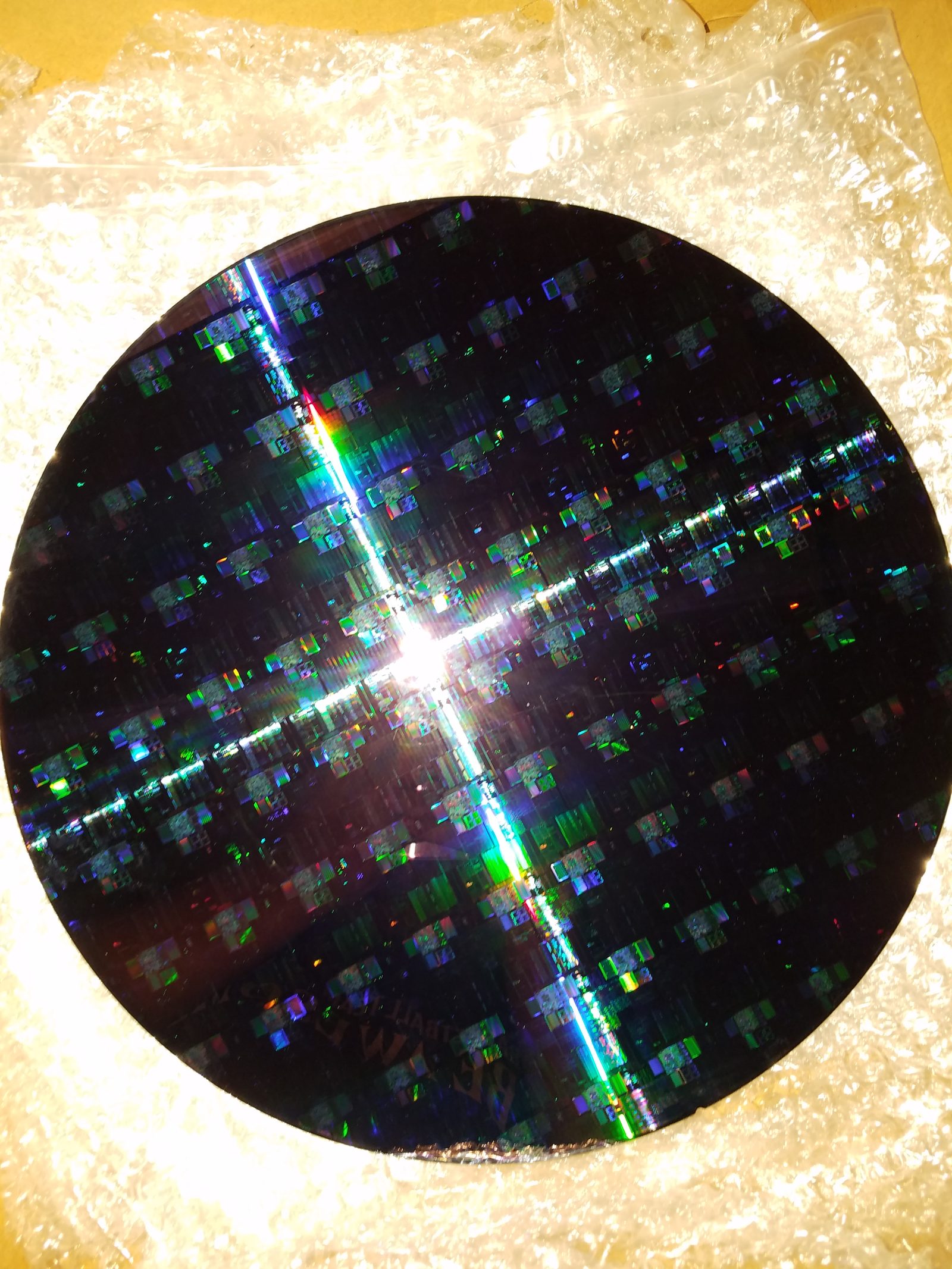
Cover image: a 12-inch silicon wafer. Photo by 2x910, licensed under CC BY-SA 4.0, via Wikimedia Commons.