Saturday, July 25, 2026, and with the screens dark for the weekend it is worth stepping back, because the week that just closed set up the most consequential five days of the summer. Wall Street ended a jumpy stretch on a split note: the S&P 500 scratched out a flat Friday to finish at 7,411.98, the Dow added 236 points to 51,947, and the Nasdaq Composite slipped again to 24,976, leaving the tech gauge down about 2 percent on the week. Underneath that quiet tape ran the story of the season, an AI trade that has cleaved in two, with the big spenders punished and the suppliers rewarded. Oil, the other headline all week, finally broke lower on Friday, with Brent sliding 4 percent below $96 after word that China and Pakistan are quietly pushing Iran back toward talks. And waiting on the other side of the weekend is a wall of catalysts: a Federal Reserve decision Wednesday, four of the Magnificent Seven reporting, and second-quarter GDP and the Fed’s preferred inflation gauge both landing Thursday.
Top Call: Next Week Is the Referee for a Split AI Trade, With Oil and the Fed as the Swing Votes
The one thing to carry into Monday is that the market has spent two weeks arguing with itself about AI, and next week it finally gets an answer. All week the pattern held: Alphabet and Tesla were hammered for pouring cash into the buildout and posting negative free cash flow, while Intel’s blowout, with data-center revenue up 59 percent, proved the chips behind that spend are flying off the shelves. That is a market rewarding the pick-and-shovel layer and taxing the prospectors. Now Microsoft, Meta, Apple, and Amazon all report inside four days, and their job is to show they have the cash flow to fund soaring AI budgets without the punishment Alphabet took. If they can, the spender half of the trade heals and the tape broadens. If the free-cash-flow math looks strained, the rotation into suppliers accelerates and the megacaps stay under pressure. We lean constructive because the demand signal from Intel and the memory names is real and confirmed, but we would keep the exposure tilted toward the supplier layer into the prints rather than betting the spenders get a free pass. The two swing votes are external. Oil cooling on the China and Pakistan diplomacy took real heat out of the September-hike scare, which helps, but yields are still parked near multi-month highs with the 30-year at its richest since 2007, so a hot GDP or PCE reading Thursday could put the rate fear right back on the screen the Fed meeting is unlikely to resolve on its own. Written over the weekend, so Sunday-night futures and any fresh Middle East headline can reset the tone before Monday.
The Week in Review: An AI Trade That Split Down the Middle
Rewind the tape and the week reads as one long referendum on how the AI boom gets paid for. It opened with chips rebounding and futures firm, then turned when Alphabet and Tesla delivered the first mega-cap verdicts and the market did not like the bill. Alphabet’s cloud growth was strong, but a capex plan marching toward $205 billion and negative free cash flow triggered a roughly $800 billion single-day wipeout across the Magnificent Seven on Thursday, the sharpest reminder yet that investors have stopped treating rising AI spend as a badge of ambition and started treating it as a wound. Then Intel answered from the other side of the same trade, growing revenue 25 percent for its fastest quarter in nearly fifteen years, lifting its data-center and AI segment 59 percent, and raising its own capital budget, and the stock jumped. Put the two prints side by side and the read is clear. The spenders are being marked down on the cost of the buildout while the suppliers are being marked up on the revenue from it, and the demand underneath both is the same and is not slowing. That is the tension the whole market is now trading around, and it is why the coming week matters so much.
Our take is that the split is rational but overdone in the short run. Capex that shows up before the payoff will always look like waste to a market that discounts cash flow, yet Intel, the memory names earlier this month, and ServiceNow on the software side have all now confirmed the same thing from three different layers of the stack, which is that the orders are real. When the suppliers, the chipmakers, and the applications all say demand, the honest conclusion is that the equity market is repricing who captures the profit and when, not whether the profit exists. We would use the megacap prints as the test of that thesis rather than a reason to abandon it.
Oil: The Shock Cools on Diplomacy, but the Chokepoints Are Still Live
The other defining story of the week was crude, and it ended on a sharp turn. After Brent crossed $100 for the first time since May on the Houthi strike against two Saudi tankers in the Red Sea, prices reversed hard on Friday, with Brent down about 4 percent below $96 and WTI near $88, on reports that China had initiated and Pakistan was carrying a push to restart the stalled US-Iran talks. Iran’s interior minister made his second visit to Islamabad in ten days, meeting the Pakistani leadership and army chief, and a Pakistani official said a halt to attacks on Saudi Arabia and other Gulf states would be a prerequisite for any talks to resume. That is the first genuinely constructive geopolitical headline in weeks, and the oil market grabbed it, though crude still booked hefty gains for the week as a whole.
Our take is to treat the Friday relief as real but fragile. The diplomacy is exploratory, not a deal, and the two chokepoints that drove the spike, the Red Sea blockade and the near-halt at Hormuz, are both still physically in place until something changes on the water. What the cooling does buy is time and a little inflation breathing room right before the Fed meets, which matters more for rates than for the oil price itself. A crude tape that is falling rather than spiking is the difference between the Fed sounding alarmed and the Fed sounding patient, and this weekend it is falling.
The Rates Picture: Yields Stay Tight Into the Fed
Even with oil easing, the bond market did not fully relax. The ten-year Treasury yield finished Friday at 4.69 percent and the two-year at 4.33 percent, both near multi-month highs, and the thirty-year sits at its loftiest level since 2007. That backdrop kept a lid on the rate-sensitive corners of the market and pressured gold, which pulled back below $4,100 to around $4,053 as a firm dollar and rising real yields beat the safe-haven bid. Bitcoin drifted near $65,000, soft for the same reason, as higher yields lured money away from risk assets. The consensus going into Wednesday is that the Fed holds, but the meeting is really a setup for September, where the market has been pricing a meaningfully higher chance of a hike after this month’s oil and tariff shocks. Our take is that the Fed decision itself is likely to be a non-event on the funds rate, and the real market-mover will be Thursday’s GDP and PCE, which will tell us whether the inflation impulse from oil and the new tariffs is showing up in the hard data yet.
Asia and Europe: A Week That Finished Lower in the East
Overnight moves are quiet on a Saturday, but the weekly scoreboard is worth marking. Asia bore the brunt of the midweek chip rout, with Japan’s Nikkei, South Korea’s Kospi, and Hong Kong’s Hang Seng all finishing the week lower after the memory and semiconductor names that led July’s rally were dumped in sympathy with Wall Street and the oil spike. The Kospi’s Thursday plunge, which tripped a sidecar curb, was the sharpest single session. Europe held up better, with the Stoxx 600 and the DAX recovering into Friday as energy heavyweights caught the oil bid earlier in the week before it faded. The divergence tells the same story as the US tape, that the selling in the Asian chipmakers was macro-driven risk reduction rather than a verdict on the businesses, since those same suppliers are the ones whose demand Intel just confirmed.
Geopolitical Tracker
US-Iran diplomacy: The most important development of the weekend is the China-initiated, Pakistan-brokered effort to restart US-Iran talks, now in its second week of shuttle visits by Iran’s interior minister to Islamabad. A halt to Houthi and Iranian strikes on Gulf shipping is being set as the price of admission. It is early and easily derailed, but it is the first off-ramp the market has seen since the conflict widened to the Red Sea.
Red Sea and Hormuz: Both chokepoints remain live. The Houthi naval blockade that struck two Saudi tankers is still in force, and traffic through the Strait of Hormuz has fallen to a trickle. The Friday oil relief was about the prospect of talks, not any change on the water, so the supply risk is deferred rather than resolved.
Trade policy: The new Section 301 tariffs on roughly sixty trading partners went live at midnight Friday and rest on firmer legal footing than the emergency-powers version the Supreme Court struck down. It is a quieter headline now, but a durable inflation input that will color how the Fed and the megacaps talk about the second half.
Quick Take: Earnings That Mattered This Week
| Company | Result vs. Street | Our Read | |
|---|---|---|---|
| Intel (INTC) | Q2 | Rev $16.1B vs $14.4B; adj EPS 42c vs 21c; Data Center & AI +59%; capex raised to $20B | The demand proof of the season; validates the entire AI supply chain and reframes the capex scare |
| Alphabet (GOOGL) | Q2 | Cloud strong; capex toward $205B; negative FCF; led the $800B Mag7 rout | The spender taking the bill; the buildout’s cost is arriving before the payoff shows |
| SanDisk (SNDK) | Fri trading | -9% on profit-taking and rotation out of AI hardware | Storage caught the risk-off broom; a positioning move, not a demand signal, ahead of its Aug 5 print |
| SLB (SLB) | Q2 | Beat; +9.7% on strong international offshore and tech growth | The cleanest non-AI beat of the week; energy services still has a real cycle underneath the oil noise |
| HCA Healthcare (HCA) | Q2 | Beat; +4.2% | Defensive quality worked; a reminder there is a healthy tape outside the AI tug-of-war |
Our take: The week’s two anchor prints, Intel and Alphabet, are two sides of one coin, and everything else was a footnote to that argument. Intel is the payoff arriving one layer down, where a supplier grew data-center revenue 59 percent and raised its own spend; Alphabet is the cost of the buildout showing up before the payoff, which is why it led the rout. Weigh the supplier confirmation more heavily than the spender’s cash burn, because full order books are a fact while capex is a choice. SanDisk’s slide is the noise, a positioning washout in a storage name rather than a demand warning, while SLB and HCA are the quiet proof that there is a functioning market beyond the megacaps.
Key Events Ahead
| Date | Event | Why It Matters |
|---|---|---|
| Wed Jul 29 | FOMC decision | Consensus expects a hold; the real signal is the tone on September as oil and tariffs stack on inflation |
| Wed Jul 29 | Microsoft, Meta earnings (after close) | The first megacap test of whether AI spenders have the cash flow to avoid Alphabet’s fate |
| Thu Jul 30 | Apple, Amazon earnings (after close) | Consumer and cloud demand read; Amazon’s capex commentary is the key AI tell |
| Thu Jul 30 | Q2 GDP and June PCE | The hard-data check on whether the oil and tariff inflation impulse is landing yet |
| Ongoing | US-Iran talks, Red Sea shipping | Whether Friday’s diplomacy relief holds or the chokepoints reprice crude back up |
Weekend wrap, Saturday July 25, 2026, written with the market closed after a volatile week that ended with the AI trade split cleanly in two. Wall Street finished mixed on Friday, the S&P 500 flat at 7,411.98, the Dow up 236 points to 51,947, and the Nasdaq Composite down 0.6 percent to 24,976, leaving the tech gauge off about 2 percent on the week. The defining story was the divide between AI spenders and AI suppliers, with Alphabet and Tesla punished earlier in the week for ballooning capex and negative free cash flow in a roughly $800 billion Magnificent Seven rout, while Intel’s blowout, data-center revenue up 59 percent and its own budget raised, rewarded the supplier layer. Oil, the week’s other headline, broke lower on Friday, Brent down 4 percent below $96 and WTI near $88, after China initiated and Pakistan carried a push to restart US-Iran talks, though crude still booked hefty weekly gains and the Red Sea and Hormuz chokepoints remain live. The bond market stayed tight, the ten-year at 4.69 percent, the two-year at 4.33 percent, and the thirty-year at its highest since 2007, which pressured gold back below $4,100 to about $4,053 and left bitcoin soft near $65,000. The week ahead is the biggest of the season, with the Federal Reserve deciding Wednesday, Microsoft, Meta, Apple, and Amazon all reporting, and second-quarter GDP and June PCE both landing Thursday. We read the setup as a real and confirmed AI-demand cycle, best expressed through the suppliers, colliding with a two-sided macro of cooling oil and still-elevated yields that next week’s prints and data will finally adjudicate. For internal use only. Not investment advice.
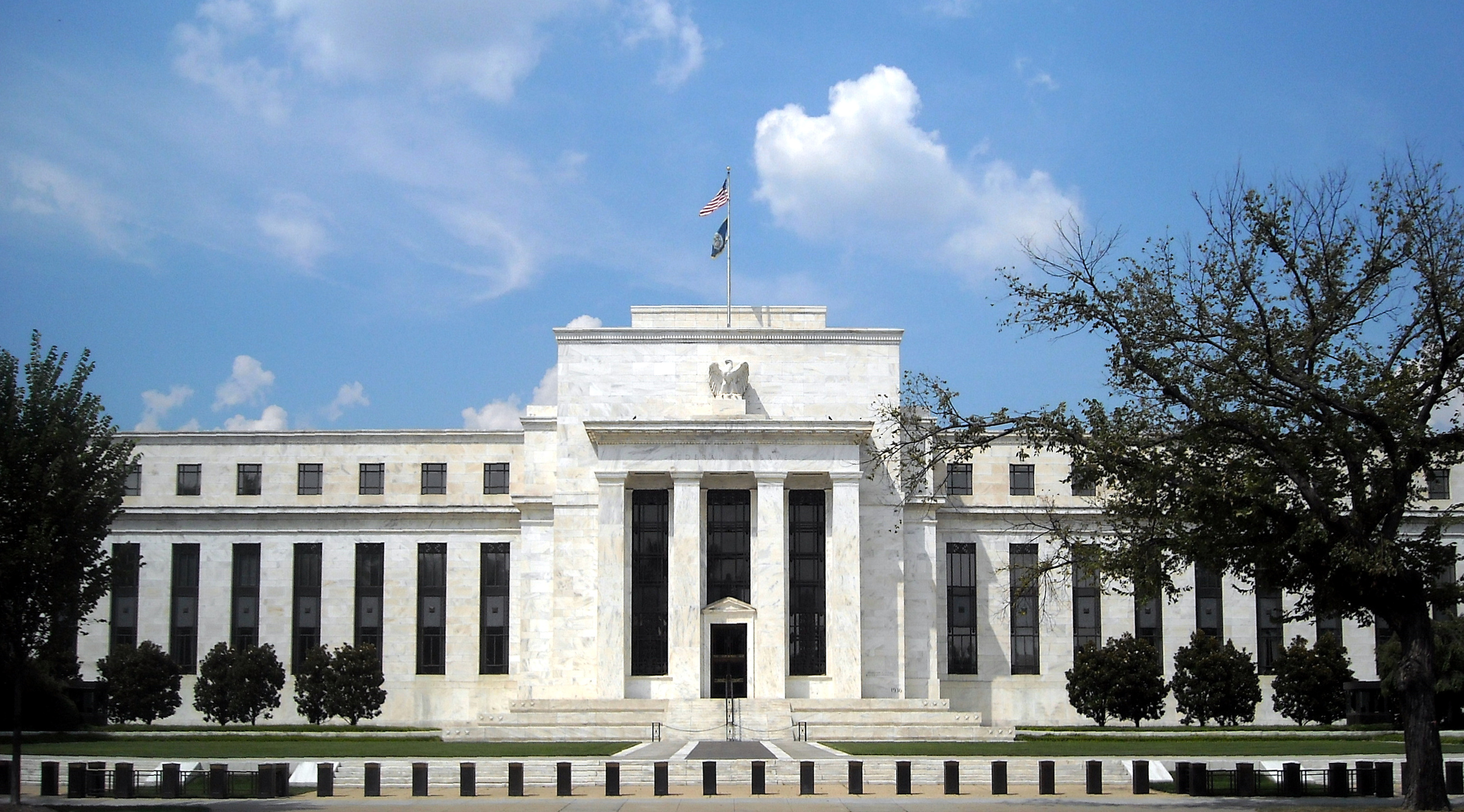
Cover image: the Marriner S. Eccles Federal Reserve Board Building in Washington, D.C. Photo by AgnosticPreachersKid, licensed under CC BY-SA 3.0, via Wikimedia Commons.