Monday, August 3, 2026. The single largest input to this market for four months was removed from the screen over the weekend, and it was removed by a sentence rather than by a barrel. President Trump said on Air Force One on Sunday that he had called off what he described as the biggest attack since World War II against Iran, at the request of Saudi Arabia, the United Arab Emirates, Qatar and Tehran itself, and that negotiators would sit down this morning on a deal covering the reopening of the Strait of Hormuz and Iranian denuclearisation. Brent for October fell as much as 7.3 percent to trade below $84, WTI slipped under $81, and the equity futures complex sorted itself in a very particular order: Dow futures up 676 points or 1.28 percent, Russell 2000 futures up 0.99 percent, S&P 500 futures up 0.60 percent, and Nasdaq 100 futures up 0.19 percent. That ordering is the whole story of the morning. This is not a growth rally. It is the unwinding of an energy tax.
Top Call: The War Premium Left, and the Bond Market Collects First
Brent rose roughly 25 percent in July, its strongest month since March. That move was doing real work inside the September Fed debate. Three FOMC members dissented at the July 28 to 29 meeting in favour of an immediate hike, the committee held at 3.50 to 3.75 percent, and market-implied odds of a September increase have swung between 55 and 80 percent for three weeks almost entirely on the oil complex rather than on growth, which undershot at 1.5 percent in the second quarter. Take seven percent out of Brent in one session and you have removed the most visible source of the second-half inflation impulse that the hawks were pointing at.
So the first-order read is that this is a rates event dressed as a geopolitical one. Treasuries are bid across the curve, the dollar index sits at 99.72, and the equity expression is showing up in exactly the places that were paying the energy tax: transport, travel, industrials, small caps and the Dow. The complication is the long end. The 30-year sits around 5.25 percent, within a few basis points of a 19-year high, and it has now failed to confirm three separate equity recoveries in eleven sessions. If the front end rallies on a lower hike probability while the 30-year stays where it is, the curve steepens for term-premium reasons, which is a worse outcome for long-duration equity than a parallel drop in yields would be. Watch the 30-year rather than the 2-year for whether this is a regime change or a one-day relief trade. Written at 9:15am Eastern before the opening bell, so a 7 percent move in crude and a 1.28 percent print in Dow futures can both look materially different by ten o’clock, particularly with ISM landing inside the first half hour of trading.
What Was Actually Agreed, and What Was Not
Nothing was agreed. That distinction is worth holding onto while the tape celebrates. According to a regional official involved in the mediation, the proposal calls for both sides to return to the table and continue working the issues that derailed the previous round, including reopening Hormuz and halting attacks across the region, with the United States ending its naval blockade and allowing Tehran to export oil again. Those are the terms of an agenda, not the terms of a settlement.
Within hours of Trump calling a deal imminent, Iranian foreign ministry spokesperson Esmail Baghaei once again publicly rejected the premise of direct negotiations with Washington. This is not the first declared pause of the campaign, and on the previous occasions strikes resumed within about a week. The honest framing is that the market has repriced a start date. If the blockade genuinely lifts and Iranian barrels return to a market that OPEC+ has just finished restoring, the supply-side disinflation is large and durable. If the talks collapse the way the June and July rounds did, the entire 7 percent comes back, and it comes back faster than it left, because inventories have been drawn through a quarter of disrupted transits.
OPEC+ Quietly Finished the Job
The second oil story of the weekend got almost no attention and deserves more. At Sunday’s virtual meeting the eight producers carrying voluntary curtailments approved an increase of 188,000 barrels per day for September, and that increment completes the phased rollback of the additional voluntary cuts introduced back in 2023. The 67th Joint Ministerial Monitoring Committee met the same day to review May and June compliance and to press the overproducers on their compensation schedules.
Read the two headlines together. OPEC+ has now returned its entire voluntary cut to the market, and Washington is negotiating to bring sanctioned Iranian supply back on top of it. The war premium was masking a supply picture that has been loosening steadily all year, which is why Brent could not hold above $100 in late July even with Hormuz effectively shut and tankers being struck. Peace is not the only bearish thing that happened this weekend. It is simply the loud one.
Korea Handed Back a Third of a Record in One Session
The Kospi fell 5.12 percent to 6,257.45 on Monday, with Samsung Electronics down about 8.95 percent and SK Hynix down about 8.56 percent. That comes forty-eight hours after the index posted the largest one-day gain in its history at 17.9 percent, with SK Hynix limit-up and Samsung up 28 percent.
Nothing changed in memory over the weekend. No contract price was renegotiated, no capacity was announced, no customer cancelled. What that tells you is what Friday’s move actually was: a short squeeze detonated by a chairman’s personal share purchase, layered on positioning that had already been washed out by a three-day, 17 percent crash the week before. It was not a re-rating, and Monday priced it accordingly. Our underlying view on the memory cycle is unchanged and, if anything, was strengthened last week when Apple guided September revenue growth to 9 to 11 percent against a 12 percent consensus and named DRAM and NAND inflation as the reason. That is the largest NAND buyer on earth confirming supplier pricing power through its own income statement. The distinction we would hold is between the cycle, which is now confirmed by invoices rather than by management commentary, and the Korean equity expression of that cycle, which has become a volatility instrument moving five to eighteen percent a session on flows. Those are two different assets. Elsewhere in Asia the Nikkei fell 1.1 percent to 63,652.26, the Hang Seng edged up 0.1 percent to 25,893.57, and the Shanghai Composite lost 0.8 percent to 3,801.86.
Washington Joined Tokyo in the Currency Market for the First Time Since 2011
Japan’s Ministry of Finance confirmed on Monday that Friday’s yen-buying operation was conducted jointly with the United States Treasury, which makes it the first coordinated intervention between the two since the 2011 action that followed the Tohoku earthquake. Finance Minister Satsuki Katayama said Tokyo will not hesitate to intervene again in coordination, and Treasury Secretary Scott Bessent said Washington will not hesitate to participate. The yen gained as much as 1.4 percent to a near three-month high of 155.20, compounding a 3.8 percent surge over the prior two sessions, having earlier fallen to a 40-year low.
This is the most underpriced item on the page. Three weeks of yen strength were being read as unilateral Japanese action of low informational quality, the sort of move that fades. A confirmed joint operation, with an explicit commitment from both treasuries to repeat it, is a different object entirely. It places a policy floor under the yen, it removes the cheapest funding currency in the world from the carry trade at the margin, and it means the United States Treasury is now an active participant in weakening its own currency against the yen while the Federal Reserve debates a hike. Those two things point in opposite directions, and the tension between them has not been priced.
Europe Rotated Out of Energy Without Selling the Index
The Stoxx 600 was up 0.4 percent at 651.88 in early trade, with energy down 2 percent and travel and leisure up 2.1 percent. That is the cleanest available expression of the morning: the index absorbed a 2 percent hit to one of its heaviest sectors and still rose, because everything that buys fuel rather than sells it repriced at once. Europe closed July with a fourth consecutive monthly gain and touched a record 656.67 intraday on Friday, and it keeps outperforming for the structural reason we have flagged all month, which is that it never took the hyperscaler capital-spending bet and therefore has nothing to hand back when that bet is questioned.
Prysmian Paid a 30% Premium for American Conduit, and That Is an AI Trade
The one real corporate transaction of the morning is instructive. Italy’s Prysmian agreed to acquire Atkore for $95.00 per share in cash, an enterprise value of roughly $3.8 billion, a 30 percent premium to Friday’s close of $72.96 and a 57 percent premium to where the shares traded before Atkore announced its strategic review last September. Atkore is up about 28 percent pre-market.
Atkore makes electrical conduit, cable management and metal framing. It is about as far from a semiconductor as it is possible to get while remaining levered to the same demand. A European cable group paying a 30 percent premium for North American electrical infrastructure at this point in the cycle is a statement about where the binding constraint in data-centre construction actually sits, and it is consistent with what the hyperscalers said in their own prints last week: the limit is not chips alone, it is power delivery, and increasingly it is the physical hardware that moves electricity from a substation to a rack. This is the layer beneath the picks and shovels, and it is now being consolidated in public. Separately, GameStop is down about 9.5 percent on a $1.4 billion debt-for-equity swap that dilutes existing holders.
Geopolitical Tracker
| Item | Status | Read |
|---|---|---|
| US strikes on Iran | Called off Sunday at the request of Saudi Arabia, the UAE, Qatar and Tehran | Another declared pause in a campaign where prior pauses were followed by resumed strikes within about a week |
| Talks | Resume today on Hormuz reopening and denuclearisation, with the US naval blockade and Iranian oil exports on the table | Iran’s foreign ministry publicly rejected direct talks within hours. An agenda, not an agreement |
| Strait of Hormuz | Still formally closed by Tehran’s Strait Authority, with transits running five in 24 hours against a 140 baseline over the weekend | Reopening is the highest-value line in the proposal and the one with the largest oil price consequence |
| OPEC+ | September quota raised 188,000 b/d on Sunday, completing the 2023 voluntary cut rollback | Supply was loosening before the peace headline. Two bearish oil catalysts landed inside the same 24 hours |
| Yen | First joint US and Japan intervention since 2011, both treasuries signalling readiness to repeat | A policy floor under the yen and a marginal tax on the global carry trade |
Quick Take: The Earnings That Matter
No coverage name reported overnight, which is itself the point. This is a positioning morning ahead of an unusually dense week, and each of the prints that matters sits on the AI, storage, power or launch axis.
| Company | When | The Number That Decides It | Our Take |
|---|---|---|---|
| Palantir (PLTR) | Tonight, after close, 5:00pm ET | Consensus revenue $1.812B, up roughly 80% y/y, EPS $0.34. Eight consecutive beats. Options implying a 10-12% move, about $31.6B of market value | Eighty percent growth would still be a deceleration, and the stock already sits about 40% off its high. This is the cleanest test of whether the market pays a premium multiple for AI growth that is decelerating from an extraordinary base. Government revenue is the swing factor, and the war has been a tailwind that a ceasefire would reverse |
| SpaceX (SPCX) | Tomorrow, after close | First public quarter ever. Revenue expected near $6.88B. Starlink at 10.3M subscribers across 164 countries as of 31 March, up 105% y/y | Priced at $135 in June for the largest IPO in history at $85.7B raised, peaked at $225.64 on 16 June, and has since lost more than 45%. An information event stacked on a supply event: this print opens the lock-up window on 6 August for up to 20% of restricted holdings, as much as 911.5 million shares. Good numbers may not be enough to absorb that |
| AMD | Tomorrow | Revenue about $11.2B, up 46%, non-GAAP EPS $1.67, gross margin 56% | The most consequential semiconductor print of the week and the only near-term read on whether inference workloads have genuinely become multi-vendor or remain a single-supplier market |
| SanDisk (Wed), Western Digital, Constellation (Thu), Oklo (Fri) | Through the week | Storage pricing and AI power demand | SanDisk grew fiscal third-quarter revenue 97% sequentially and 251% year on year. These are the storage and power legs of the same trade, reporting into a tape that has just repriced energy sharply lower |
Our take: Last week’s four megacap prints established that this market pays for capital spending only when the customer of the capacity can be named, which is why Microsoft and Amazon rose and Meta fell. This week runs the same test three layers further down the stack: in software with Palantir, in silicon with AMD, in storage with SanDisk and Western Digital, and in power with Constellation and Oklo. Palantir tonight carries the most information of the four, because it holds the named customers and the highest multiple at the same time, which isolates the valuation question cleanly. On SpaceX we would separate the operating story from the share-supply story. Starlink subscriber growth above 100 percent is a genuinely strong business, and it is about to meet the largest insider unlock this market has seen in years three days later.
Key Events Today and Ahead
| Date | Event | Why It Matters |
|---|---|---|
| Mon, 9:45am | S&P Global Manufacturing PMI, final July | Prior reading 53.8. The less market-moving of the two morning surveys |
| Mon, 10:00am | ISM Manufacturing, July | Expected 54.0 against 53.3 prior. Prices Paid expected at 70.0 from 73.0 is the line that matters this morning, because a cooling input-cost survey landing on the same day as a 7 percent drop in Brent compounds the disinflation read |
| Mon, 10:00am | Construction spending, June | Expected +0.2% against +0.1% |
| Mon, after close | Palantir Q2 | The highest-multiple large-cap in the AI complex reports into a tape that has spent a week rewarding cash conversion over narrative |
| Tue | SpaceX first public quarter, AMD, HSBC, Pfizer | Rockets and silicon on the same evening. HSBC opens the European bank season at 04:00 GMT |
| Wed | SanDisk fiscal Q4, Disney, Shopify, McDonald’s | The storage read, straight into the memory-inflation debate Apple opened last Thursday |
| Thu | Constellation Energy, Airbnb | The AI power leg |
| Thu, 6 Aug | SpaceX lock-up window opens | Up to 20% of restricted holdings, as much as 911.5 million shares, becomes sellable |
| Fri, 8:30am | July employment report | Consensus near 88,000. With oil collapsing and three Fed dissenters already wanting a hike, wages and payrolls now carry more weight in September pricing than the energy complex does |
| Fri | Oklo, pre-market | Nuclear supply for data centres, reporting into a week that has repriced the entire energy complex |
| Sept 16-17 | Next FOMC | Hike odds have swung between 55% and 80% on oil headlines. This morning removes a large piece of that argument |
Morning note, Monday August 3, 2026, written at 9:15am Eastern before the opening bell, so pre-market levels can and will move by the open and the 10:00am ISM release sits inside the first half hour of trading. President Trump said on Air Force One on Sunday that he had called off what he described as the biggest attack since World War II against Iran at the request of Saudi Arabia, the United Arab Emirates, Qatar and Tehran, that a deal covering the Strait of Hormuz and Iranian denuclearisation is imminent, and that negotiations resume today, with a regional official involved in the mediation describing terms under which the United States would end its naval blockade and allow Iran to export oil, while Iranian foreign ministry spokesperson Esmail Baghaei again rejected the premise of direct talks. Brent for October fell as much as 7.3 percent to below $84 and WTI slipped under $81, after Brent gained roughly 25 percent in July for its best month since March. On Sunday OPEC+ approved a September increase of 188,000 barrels per day, completing the rollback of the additional voluntary cuts introduced in 2023, with the 67th Joint Ministerial Monitoring Committee reviewing May and June compliance the same day. S&P 500 futures are up 0.60 percent at 7,563.50, Dow futures up 676 points or 1.28 percent at 53,311.00, Nasdaq 100 futures up 0.19 percent at 28,458.50 and Russell 2000 futures up 0.99 percent at 2,967.10, with the VIX at 15.96, gold at $4,104.40, bitcoin near $62,643 and the dollar index at 99.72. Overnight the Kospi fell 5.12 percent to 6,257.45 with Samsung Electronics down about 8.95 percent and SK Hynix down about 8.56 percent, two sessions after the index posted a record 17.9 percent gain, the Nikkei fell 1.1 percent to 63,652.26, the Hang Seng rose 0.1 percent to 25,893.57 and the Shanghai Composite fell 0.8 percent to 3,801.86, while the Stoxx 600 traded up 0.4 percent at 651.88 with energy down 2 percent and travel and leisure up 2.1 percent. Japan’s Ministry of Finance confirmed that Friday’s yen-buying operation was conducted jointly with the United States Treasury, the first coordinated intervention since 2011, with Finance Minister Satsuki Katayama and Treasury Secretary Scott Bessent both signalling readiness to act again, and the yen strengthening as much as 1.4 percent to a near three-month high of 155.20. Prysmian agreed to acquire Atkore for $95.00 per share in cash at an enterprise value of about $3.8 billion, a 30 percent premium to Friday’s close of $72.96. Palantir reports after the close tonight against consensus of $1.812 billion in revenue and $0.34 in earnings per share, and SpaceX reports its first public quarter tomorrow ahead of a lock-up window opening on 6 August. We read this morning as a rates event wearing geopolitical clothing, with the important caveat that what was actually delivered over the weekend was a negotiating date rather than a signed agreement, and with the 30-year Treasury near 5.25 percent still refusing to confirm any of it. For internal use only. Not investment advice.
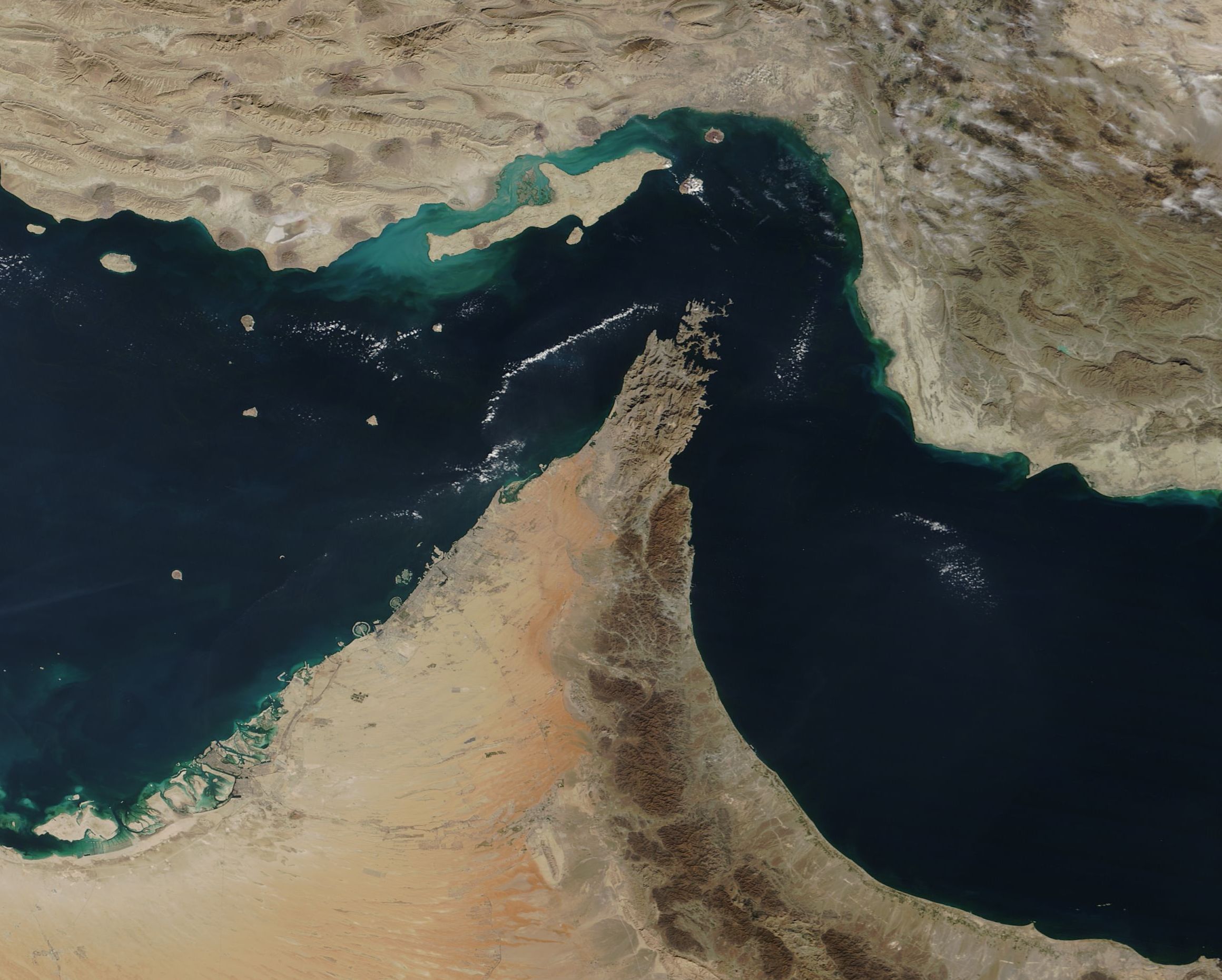
Cover image: the Strait of Hormuz and the Musandam Peninsula, imaged by the MODIS instrument aboard NASA’s Terra satellite on 6 December 2018. MODIS Land Rapid Response Team, NASA Goddard Space Flight Center. Public domain.