Saturday, August 22, 2026, written after Friday’s close, so every level below is a settlement rather than a moving mark, and nothing can change any of it until Monday’s Asian open. The week snapped a three-week advance in all three major averages. It also produced the best week for Bitcoin in two years, a roughly five percent gain in gold, a break above sixty-nine dollars in silver, and the fastest reading of US business activity since April 2022. Reconciling those facts is the whole note, because on the surface they do not belong to the same market.
Top Call: Compute Was Sold, Collateral Was Bought
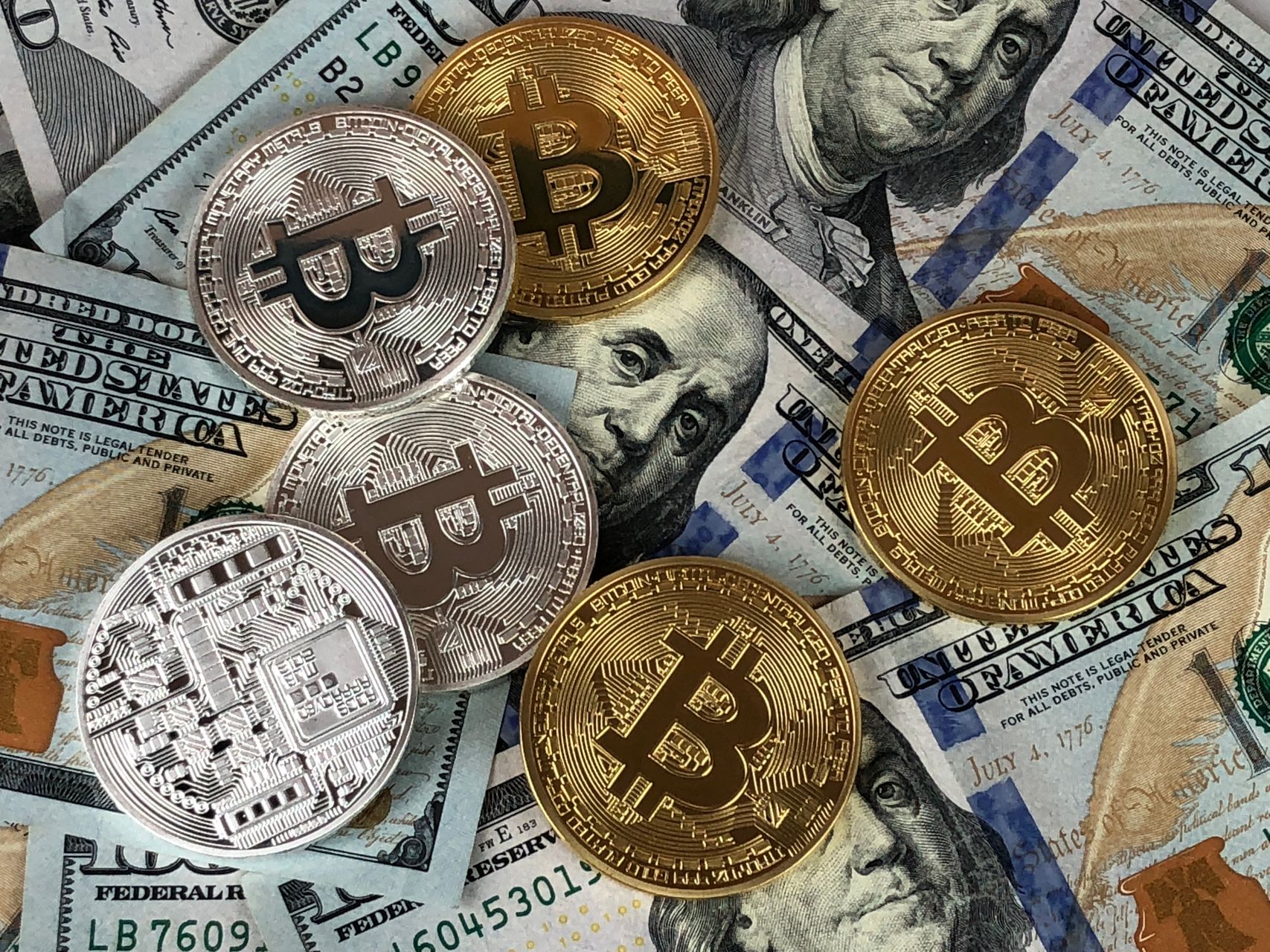
The tape’s headline was a losing week, with the S&P 500 down 1.4% to 7,674.37, the Nasdaq Composite down 2.0% to 26,180.46 and the Dow down 0.8% to 53,277.01. That framing hides what actually happened. Underneath the index level the week was a clean rotation with almost mirror symmetry: the VanEck Semiconductor ETF fell close to five percent, information technology shed more than three percent, and in exactly the same five sessions gold rose almost five percent to $4,607.35, silver cleared $69, and Bitcoin gained twenty-two percent to $77,227.
Money did not leave the market. It left compute and it bought collateral. That is a very specific statement about what investors think the binding constraint is, and it is not a growth worry, because Friday’s flash composite PMI printed 56.0 against 54.5 in July for the strongest expansion since April 2022, with services at a twenty-month high of 56.8 and private hiring at its best pace since January 2025. Growth accelerated while the most growth-levered sector in the index was sold. The explanation has to sit in the discount rate and in the currency, not in the earnings line.
Our read going into next week is that the rotation is rational and probably incomplete, but that it has de-risked the single largest event on the calendar. Nvidia reports Wednesday after the close into a sector that just fell five percent and a market that has spent the week reducing exposure to it. That is a lower bar than the one it faced in May, and we would rather own the print than fade it.
The Tape
| Friday close | On the week | |
|---|---|---|
| S&P 500 | 7,674.37 (+0.43%) | -1.4%, streak of three snapped |
| Nasdaq Composite | 26,180.46 (+0.43%) | -2.0%, semis roughly -5% |
| Dow Industrials | 53,277.01 (+0.98%) | -0.8%, second straight weekly loss |
| Russell 2000 | 3,017.87 (+0.85%) | outperformed on Friday |
| 30Y / 10Y / 2Y | 5.27% / 4.73% / 4.12% | 30Y high 5.339% Tuesday |
| Gold / Silver / Bitcoin | $4,607 / $69.63 / $77,227 | +5% / ratio 65.7 / +22% |
| VIX / DXY | 15.13 (-5.50%) / 98.88 | dollar at a three-month low |
Friday itself was a broad and orderly bounce rather than a squeeze. Financials and materials led, materials adding roughly two percent on the gold move, and the crypto-linked equities did the heavy lifting in sentiment terms with Robinhood up almost fourteen percent, Coinbase up eight percent and MicroStrategy up six percent. The VIX fell 5.5% to 15.13, which tells you the week’s damage never became disorderly. That matters. A five percent drawdown in the most crowded trade in the market that produces a fifteen handle on volatility is a position adjustment, not a de-rating.
The Buyback Round Trip Is the Week’s Most Important Data Point
On Wednesday the Treasury announced it would more than double the size of its long-dated debt repurchases to at least $4 billion per operation from September 9, targeting the ten-to-twenty and twenty-to-thirty year sectors. The market’s first reaction was the one the Treasury wanted: the ten-year fell 5.7 basis points to 4.647% and the thirty-year dropped nine basis points to 5.196%. By Friday the thirty-year was back at 5.27% and the ten-year at 4.73%. Every basis point of relief was returned inside three sessions, and the ten-year finished the week higher than it started the intervention.
| The buyback and its half-life | 30Y | 10Y |
|---|---|---|
| Tuesday Aug 18 peak | 5.339%, highest since June 2007 | roughly 4.71% |
| Wednesday Aug 19, post-announcement | 5.196% (-9bp) | 4.647% (-5.7bp) |
| Friday Aug 21 close | 5.27% | 4.73% |
| Net over the week | relief fully reversed | finished above the pre-announcement level |
We think this is the most analytically useful thing that happened all week, and it deserves a plain statement. A buyback changes who holds a bond. It does not change how many bonds exist, and it does not change the fiscal path that will create the next ones. If the long end were struggling because of a temporary shortage of balance sheet, a doubling of the official bid would have held. It did not hold for three days. What is being priced is term premium, and term premium is compensation for supply and for uncertainty about the policy framework, neither of which a repurchase operation touches.
The global context supports that reading rather than a US-specific one. This month has produced a fifty-year gilt yield at a record 5.392%, a five-year JGB yield at a record 2.18% with the ten-year at 2.9494% and the highest since September 1996, a French thirty-year near 4.899% for its highest since 2008 and a Canadian thirty-year at 4.164% for its highest since 2010. Five sovereigns with unrelated fiscal politics repriced duration in the same weeks. That is a repricing of the asset class, not a verdict on any one government.
The consequence for equities is the part investors should carry into Monday. When the long end will not fall on official buying, the discount rate applied to cash flows arriving in 2030 and beyond stops improving. The most duration-heavy equity in the index is the AI capital expenditure complex, whose returns are back-loaded by construction. That is the mechanical link between a five point three percent long bond and a five percent week in semiconductors, and it is why we do not read the chip selloff as a demand signal.
The Debasement Bid Widened From Metals to Everything Without an Issuer
Gold finished at $4,607.35 spot, up 2.03% on Friday and close to five percent on the week, with the futures contract at $4,680.60. Silver was the more informative half of the move, trading $69.63 and up more than two percent on the day, which compressed the gold to silver ratio to 65.71 from 66.35. That compression is what separates a fear bid from a monetary one. When gold rallies alone the market is buying insurance. When silver keeps pace and the ratio falls, the market is expressing a view on the unit of account, because silver carries industrial demand and a much thinner float and only participates when the flow is real.
Bitcoin belongs in the same paragraph this week rather than in a separate crypto section. It gained twenty-two percent for its best week in two years, touched just under $80,000 overnight Thursday and settled at $77,227. The composition changed as the week progressed, which is what makes it interesting. It began as the largest short liquidation in the Coinglass record at roughly $3.3 billion, and it ended with US spot ETFs taking $517 million on Wednesday and $606 million on Thursday, the biggest single day since May, for about $1.61 billion on the week, with BlackRock’s IBIT capturing more than eighty percent of Thursday’s total. A squeeze that hands off to allocator flow is a different animal from a squeeze that exhausts itself.
The dollar completed the picture at 98.88, a three-month low. So all four expressions of the same idea moved together and in the correct direction, which is unusual and which is why we take it seriously. The trigger was not the Middle East and it was not an inflation print. It was a fiscal authority announcing it would buy its own long-dated paper in the same month the national debt crossed $40 trillion. The market ran the stabiliser interpretation for about six hours and has spent every hour since running the monetiser one.
We would flag one honest tension. Hard assets are pricing debasement while the front end still carries the highest policy rate in the developed world, and the two-year at 4.12% is not confirming. Either the metals and Bitcoin are running ahead of the currency and will give some back, or the front end is about to reprice. Friday’s PMI argues for the second.
The Data Said Hike and the Market Is Not Positioned for It
Friday’s S&P Global flash composite at 56.0 was not a marginal beat. It was the strongest print since April 2022, and the internals were stronger than the headline. Services jumped to 56.8 from 54.6 for a twenty-month high. Backlogs accumulated at the fastest rate since May 2022. Private employment rose sharply after roughly eight months of essentially no net change, the largest increase since January 2025 and the second largest in four years. S&P Global put third-quarter annualised growth on a path toward three percent against 1.5% in the second quarter.
| Flash PMI, August | Prior | August | Read |
|---|---|---|---|
| Composite output | 54.5 | 56.0 | best since April 2022 |
| Services activity | 54.6 | 56.8 | twenty-month high |
| Employment | little net change | sharp rise | strongest since Jan 2025 |
| Q3 GDP implied | 1.5% in Q2 | approaching 3.0% | reacceleration, not a slowdown |
Set that against the policy backdrop. The July minutes released Wednesday showed many officials believed rates would have to rise if inflation did not ease, and three dissented for a hike at the meeting itself. Kevin Warsh has been explicit in a way his predecessor rarely was, telling markets there is no soft target and no implicit target, only two percent. September pricing has swung violently through August, from roughly fifty-five percent before the payrolls miss to about twenty percent after it, and back toward a coin flip now. A composite at 56.0 with hiring reaccelerating does not fit a market that has mostly talked itself into a pause.
That is the setup into Friday the 28th, when Warsh delivers his first Jackson Hole keynote as chair, with the symposium running August 27 to 29 on the theme of financial innovation in payments and policy. The audience question is not really September. It is what the central bank thinks about a Treasury that is repurchasing its own thirty-year paper while gold, silver and Bitcoin go vertical and the dollar sits at a three-month low. Warsh built a reputation on central bank independence long before he held the chair. He is now presiding over the first serious test of whether the market believes the monetary authority or the fiscal one is setting the price of long money.
Earnings: Analog Devices Was the Print That Mattered
The retailers dominated the calendar, but the quarter with genuine information for the AI complex came Wednesday from Analog Devices, and it was better than its share price reaction suggested.
| Analog Devices, FQ3 2026 | Consensus | Actual | Beat/Miss |
|---|---|---|---|
| Revenue | roughly $3.9B | $4.02B, +39.6% y/y | beat |
| Adjusted EPS | roughly $3.32 | $3.45 | beat, fourth straight |
| Communications segment | n/a | +84% y/y | data centre and AI driven |
| FQ4 guidance | roughly $4.1B | record $4.3B, adj op margin ~52% | raise |
Our take: This is the cleanest evidence available that AI demand has spread past the accelerator into the unglamorous analog content that every rack needs, and it is showing up in the highest-margin part of a portfolio that also carries a fifty-three percent industrial recovery. An adjusted operating margin guided near fifty-two percent on record revenue is not a company competing on price. The reason it did not stop the sector selloff is that ADI is a validation of demand, and demand was never the thing the market was questioning this week.
The rest of the week fits the same consumer picture we have been tracking. Walmart beat on revenue and earnings but posted US comparable sales of just 2.6%, its slowest in six years, and fell six percent. Deere printed $5.10 against $4.45 and called the bottom of the agricultural cycle. Then Thursday night produced two prints that look like the consumer is fine and one that looks like margin pressure is not over.
| Thursday night | Result | Read |
|---|---|---|
| Ross Stores | $2.66 vs guidance $1.85-$1.93, comps +10% traffic-led | off-price is taking share, not just trading down |
| BJ’s Wholesale | EPS $1.36, revenue $6.09B, comps +11.9%, FY raised to $4.60-$4.80 | membership model compounding, +3% Friday |
| Ubiquiti | revenue $937.3M, +23.5%, gross margin 45.8% flagged at risk | component cost inflation is reaching networking |
Our take: The spread between Walmart at 2.6% and Ross at ten percent on traffic is too wide to be a consumer weakness story. It is a share-shift story, and it says the value end of retail is winning the trade-down without needing a recession to do it. Ubiquiti is the one to carry forward, because a hardware vendor naming component costs as the threat to a forty-six percent gross margin is the memory shortage arriving at companies that are not memory companies. That theme has one more leg.
Asia and Europe
Asia was mixed on Friday and lower on the week, with bond stress the common thread. Japan was the weak link, with the Nikkei down 0.30% to 66,016.36 as the domestic curve produced record five-year and three-decade-high ten-year yields. Hong Kong was the strongest, with the Hang Seng up 1.21% to 26,009.46, while the CSI 300 added 0.57% to 4,618.90 and the Shanghai Composite closed at 3,905.20, down about 0.6% on the week despite fresh signals of policy support.
Korea remains the most direct read on the AI hardware cycle and it held up. The Kospi rose 0.88% to 6,912.95, reclaiming 6,900, with SK Hynix up 2.31% on reports it is evaluating a new memory plant in Japan and Samsung up 3.87% on reports of a shareholder return package of ninety to a hundred and ten trillion won, following SK Hynix’s forty trillion won open-market buyback. That Korea rose in a week when US semiconductors fell five percent is worth noting, because it suggests the selling was positioning in US-listed names rather than a change in the memory cycle itself.
Europe snapped a losing streak on Friday but still finished the week down. The Stoxx 600 rose about 0.5% to 653 after seven consecutive declines through Thursday, its longest run since September 2023, with basic resources leading on the gold move and banks and luxury contributing. The DAX added 0.59% to 26,136.56, the FTSE 100 rose 0.64% to 10,816.56 and the CAC 40 gained 0.37% to 8,484.43.
Geopolitics: The Sanctions Regime Becomes a China Question on Monday
Brent held $93.86 and WTI sat near $87, both near one-month highs, and the reason is on the calendar rather than in the tape. Scott Bessent holds a press conference Monday to detail what he has described as the greatest coordinated economic isolation in the history of the world, aimed at Iran, and he has said the objective is to make large-scale military operations unnecessary. The specific mechanism to watch is secondary sanctions on buyers of Iranian crude, because China takes roughly ninety percent of it. That converts an Iran policy into a China policy about five weeks before a US-China summit scheduled for September 24 in Washington, where tariffs and Taiwan are already on the agenda.
The physical picture in the Strait is stranger than the headline suggests. Preliminary data show 73 transits in the week of August 10 to 16 against 91 the prior week, and against a pre-crisis baseline of roughly 73 transits per day. On August 16 a single transit was recorded. At the same time a US operation has been moving fifteen to twenty tankers a night through a southern channel along the Omani coast, carrying roughly ten million barrels a day, about half the pre-war volume. So the strait is simultaneously closed as a commercial matter and functioning as a state-managed one. That is a fragile equilibrium, and it is the reason the crude curve is carrying a premium that neither collapses nor extends.
Elsewhere, Ukraine’s Patriot interceptor stocks have been reported effectively exhausted while Moscow signals openness to new proposals with conditions, Taiwan floated a record defence budget, and Washington added fresh sanctions on Hezbollah. Canada begins removing the majority of its retaliatory tariffs from August 22, which is the one unambiguously constructive trade development of the week.
Key Events: August 24 to 28
| When | Event | Why it matters |
|---|---|---|
| Mon 24 | Bessent press conference on Iran | secondary sanctions design, China exposure |
| Tue 25 | Consumer confidence, Case-Shiller, new home sales | first read on whether PMI strength reaches households |
| Wed 26, 8:30am | Q2 GDP second estimate, PCE, durable goods | the inflation print into Jackson Hole |
| Wed 26, after close | Nvidia FQ2 2027, CrowdStrike | consensus roughly $92.1B revenue, $2.06-$2.09 EPS |
| Thu 27 | Jobless claims, Marvell; Jackson Hole opens | Marvell is the custom silicon read-through |
| Fri 28 | Warsh keynote at Jackson Hole, Chicago PMI, UMich final | first symposium address as chair |
Two of these carry most of the risk. Nvidia is expected to grow revenue roughly ninety-seven percent to about $92.1 billion with earnings near $2.09, and the questions that will move the stock are the Rubin ramp schedule and any change in the China arrangement rather than the quarter itself. Warsh is the other, and the more consequential of the two for the levels in this note, because the entire hard-asset trade of the past week is a bet that the fiscal authority is setting the price of money. A chair who wants that bet unwound has one credible way to say so, and Friday morning is when he would say it.
Positioning Into Monday
We are carrying three views. First, the rotation out of semiconductors is positioning rather than fundamentals, and Analog Devices at eighty-four percent communications growth plus a Korean tape that rose while US chips fell is the evidence for that; we would be adding rather than trimming into Wednesday. Second, the debasement trade is real but is now extended enough that its next leg needs confirmation from the front end rather than from another gold headline, and the two-year at 4.12% has not given it. Third, the long end is the variable that governs everything else, and the failure of a doubled buyback to hold three days of relief means we should stop treating each new intervention as a floor.
We were early on one thing this week and should say so. On Friday morning this note argued that the dollar would be the cleanest expression of the setup and that 98.50 was the level that mattered. The dollar closed at 98.88 and never went there. The move happened entirely in the assets with no issuer, and the currency lagged the whole way. The mechanism was right and the instrument was wrong, and gold, silver and Bitcoin were the better expression of the identical thesis.