Wednesday, August 26, 2026, written at 9:20 a.m. Eastern, ten minutes before the cash open. The eight-thirty data is in the market and the two prints that decide the week are still eight hours away. One correction to yesterday’s edition before anything else: this book carried the Nikkei’s Tuesday close at 64,980.53, and the correct figure was 65,856.43. The direction of the Asia read was right, the level was not.
Top Call: The Bar Is the Guide, Not the Print
Intuit reported fourth-quarter revenue of $4.35 billion against $4.27 billion expected and adjusted earnings of $4.03 against $3.58, a twelve percent beat on the bottom line with revenue up fourteen percent. The stock is down 11.8% pre-market. The entire move sits in one line of the release: fiscal 2027 adjusted earnings guided to $22.88 to $23.12 against a consensus near $27.30, with revenue of $23.28 to $23.51 billion against $23.74 billion.
Yesterday this book called Intuit the test of whether the fifty-point software-over-silicon spread was a genuine earnings rotation or a positioning squeeze. The test has resolved, and it resolved against the rotation. A company that beat by twelve percent lost twelve percent because it told you what next year looks like when you are spending to acquire customers and embed agents rather than harvesting them.
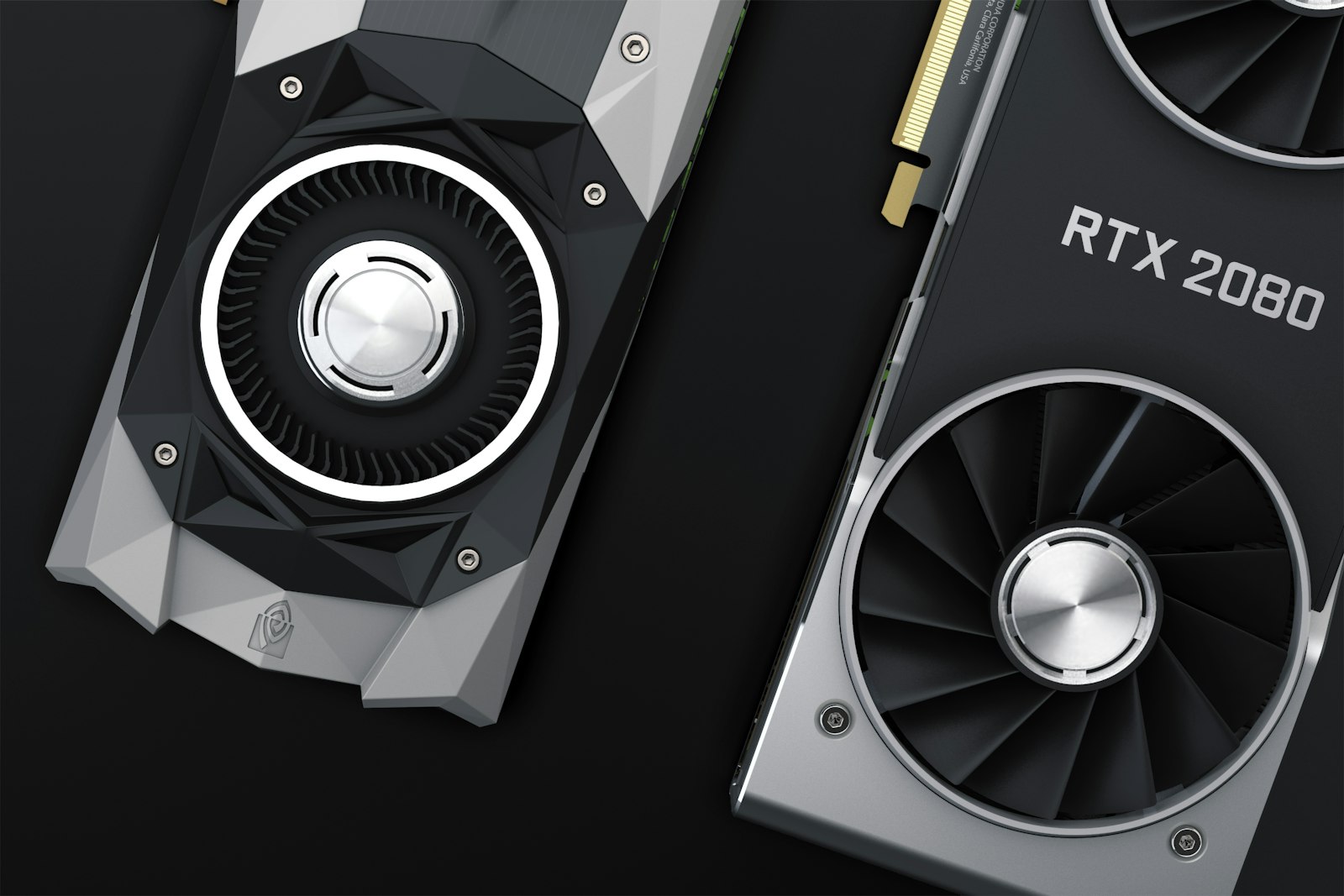
That is the frame for tonight, and tonight is unusually dense. Nvidia and Salesforce both report after the close, along with CrowdStrike, Synopsys, Okta and HP. Consensus has Nvidia at roughly $92.2 billion of revenue and $2.09 of adjusted earnings against a company guide of $91 billion plus or minus two percent, with options pricing a move worth close to $286 billion of market value. Salesforce is looked for at $3.27 on $11.33 billion with an implied move near eight percent. Both halves of the AI trade get adjudicated in the same hour, and Intuit has already established that the printed quarter is not what gets paid.
The Tape Into the Open
| Level | Move | |
|---|---|---|
| S&P 500 / Nasdaq 100 futures | 7,681.00 / 29,158.25 | -0.14% / -0.40% |
| Dow / Russell futures | 53,636.00 / 3,005.80 | -0.02% / -0.29% |
| 30Y / 10Y / 2Y | 5.181% / 4.659% / 4.199% | little changed through PCE |
| WTI / Brent | $80.76 / $86.80 | -1.95% / -2.06%, third straight fall |
| Gold spot / Bitcoin | $4,610.95 / $78,091 | -1.01% / -0.69% |
| VIX / DXY | 15.73 / 99.10 | +1.81% / +0.18% |
Tuesday closed green across the board, with the S&P adding 24.42 points to 7,677.28, the Dow 160.24 to 53,577.40 and the Nasdaq Composite 171.11 to 26,151.30. Nvidia itself rose 2.2% to about $213 and snapped a seven-session losing run that had cost it roughly seven and a half percent. That was a positioning bounce into the print rather than a change of view, and this morning the Nasdaq contract is giving a little of it back while the Dow sits flat.
The internals are worth pausing on. The VIX is up almost two percent on a tape that is barely down, which is straightforward event premium ahead of the close and not a risk signal. The long end did essentially nothing through an inflation report that came in hot on the headline, which tells you the bond market had already decided this print was not the deciding input for Friday. And gold falling a full percent while the dollar firmed 0.18% is the second consecutive session in which the debasement bid has traded on real yields rather than on its own momentum, after a fortnight in which it did the opposite.
PCE: Hot Headline, Cold Core, and a Coin Flip
The July personal consumption expenditures report gave both camps something. Core rose 0.2% on the month and held at 3.3% on the year, exactly in line, and that is the sixty-fifth consecutive month above the Fed’s two percent target. The headline rose 0.2% against 0.1% expected and 3.7% against 3.6% on the year, which is the highest reading in three years. The second estimate of second-quarter GDP landed alongside it at a 1.5% annual rate, unrevised from the advance figure.
Two readings of the same release are available and both are honest. The hawkish one is that headline inflation is accelerating and has now been running above target for more than five years, so the anchor argument is empirical rather than theoretical. The dovish one is that the gap between 3.7% headline and 3.3% core is energy and food, which are precisely the components rolling over as Brent falls through the mid-eighties, so the headline is telling you about last month while the oil tape is telling you about the next two.
September hike odds sit near forty percent on the CME caliber, which is a genuine coin flip and is up from the roughly thirty percent this book carried yesterday. What is notable is that the composition of core inflation has shifted in a way that is uncomfortable for anyone who wants to argue this is a demand problem. Rising prices for computer hardware and software, together with portfolio management fees that mechanically follow equity market levels, are doing real work in the core index. The Fed cannot fix a memory shortage with the funds rate, and it cannot fix asset management fees without cutting the value of the assets. Kevin Warsh delivers his first Jackson Hole keynote on Friday at ten o’clock into a symposium themed on financial innovation and payments, which gives him an unusually convenient platform to talk about structure instead of about September.
Hormuz: The First Concrete Reopening Framework in Six Months
Iranian Foreign Minister Abbas Araghchi met his Omani counterpart Sayyid Badr Albusaidi in Tehran on Tuesday, and the joint statement is the most substantive thing to come out of the strait since the war began. It commits both sides to a joint temporary navigational corridor and to working together to clear mines from the waterway, with technical negotiations continuing toward a permanent corridor and an agreement on the future administration of the strait. About a fifth of the world’s traded oil moved through Hormuz before February 28. Very little does now.
Crude has fallen three sessions in a row on it. Brent is $86.80 and WTI $80.76, both down about two percent this morning and both at the lowest levels in more than a fortnight, roughly eighteen dollars below the late-July high near $105. The United States has also begun returning personnel to Middle East diplomatic posts it had evacuated, and Washington has said the strait is demined with what it described as zero tolerance for new mines.
Here is the tension the tape is choosing to ignore. On Monday night a projectile struck the engine of a tanker roughly nine nautical miles northeast of Ash Shishan on Oman’s coast and disabled it. The crew is safe and nobody has claimed the attack. That happened inside the same forty-eight hours as the corridor announcement. The honest description of the situation is that the diplomatic track and the shooting track are running simultaneously, and the market has decided to price the first and discount the second.
We think that is defensible on the direction and premature on the pace. A temporary corridor plus mine clearance is a months-long physical undertaking with insurance, escort and salvage economics attached to it, and none of that is priced by a two percent day in Brent. But the direction is right for a reason that matters more than the headline: every dollar off crude removes upside risk from the inflation path that has been the engine of the entire 2026 hike narrative. That is why the front end barely moved on a three-year high in headline PCE.
Earnings That Matter
| Company | Result | Read | |
|---|---|---|---|
| Intuit | FQ4, Tue night | EPS $4.03 vs $3.58; rev $4.35B vs $4.27B | FY27 EPS $22.88–$23.12 vs ~$27.30; stock -11.8% |
| Zoom | FQ2, Tue night | EPS $1.55 vs $1.48; rev $1.28B, +4.9% | Enterprise +7.8%, best in three years; FY27 raised |
| Abercrombie | Q2, before open | EPS $4.17 vs $2.91 LY; sales $1.27B, +5% | Record Q2, op margin 19.9%; stock +11.9% |
| Williams-Sonoma | Q2, before open | Non-GAAP EPS $2.10; comps +6.2% | Op margin 17.3% on 6.7% revenue growth |
| Semtech | FQ2, Tue night | Rev $341.9M, EPS $0.71, both records | Data centre revenue $100M, up 91%; +5.5% |
| Nvidia | FQ2, after close | Est $92.2B and $2.09 vs $91B guide | ~$286B implied swing; the whole tape |
| Salesforce | FQ2, after close | Est $3.27 on $11.33B | ~8% implied move; agentic attach is the question |
Intuit is the analytical event and it deserves to be read carefully rather than dismissed as a guidance miss. Management guided fiscal 2027 revenue growth to nine to ten percent while prioritising customer acquisition and artificial intelligence spending, and put automation and deeper integration between software and human experts at the centre of the strategy. That is a company choosing to spend the AI transition rather than harvest it. The market’s response was to take twelve percent off, which is the same reflex that took ten percent off Alibaba for funding compute with equity two sessions ago and eight and a half percent off Samsung for a capital return package it judged small. The pattern across three continents and three business models is consistent: in August 2026 the tape pays for what you deliver now and charges you for what you intend to build.
Zoom is the counterexample and it is the more useful one for tonight. Revenue grew only 4.9% to $1.28 billion, but it beat the high end of its own guide, enterprise revenue grew 7.8% for its fastest rate in three years, and management raised full-year revenue, earnings and free cash flow. The Virtual Agent customer count is up 256%. A slower-growing company that raises beats a faster-growing company that spends, and that is the asymmetry Nvidia and Salesforce walk into after the bell.
Semtech is the quiet read-through worth flagging into Nvidia. Record quarter, revenue four percent above expectations, earnings sixteen percent above, and a data centre line that hit $100 million for the first time on 91% annual growth. That is optical connectivity inside the rack, and it is the part of the AI supply chain that has to be busy for Nvidia’s quarter to be good. Semtech has now printed the demand signal ahead of the company that generates it.
Abercrombie does not fit the AI complex but it corrects yesterday’s consumer read. Record second-quarter sales, a fifteenth consecutive quarter of growth, nineteen percent growth in Asia Pacific and a next-quarter guide above consensus, with the stock up almost twelve percent. Note the asterisk: roughly $100 million of the $253 million operating income came from tariff refunds under the IEEPA ruling, so the underlying margin is closer to eleven or twelve percent than to the reported 19.9%. Set against Dick’s cutting full-year earnings nineteen percent below consensus yesterday, the message is not that the consumer is weak. It is that brand-specific execution is separating violently inside a flat aggregate.
SpaceX Commits $100 Billion to a Second Starbase
Louisiana Governor Jeff Landry and SpaceX executives announced on Tuesday that the company will build a second Starship spaceport across roughly 125,000 acres at Pecan Island in Vermilion Parish, on the Gulf coast west of New Orleans. The capital figure is $100 billion. Construction begins in 2027 and the first launch is targeted for as soon as 2029. The site is designed to be self-sustaining, with its own methane production for propellant, its own power generation, deep-water shipping to move vehicles from the Texas Starbase, processing facilities and probably an airport. Musk put the employment figure at roughly ten thousand jobs. The shares traded up to about $138 pre-market.
The number to sit with is the ratio. One hundred billion dollars is a comparable order of magnitude to the $105 billion of financing Nvidia agreed nine days ago to support a single OpenAI data centre campus in Pike County, Ohio, covering an initial 4.25 gigawatts with an option on another 3.75. Two of the largest private capital commitments announced in the United States this month are both essentially industrial land plays with captive power attached, one for launch cadence and one for compute. Vertical integration down to the electron and the methane molecule is what both of these projects actually are, and it is happening because the constraint in each business has moved from the vehicle and the chip to the energy and the site.
Asia and Europe
| Market | Close | Move |
|---|---|---|
| Nikkei 225 | 66,262.16 | +0.62% |
| Kospi | 6,808.21 | +0.97%, chips bid into Nvidia |
| Hang Seng | roughly 25,710 | +0.79% |
| Shanghai Composite | roughly 3,864 | -0.64% |
| Stoxx 600 / DAX | 656.61 / 26,377 | +0.37% / +0.42% |
Korea is the strongest read in Asia. The Kospi added 65.47 points to 6,808.21, a gain of 0.97% and a second consecutive advance after Monday’s 3.12% Samsung-driven drop, with the buying concentrated ahead of the Nvidia print. Two sessions have now fully recovered a capital-allocation shock in the largest issuer in the index, which supports the position this book took on Monday that the Samsung selloff was idiosyncratic rather than a memory cycle signal. Japan followed at 0.62%.
The Hong Kong and Shanghai split is the more interesting one. Hong Kong opened up 0.45% and held the gain to close 0.79% higher, while the Shanghai Composite fell 0.64%. Capital is going where the listings and the offshore tech complex are rather than where the domestic index is, which is the same market-share dynamic the Shein book demonstrated on Monday. Europe is quietly constructive again with the Stoxx 600 at 656.61, the DAX up 0.42% to about 26,377 and the CAC up 0.67% to roughly 8,496, all of it on the combination of cheaper oil, softer yields and a technology rebound ahead of tonight.
Canada Retaliates and Nobody Prices It
Canada published its retaliation on Tuesday, covering about $20 billion of American goods effective September 8. Counter-tariffs on US steel and aluminium double to fifty percent. New fifty percent duties hit American milk, furniture, clothing and apparel, video game consoles, smartphones and other electronics, and the list extends into seafood, cheese, cosmetics and toilet paper. Mark Carney matched Washington dollar for dollar, said American demands during the failed talks showed an intent to destroy Canadian industries, and acknowledged plainly that the measures raise costs and reduce choice for Canadians.
The tape rose on the day it landed. That is the third consecutive session in which this file has produced a headline and no market response, and the market’s implicit logic is not unreasonable: the product scope is narrow, energy is carved out, and the numbers are small against a $28 trillion economy. What that logic misses is the calendar. Nothing takes effect until September 8, both governments face midterm and domestic political pressure before then, and neither side has a negotiating channel open. A dispute that has been priced at zero has a lot of room to be priced at something.
Key Events Today and This Week
| When | Event | Why it matters |
|---|---|---|
| Wed 26, done | Core PCE 3.3%, headline 3.7%, Q2 GDP 1.5% | headline three-year high, core in line, GDP unrevised |
| Wed 26, after close | Nvidia, Salesforce, CrowdStrike, Synopsys, Okta, HP | both halves of the AI trade in the same hour |
| Thu 27 | Jobless claims, pending home sales; Jackson Hole opens | symposium runs to the 29th |
| Fri 28, 10:00am | Warsh keynote, Chicago PMI, final UMich | first symposium address as chair |
| Mon 31 | Shein Hong Kong IPO pricing | trading starts September 1 |
| Tue 8 Sep | Canadian retaliatory tariffs take effect | the file the tape has priced at zero |
The Read
Three things to carry into the open.
The first is that the market has changed what it pays for, and it changed some time in the last three weeks. Intuit beat by twelve percent and lost twelve percent. Alibaba raised ten billion dollars for compute and lost ten percent. Samsung announced the largest capital return in its history and lost eight and a half percent. Zoom grew less than five percent, raised its guide, and was fine. The common thread is not growth and it is not artificial intelligence exposure. It is whether the next twelve months are a harvest or an investment, and right now the tape will not fund an investment.
The second is that tonight is the cleanest single test of that proposition available all year. Nvidia is the purest harvest story in the market, roughly doubling revenue year on year, and Salesforce is the purest attach story, monetising agents inside an installed base. If both are rewarded, the August dispersion was a positioning artefact. If Nvidia beats and falls, which it has done after six of its last eight prints, then the market is telling you that even a hundred percent growth rate does not earn a multiple when the customer’s own capital expenditure is being funded with debt and equity rather than cash flow.
The third is that the macro has quietly gotten easier while everybody has been watching the earnings calendar. Brent is eighteen dollars off its July high with the first real Hormuz reopening framework on the table. Core inflation is flat. Growth printed 1.5% and did not revise. Europe is recovering into cheaper energy. That is a materially more constructive backdrop than the one this book was writing about a fortnight ago, and it is being obscured by an event risk that resolves at four o’clock.
Written pre-market. Every level above is a pre-open mark, and tonight can rewrite most of this page.