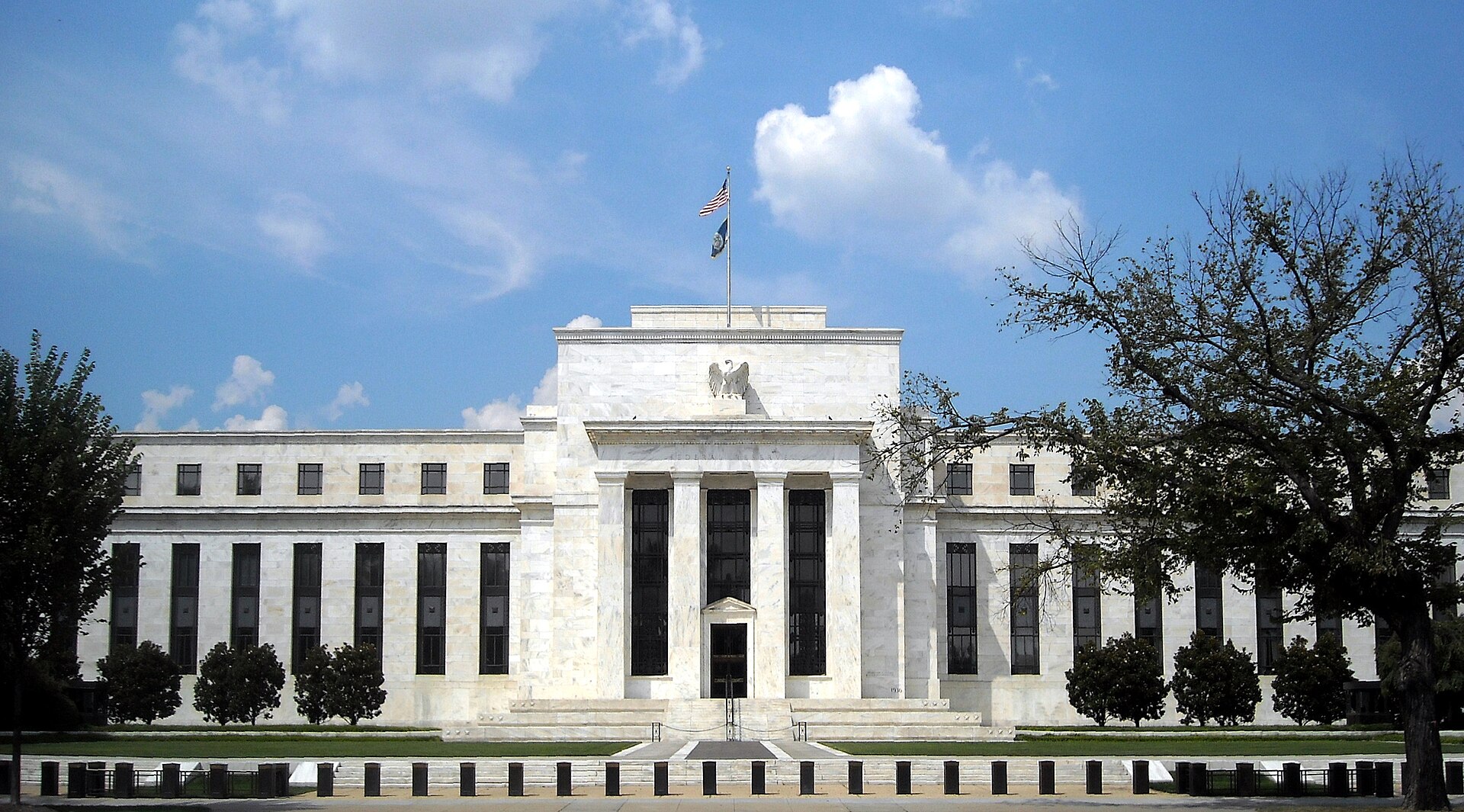
Friday, September 4, 2026, written at 9:20 a.m. Eastern, thirty minutes after the Bureau of Labor Statistics released the August employment report and before the cash open, so every US equity number below is a future and the reaction function described here has an hour left to change its mind. The number that the whole week was built around arrived, it was three times the consensus, and the meeting it was supposed to decide moved by roughly five percentage points.
Top Call: The Labour Market Answered a Question the Fed Is No Longer Asking
August payrolls rose 162,000 against a Dow Jones consensus of 53,000 and a Reuters consensus of 56,000. The unemployment rate held at 4.1%. June was revised up 11,000 to 31,000 and July was revised from a reported loss of 23,000 to a gain of 21,000, putting the two months a combined 55,000 higher. This is the strongest month since March and it demolishes the picture that ADP at 38,000 and Challenger’s quietest August since 2022 painted over the previous two sessions.
And yet average hourly earnings rose 0.3% on the month to $37.75 and only 3.1% over the year, which is the softest wage reading of this cycle. That is the entire story in one release. The Fed under Kevin Warsh is contemplating a hike aimed at inflation, not at overheating employment, and a labour market that hires 162,000 people while paying them 3.1% more than a year ago is not the mechanism by which inflation gets worse. It is the mechanism by which real incomes recover without a wage-price spiral.
The market agrees, which is why September travelled from roughly 50% after Waller’s dovish comments on Thursday to somewhere between 52% and 58% depending on which caliber you take, against 63% before Waller spoke. A three times beat on the headline bought about five points of probability. Hold that next to the fact that Warsh’s Jackson Hole keynote, which contained no data at all, bought more than twenty. This committee is being read as a committee that has already decided what it thinks and is now looking for permission, and today’s report withholds the one variable, wages, that would have supplied it.
The Print in Detail
| Metric | Consensus | Actual | Read |
|---|---|---|---|
| Nonfarm payrolls | 53K (DJ), 56K (Reuters) | 162K | Three times consensus, best since March |
| Unemployment rate | 4.1% | 4.1% | Unchanged, third straight month |
| Avg hourly earnings m/m | +0.3% | +0.3% | In line |
| Avg hourly earnings y/y | about 3.2% | +3.1% | Softest of the cycle, the dovish half |
| June revision | 20K | 31K | +11K |
| July revision | -23K | +21K | +44K, the loss was not a loss |
The revisions deserve more attention than they will get. July was reported four weeks ago as the first outright monthly job loss of the expansion, and that print is what took September hike odds down to the low thirties in early August and set up the entire “the Fed cannot hike into a contracting labour market” argument. July did not contract. It added 21,000. An argument that carried the market for a month was built on a number that no longer exists, which is a useful reminder about how much conviction any single payroll print deserves before its second revision.
The Curve Says This Is About the Meeting, Not the Decade
The reaction across rates is small in absolute terms and very informative in shape. The two-year rose about six basis points to 4.41%. The ten-year rose under two to 4.79%. The thirty-year is roughly unchanged near 5.23%. That is a bear flattening, and it is the exact inverse of what happened on Monday when Japan’s ten-year touched 3.00% for the first time since 1996 and the entire global long end steepened on term premium and fiscal supply.
The distinction matters for positioning. Monday’s move was a repricing of how much investors demand to hold duration in a world issuing $570 billion of AI-related paper into a $40 trillion debt stock. Today’s move is a repricing of one meeting on September 16. The first is structural and does not care what the Fed does. The second unwinds the moment the data turns. Anyone who spent this week arguing the long end was the problem should notice that on the single most important data day of the month, the long end did essentially nothing.
The dollar took the print at face value, adding 0.36% to 99.27 and unwinding part of the yen’s strongest week since July. Gold did the cleanest work of any asset, falling 1.98% to $4,384.91, which is the third time in two weeks that bullion has behaved like a pure real-rate instrument rather than a hedge against anything. Crude went the other way, WTI down 1.54% to $89.89 and Brent easing to around $95, which sits oddly against six Hormuz transits on Wednesday versus a ten-day average near thirteen. The supply side of that market is being repriced by Caracas rather than Tehran, and that is covered below.
The Overnight Scoreboard
| Company | Guide | Tape | |
|---|---|---|---|
| Samsara FQ2 | Rev $508.4M (+30%), ARR $2.125B (+30%), net new ARR $134.1M | FY27 rev $2.043B to $2.047B (+26%), 21% op margin | +15% |
| Zscaler FQ4 | Rev $898.2M (+25%) vs $877M, EPS $1.19 vs $1.09, ARR $3.771B | FY27 ARR $4.40B to $4.43B, rev $3.91B to $3.94B | +4% after hours |
| Guidewire | Beat on the quarter | Q rev $372M to $378M vs $387M consensus | -14.5% pre-market |
| Lululemon FQ2 | Rev $2.4B (-4%) vs $2.46B, comps -9%, Americas -12% | FY26 rev cut to -5% to -7% from flat to -1% | -18% pre-market |
Samsara is the most underrated print of the week. Revenue grew 30% to $508.4 million, ending ARR reached $2.125 billion, and the company added 242 customers above $100,000 of ARR and 20 above $1 million, both quarterly records, with the million-dollar cohort alone now carrying more than $500 million of ARR and growing above 50% for a third consecutive quarter. It also posted a fourth straight quarter of GAAP profitability while guiding to a 21% non-GAAP operating margin. This is physical-world telemetry, fleets and equipment and industrial sensors, and it is compounding at thirty percent with expanding margins while the market obsesses over accelerators. The AI trade has a second floor that almost nobody is standing on.
Zscaler matters for a different reason. In late May this stock fell 31% in a single session, its worst day ever, on what management called prudent guidance alongside a sales reorganisation. Last night it delivered 25% revenue growth, a record 24% adjusted operating margin and fiscal 2027 guidance above the conservative bar that caused the crash. Twenty percent ARR growth excluding the Red Canary contribution is the number to hold, because the headline 25% is partly acquired. The stock added roughly 4% after hours, and one source had it flat, which is a strange muted response to a company that just retired its own bear case. If the market will not pay for a resolved controversy in security software, it tells you where the marginal dollar is going, and it is not going to anything that has already disappointed once.
Lululemon is the counterweight and it is worth one paragraph because it is the clearest consumer datapoint of the week. Revenue fell 4% to $2.4 billion with comparable sales down 9% and the Americas down 12%, accelerating from a 5% decline a year ago. The headline adjusted EPS of $2.92 beat $1.82, but $0.86 of that was tariff refunds, so the operating number was $2.06. Full-year revenue guidance was cut to a decline of 5% to 7% from flat to down 1%, and earnings to $9.48 to $9.73 from $10.95 to $11.15. That is the third cut of 2026. A 12% comp decline in the highest-margin region is share loss, not weather, and it sits uncomfortably beside a 162,000 payroll print. Employment is fine. Discretionary spending on a $120 pair of leggings is not.
Nvidia Buys the Front Door
Nvidia confirmed on Thursday that it is acquiring Hugging Face for about $12.9 billion, roughly $11.9 billion to shareholders and up to $1 billion in retention equity, with closing expected in the first half of 2027 pending regulatory review. It is the second largest acquisition in the company’s history. Hugging Face hosts more than three million models used by over eighteen million developers and more than two hundred thousand companies.
The strategic read is straightforward and the market underreacted, taking Nvidia up about 1%. Nvidia has spent three years selling the picks and shovels while a neutral, open, vendor-agnostic repository sat at the top of the funnel deciding which models developers reached for first. Owning that changes the default. Every model card, every quickstart, every inference example becomes a place where CUDA is the path of least resistance. Nvidia has promised the platform stays open, and it will need to, because the value evaporates the moment developers migrate away. But the same promise was made in most acquisitions of neutral infrastructure, and the regulatory review between now and mid-2027 will turn on exactly that question.
Set this next to Broadcom, which reported one of the strongest quarters of the cycle on Wednesday night, guided fiscal 2028 AI revenue to $230 billion, and fell 3% on Thursday because the October quarter came in $230 million light. Broadcom sells silicon into a demand curve it does not control. Nvidia just bought a piece of the layer that shapes the demand curve. In a market repricing duration, ownership of the choke point is worth more than a longer forecast, and that is the most durable lesson of this week.
Two Chokepoints Closed on the Same Morning
Reuters reported today that a handful of Chinese rare earth suppliers have refused to ship to US customers since early August, when Beijing sanctioned the Responsible Business Alliance, a US supply chain monitor. The refusals appear to be pre-emptive, driven by fear that material could be resold to banned end users, rather than formal policy. MP Materials and Energy Fuels rose about 3% pre-market, USA Rare Earth and Critical Metals about 4%.
Separately, the FCC is drafting an import ban on new Chinese optical transceivers with officials targeting publication before the end of 2026. Chinese suppliers ship roughly sixty percent of global volume. US capacity runs in the hundreds of thousands of units per month against hyperscaler demand for 800G and 1.6T parts measured in millions of units per year, and that gap does not close by the end of next year.
These are two separate stories and they are the same story. Both are Chinese chokepoints on the American AI buildout, both moved on the same morning, and both land three weeks before Xi Jinping visits Washington on September 24. The transceiver item is the one with an identifiable equity consequence, and it arrives forty-eight hours after Ciena reported optical revenue of $1.19 billion, up 46%, with gross margin expanding four and a half points. A Western optical supplier with pricing power in a market where sixty percent of the competing supply is about to be legislated out is a materially better business than it was on Wednesday. The offsetting cost lands on Amazon and Microsoft, who pay more for interconnect and run expensive accelerators at lower utilisation while they wait.
Asia Bought the Dovish Waller, Europe Bought Volkswagen
Tokyo snapped a four-session losing streak with the Nikkei up 1.26% to 64,750, though it still finished the week down 2.08% under the weight of oil and global yields. SoftBank did the heavy lifting with an 11.78% surge to 5,590 yen, with Kioxia up 5.4% and Advantest up 2.5%. Korea followed with the Kospi up 1.64% to 6,687.21 and Hong Kong led the region at plus 1.75%. Mainland China was the exception, the Shanghai Composite slipping 0.30% to 3,930.12 and the Shenzhen Component down 0.79%, with semiconductor names such as NAURA down 3.33% among the worst.
That divergence is worth a sentence. Hong Kong and Tokyo rallied on a dovish Fed governor, which is a liquidity trade. Shanghai fell on its own semiconductor complex, which is a supply chain trade. The two markets are reading different halves of the same US-China relationship, and the rare earth headline suggests Shanghai is reading the more relevant half.
Europe was flat at the index level and busy underneath. Volkswagen’s supervisory board approved the most extensive restructuring in the company’s 89-year history, cutting 50,000 jobs on top of 50,000 already agreed, halving the model line and ending automobile production at Emden, Zwickau, Hannover and Neckarsulm between 2031 and 2034. The stock rose between 5% and 8% by caliber and carried the DAX up 0.44% to 26,118. A company shedding roughly eight percent of its global workforce and being rewarded for it is a fair summary of what European equity investors have wanted from German industry for a decade. The FTSE 100 slipped 0.28% to 10,801.33 with miners lagging, and the Stoxx 600 finished the week down 0.9%. The ECB is expected to raise by 25 basis points next Thursday with market-implied odds near 87%, which makes Europe the one major bloc where the direction of policy is not actually in dispute.
Geopolitics: The Barrels Are Coming From Caracas
The White House and Caracas have now published details of the US-Venezuela oil agreement that Trump announced on August 28 as securing majority US control of more than 65 billion barrels of proven reserves. Under the structure, North American Blue Energy Partners, controlled by Alejandro Betancourt, receives hundred-year concessions on seventeen fields, the Pentagon takes a 35% ownership stake in the company and the State Department obtains a guarantee to purchase 20% of output at cost, against a target of up to $100 billion of investment. Chevron said on September 2 that its Venezuelan ventures intend to invest more than $7 billion over five years and lift production toward 600,000 barrels per day.
This is the missing variable in the crude tape. Brent has spent three weeks trading a Hormuz risk premium, and transits remain depressed at six vessels on Wednesday against a ten-day average near thirteen, with Trump saying the renewed Iran campaign will not last long and Syria openly positioning itself as a bypass route. Yet WTI is under $90 and falling. A twenty-five year, hemispheric supply arrangement with a Pentagon equity stake attached is a structural answer to a tactical disruption, and the market is beginning to price the answer rather than the disruption. That said, 600,000 barrels per day is five years away and Hormuz moves seventeen million barrels a day today, so anyone treating this as a resolution is confusing a direction with a magnitude.
Key Events Ahead
| When | Event | Why it matters |
|---|---|---|
| Today, 10:00am | Post-payroll Fed speakers | Watch whether anyone endorses Waller’s hold after a 162K print |
| Thu Sep 10 | ECB decision | 25bp hike priced at about 87%, the one certain central bank |
| Fri Sep 11 | August CPI | The number that actually decides September now that wages cooled |
| Sep 15-16 | FOMC with new projections | 52% to 58% priced, and the dot plot matters more than the decision |
| Sep 18 | Bank of Japan | 25bp broadly priced, the funding channel behind the global long end |
| Sep 24 | Xi in Washington | Rare earths and optical transceivers are now both on the agenda |
Accountability
Yesterday’s note argued that two thirds odds on a September hike looked high against a labour market that had stopped both hiring and firing. The odds were already down near 50% by the time that published, thanks to Waller, and the frozen labour market half of the argument was wrong outright: 162,000 jobs with July revised from a loss to a gain is not a frozen market. The conclusion survived for the wrong reason. The correct version is narrower and I will hold it: the case for a September hike rests on inflation, wages decelerated to 3.1%, and next Friday’s CPI is now the only release between here and the meeting that can settle it.
The note also flagged Zscaler’s fiscal 2027 guide as the line carrying information into last night. It was, the guide came in above the conservative bar, and the stock moved roughly 4%. Identifying the right line and getting a muted reaction is becoming the pattern of this week, and the pattern itself is the signal: this tape is paying for revenue it can see this quarter and discounting almost everything else.