Saturday, September 5, 2026, written after Friday’s close, so every level below is a settlement rather than a moving mark and nothing reprices until Sunday night. OPEC+ meets tomorrow, the Federal Reserve’s blackout period begins today, and the week that just ended moved the S&P 500 by one tenth of one percent. That flat line is the least informative number in this note.
Top Call: The Oil Price Became the Policy Variable
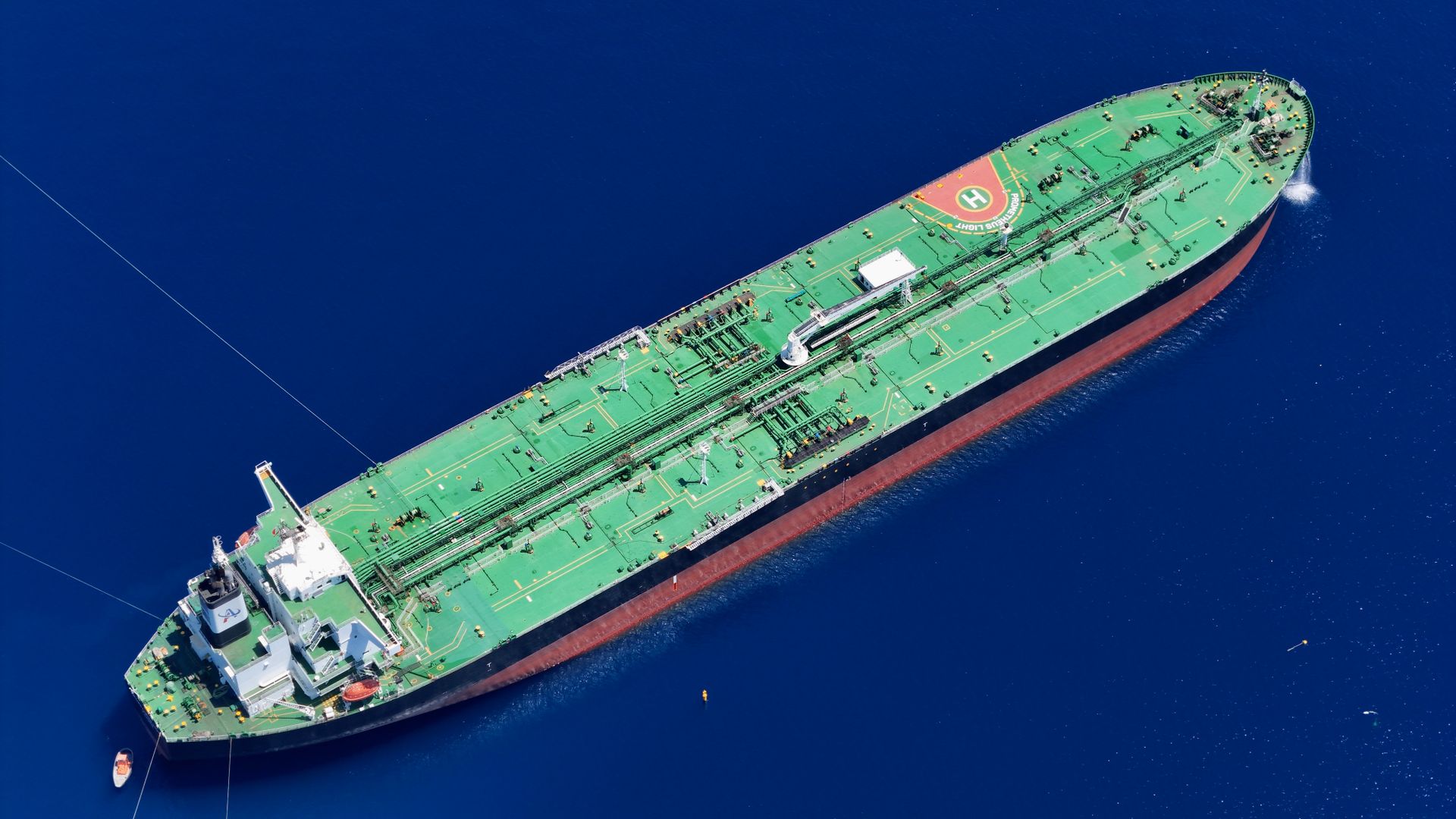
Crude added 9.5% on the week because the Strait of Hormuz is running six to eight transits a day against a baseline of eighty five, and a VLCC passage now costs twenty million dollars. That is no longer a geopolitical headline sitting on top of the macro. It is the macro. Euro area inflation printed 3.3% in August with the energy component at 14.3%, the ECB is a near certainty to hike on Thursday, and the Federal Reserve goes silent today with payrolls at 162,000 having removed the labour market as an objection.
The stock impact is not in the index level, which did nothing. It is in the composition. Friday saw SanDisk gain 11.9%, Micron 6.1%, Marvell 7% and AMD 4.7% while Apple fell 2.55%, Alphabet 2.10% and Microsoft 2.05%. Rising real rates compress the platform multiple and pay the physically scarce link. We stay with memory, storage and optical over the megacap platform layer into a September 16 meeting that is now more likely than not to deliver a hike.
The Strait Is the Story
The numbers here are worse than the price implies. PortWatch recorded six transits on August 30 against a normal day of eighty five. Early September counts have run around eight. War risk claims across the affected corridors have passed two billion dollars, and Iraq has been reduced to searching for tankers willing to run the strait at all, which tells you more about commercial behaviour than any freight index does. The escalation ladder moved again this week: the United States struck two Iranian government tankers in their engine rooms on September 2, and Iran answered on September 3 with roughly twenty five ballistic missiles and drones aimed at bases in Bahrain, Kuwait and Erbil.
WTI settled at $91.31 to $91.48 depending on caliber, up 9.5% on the week and the strongest weekly move since mid-July. Brent settled around $96.28 after touching $97.36 intraday, up roughly eight percent. The detail worth holding is the spread. Brent’s premium over WTI narrowed from about $6.14 to roughly $4.97 across the week, which means American crude outperformed the seaborne benchmark during a Persian Gulf supply event. That is backwards on the standard template, and the explanation is that the disruption is now severe enough to be priced as a global barrel shortage rather than as a regional risk premium.
OPEC+ meets Sunday and the base case from delegates is that October quotas are held flat, having completed the rollback of the 1.65 million barrel per day voluntary cut with a 188,000 barrel September increase. A hold is the wrong-footed outcome here. The group finished restoring supply into a market that has since lost its most important transit corridor, so it enters the fourth quarter with essentially no spare policy lever left to deploy against a physical shortage it did not cause.
The Fed Goes Dark With the Labour Question Answered
August payrolls at 162,000 against a 53,000 consensus is the headline, but the number that matters is the comparison to the trailing twelve month average of 31,000. This was not a beat, it was a regime change in a single print, and June and July were revised up a combined 55,000 on top of it. September hike odds moved from roughly 51% to between 58% and 65% depending on which venue you take.
The blackout period begins today. Between now and the September 16 decision the committee will receive exactly two pieces of information: producer prices on Thursday and consumer prices on Friday. That is the entire remaining input set, and here is the part the market is not discussing. Friday’s CPI covers August. The 9.5% crude move happened in September. The gasoline and energy services pass-through from a closed strait cannot appear in the print that decides this meeting. The Fed will therefore vote on August data while the actual inflation impulse is running in real time in front of it, and a committee under Kevin Warsh that has spent a month signalling it wants to move on inflation is unlikely to treat that asymmetry as a reason to wait.
Two counterweights are worth respecting. Average hourly earnings rose only 3.1% over the year, the softest of the cycle, so there is no wage channel to point at. And the Chicago Business Barometer collapsed 10.5 points to 47.1, its first sub-50 reading since April, with new orders down 15.4 points and production contracting for the first time since December. That is a genuine crack in the activity data, and it is the reason this is a 60% probability rather than a 90% one.
The Curve Refused to Panic
| Tenor | Friday | Week | Read |
|---|---|---|---|
| 2Y | 4.39% | +4bp | Did the work Friday, meeting risk |
| 10Y | 4.78% | +6bp | Led the week, the real rate leg |
| 30Y | 5.25% | -1bp Fri, +4bp wk | Refused to price an oil shock |
| DXY | 99.16 | -0.5% | Fell in a week hike odds rose |
Friday was another bear flattening, the two year up four to five basis points while the thirty year eased a basis point. Across the week the ten year led with six basis points. Neither pattern is what a 9.5% crude week normally produces. A genuine energy shock steepens the long end, because it lifts expected inflation over horizons no committee can control. The thirty year instead did essentially nothing and the dollar fell half a percent in a week when September hike odds rose by roughly ten points.
Read that combination carefully. The long end is telling you it believes this Fed will handle an energy shock rather than accommodate one, which is a credibility statement, and it is the strongest evidence yet that Warsh’s Jackson Hole positioning worked. The dollar’s decline against that is the awkward part of the picture and the one we would want to see resolved: a currency that will not rally on a hawkish repricing is a currency where something other than rate differentials is setting the price.
The Rotation Inside the AI Trade
This is the week’s most actionable observation and it is completely invisible in the index. On Friday only three sectors advanced, technology up 0.44%, industrials up 0.22% and utilities up 0.12%. Underneath that, the dispersion was extraordinary.
| Friday | Move | What it is |
|---|---|---|
| SanDisk | +11.9% | NAND, sold out capacity |
| Marvell | +7.0% | Custom silicon, optical |
| Micron | +6.1% | HBM, the AI bottleneck |
| AMD, Intel | +4.7%, +4.5% | Physical semis broadly |
| Nvidia | +0.8% | Already owns the narrative |
| Apple | -2.55% | Platform layer |
| Alphabet | -2.10% | Platform layer |
| Microsoft | -2.05% | Platform layer |
Semiconductor and memory names ripped while the three largest platform companies in the world all fell more than two percent on the same session. The DRAM ETF gained 6.5% and SOXX added 3.5%. This is not risk on or risk off. It is capital moving down a layer, out of businesses whose AI value is optionality priced over a decade and into businesses whose AI value is a shortage priced this quarter.
The mechanism is the discount rate. When the ten year sits at 4.78% and the thirty year at 5.25%, a platform multiple built on terminal value gets marked down arithmetically, while a memory maker with sold out capacity and rising contract prices gets marked up on cash flows arriving inside eighteen months. It fits everything this cycle has been telling us for two weeks. Ciena’s optical revenue grew 46% with four and a half points of gross margin expansion. Dell exited its quarter with a $95.0 billion backlog. Broadcom put fiscal 2028 AI revenue at $230 billion and was still sold for a $230 million quarterly shortfall. The market has stopped paying for the AI story and started paying only for the parts of it that are physically constrained.
Shipping stocks reaching fifty two week highs on the same session is the same trade wearing a different jacket. Scarcity of hulls, scarcity of high bandwidth memory, scarcity of transit capacity. All three are being bid, and none of them are narratives.
The Demand Side Has a Number Now
Anthropic signed a $35 billion, six year cloud agreement with Nvidia-backed Lambda this week, with Hut 8 developing the Nueces County, Texas facility at roughly 350MW and Nvidia holding the lease. That brings the company to roughly $175 billion of cloud commitments in recent months, alongside $50 billion with Fluidstack, $45 billion with Nscale in West Virginia and $45 billion with SpaceX.
Two things follow. First, this is the demand curve that justifies Micron’s sold out position, and it is being signed by a private company rather than by a hyperscaler with a public balance sheet, which is exactly the financing composition risk we have flagged since Broadcom’s guide. Second, $45 billion of it went to SpaceX, which means AI compute procurement is now a direct funding source for the launch industry. Starship Flight 14 is scheduled no earlier than September 15 and would be the first Starship attempt to reach orbit, following a 33 engine static fire of Booster 21 on August 28. A successful orbital flight inside the same week as the FOMC would be the cheapest large catalyst on the calendar.
Earnings That Mattered, and What They Say
Two prints this week were about companies rather than about AI, and both were ugly in instructive ways.
| Company | Result | Reaction |
|---|---|---|
| Lululemon | Rev $2.42B, -4% y/y, missed | -17% to an 8-year low, under $100 |
| Guidewire | Soft revenue guide | -20% |
| Adobe | New CEO named pre-earnings | -6.5%, reports Sept 10 |
| Fair Isaac | FHFA pricing criticism, VantageScore | -17% |
| Tesla | NHTSA opens Cybercab probe | -5.9% |
Lululemon cut full year revenue guidance to $10.35 to $10.50 billion from $11.00 to $11.15 billion and EPS to $9.48 to $9.73 from $10.95 to $11.15. That is the third cut since March, each one following a quarter that beat on earnings and missed on sales, which is the classic signature of a company defending margin by under-shipping into weakening demand. Incoming CEO Heidi O’Neill, formerly of Nike, starts Monday. Our take is that the guidance is now finally low enough to be beatable and the stock is at an eight year low, but a brand problem in athletic apparel takes three to four quarters to diagnose and longer to fix, and there is no reason to be early.
Adobe is the more interesting one. Naming Anil Chakravarthy as CEO effective December 1 to replace Shantanu Narayen, while simultaneously disclosing that David Wadhwani is leaving, took the stock down 6.5%. Wadhwani ran the creative business, which is roughly three quarters of revenue. Announcing a succession one week before a fiscal Q3 print is not a decision a confident board makes on its own schedule. Adobe reports Thursday and the market is going to treat that call as a referendum on whether generative tools are taking the creative franchise, which is precisely the question a new CEO from the digital experience side is least equipped to answer in his first public appearance.
The Fair Isaac decline is worth flagging as a category. A 17% single day loss driven by a regulator criticising pricing and approving an alternative product is the same policy risk that hit the rare earth and optical transceiver supply chains earlier this week. Regulatory intervention is currently a larger source of single stock variance than earnings are.
Asia and Europe
Asia finished Friday strong on a misread. Regional markets rallied because Governor Waller’s dovish Thursday comments were taken as reducing September risk, and then the payrolls report landed after Asia had closed. The Nikkei gained 1.26% to 65,021 but still lost 2.1% on the week, the Hang Seng added 1.74% to 25,650.87 for a small weekly gain, and Shanghai eased 0.30% to 3,930.12 and 0.6% on the week. Tokyo has now given back a meaningful part of its August advance with a Bank of Japan meeting on September 18 carrying a broadly priced hike.
Europe is the cleaner read because the energy channel is direct. Euro area headline inflation rose to 3.3% in August from 2.9% in July, the highest since September 2024, with energy inflation accelerating to 14.3% from 10.3%. That acceleration is a Hormuz number arriving in a CPI basket. Markets price a 25 basis point ECB hike to 2.50% at roughly 99% on Thursday, the second of a cycle that began on June 11. Friday’s session was flat at the index level with ASML up 1.5% and Infineon up 2.2%, and Volkswagen led the Stoxx 600 with a gain above 8% after a turnaround agreement that averted escalation with its unions.
Geopolitical Risks
The Hormuz campaign is now in its second week of direct tanker-on-tanker exchange and the corridor is functionally closed to commercial traffic. Iranian retaliation has expanded to Kuwait, Bahrain, the UAE and Erbil without yet hitting a facility housing American forces, which is the deliberate calibration that has kept this from becoming a general war. That calibration is the entire risk. It works until a single strike lands badly.
Venezuela remains the structural counterweight we described yesterday, with the Pentagon holding a 35% stake in NABEP and Chevron targeting 600,000 barrels per day over five years. Nothing about that changed this week and nothing about it helps this quarter. On China, the rare earth shipment refusals and the drafted FCC ban on Chinese optical transceivers both remain live into Xi’s Washington visit later this month, and both sit directly on the supply chain that memory and optical investors just bid up.
Key Events, September 6 to September 16
| When | Event | Why it matters |
|---|---|---|
| Sun Sep 6 | OPEC+ | October quotas, base case is a hold into a shortage |
| Today | Fed blackout begins | No official commentary until the decision |
| Thu Sep 10 | PPI, ECB, Oracle, Adobe | Four events, and Oracle’s RPO is the AI capex read |
| Fri Sep 11 | August CPI | Decides the meeting, but predates the oil move |
| Tue Sep 15 | Starship Flight 14 | First orbital attempt, NET |
| Sep 15-16 | FOMC with projections | 58% to 65% priced, dots matter more than the move |
Oracle on Thursday is the single most important corporate print of the coming week and it is being underweighted. Consensus sits near $19.13 billion of revenue and $1.30 of GAAP EPS, but the line that moves everything is remaining performance obligations, which stood at $455 billion and up 359% last quarter with management guiding toward half a trillion. RPO above $500 billion validates the entire memory and optical bid described above. RPO that stalls does the opposite, and it would do so on the same day the ECB hikes and PPI prints.
Accountability
Yesterday’s note argued that the marginal barrel was being priced out of Caracas rather than Tehran, and used WTI under $90 as the evidence. That was wrong within one session. WTI closed above $91 and the week finished up 9.5%. The error was one of magnitude and timing rather than of direction: a twenty five year Venezuelan arrangement targeting 600,000 barrels per day is genuinely structural, but a strait running six transits against a baseline of eighty five is a physical shortage happening now, and we let a five year supply story colour a same week price call. Physical availability beats contracted future supply every time. Booked and corrected.
The note also said that Friday’s CPI would be the only release between there and the meeting capable of settling September. That holds, with PPI on Thursday added, and we would now sharpen it further: because August CPI predates the crude move, the release most likely to settle September is the one the committee will not have.