Wednesday, September 9, 2026, written at 8:30 a.m. Eastern, an hour before the open. Brent traded through $100 overnight for the first time since late July. Everything below is a pre-open mark and the 10-year auction at 1:00 p.m. is the first real vote on any of it.
Top Call: The Oil Trade Stopped Being a Rotation
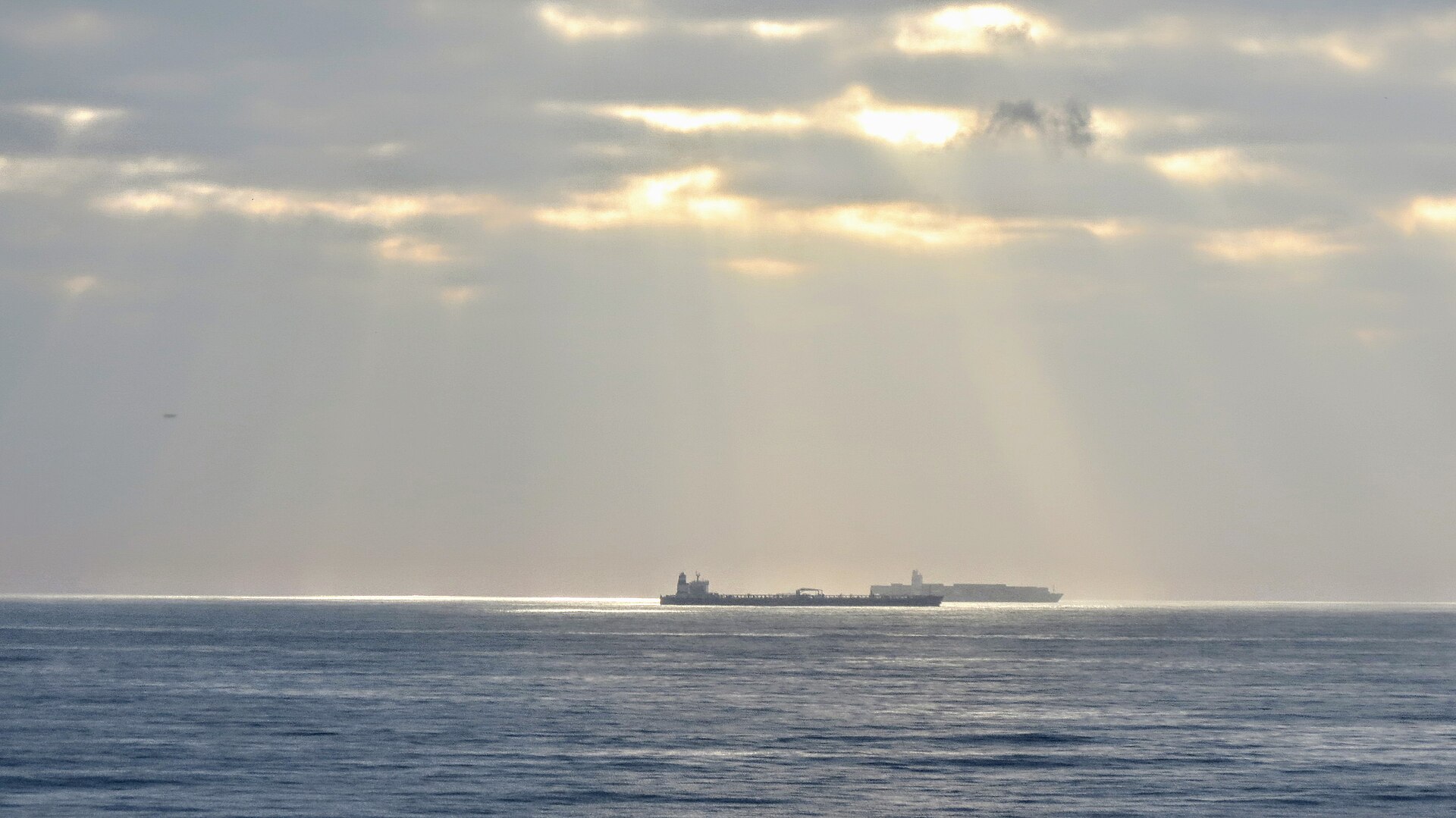
CENTCOM destroyed five more Iranian crude carriers overnight, four in the Gulf of Oman and one near Kharg Island. That is eight tankers in four days. Iran answered by attacking roughly ten ships near the Strait of Hormuz and firing about twenty ballistic missiles at the Al-Azraq air base in Jordan, of which Jordanian forces intercepted eighteen. Brent cleared $100 and WTI added 3% to roughly $95.50.
The market reaction is the part worth paying for. For two weeks an oil headline produced dispersion: Dow futures down, Nasdaq futures green, capital rotating out of things that move atoms and into things that sell scarce chips. This morning all four boards are down between 0.33% and 0.56%, and the Nasdaq is not the exception. That is the signal. When crude is a sector story it hits margins; when crude is a rate story it hits the discount rate, and the most rate sensitive thing in the index is the long duration growth complex that has been treated as exempt. We think the exemption ended overnight and we would stop treating semiconductor and software exposure as a hedge against the energy shock.
A Blockade, Not a Retaliation
The framing everyone is using is retaliation. CENTCOM says the strikes answered two IRGC attempts on a US warship in two days, and Secretary Rubio put it plainly: every time they try that, they lose tankers. But look at what is actually being destroyed, because the target selection is the whole analysis.
Eight ships in four days, with crews warned off before the strikes, and Kharg Island itself still standing. The United States is systematically deleting Iran’s ability to move crude while leaving Iran’s ability to produce crude untouched. That is an economic strangulation campaign wearing the clothes of tit for tat, and it has a very different price signature from the alternative. A struck refinery is a magnitude question: barrels come off, engineers assess, capacity returns on a schedule. A destroyed export fleet is a duration question: the barrels sit in storage and come back the day the political will ends, which nobody can date.
So the correct way to price this is not to argue about how many Iranian barrels are gone this week. It is to ask how long a policy of sinking one tanker per attempt can run before either Iran stops attempting or the fleet stops existing. Neither of those has a near term resolution, and that is why we think a crude price that has now made a two-month high is more likely to be the floor of a range than the top of a spike.
Jordan Is the Escalation That Matters
The tanker arithmetic is the loud story. Al-Azraq is the important one.
Until last night the conflict had two theatres, both of them about oil: the strait, and Saudi energy infrastructure on the Red Sea flank after Tuesday’s Houthi strikes on Jizan, Abha and Najran wounded 73 and halted operations at some facilities. Firing twenty ballistic missiles at an air base in Jordan adds a third, and Jordan produces no oil at all. It is a US aligned Arab state, it hosts American aircraft, and it is not a party to the barrel dispute in any direct way.
This is horizontal escalation rather than vertical escalation, and horizontal is the more dangerous kind. Vertical escalation, which is what the past six weeks delivered, means bigger targets inside the same fight, and it is legible: everyone can see the ladder and count the rungs. Horizontal escalation means more countries, and it converts a bilateral confrontation into a regional one in which the participants no longer share a single scoreboard. Jordan intercepting 18 of 20 is the good news and it is thin comfort, because the interception rate is a capability statement about one night, not a policy.
The immediate casualty is the diplomacy. Twenty four hours ago Iran was describing an Oman brokered deal on managing Hormuz shipping as days away, complete with maps, a temporary safe corridor and a maritime exclusion zone. We wrote yesterday that the corridor would be bearish for crude in the narrow sense and bullish for Iranian leverage in every other sense. That trade is now much less likely to be available at all. You do not sign a shipping accord in the same week you put missiles into a neighbour’s air base and the counterparty sinks five of your ships.
The Fed Is the Transmission, and 1:00 p.m. Is the Test
Here is the chain that matters for anyone who owns equities rather than energy. Brent through $100 goes into headline inflation, headline inflation goes into Friday’s August CPI and then more forcefully into September’s, and the Federal Reserve votes on September 16 with roughly 60% priced for a 25 basis point hike. The two year is already at its highest since late July. The ten year sits at 4.808%.
The asymmetry we flagged last week is still the cleanest thing in this market and it got worse overnight. Friday’s CPI covers August. The move from $90 to $100 happened in September. The committee will vote on a number that structurally cannot contain the impulse running in front of it, which means the dot plot and the statement carry far more information than the decision itself.
The live test today is the Treasury’s ten year auction at 1:00 p.m., the first duration sale since crude broke a hundred and two days before the thirty year comes on Thursday. A soft tail here, with a long end that has spent three weeks refusing to steepen on oil, would tell you the bond market has stopped treating this Fed’s inflation credibility as a given. We would watch the auction more closely than the equity tape today.
Europe gets there first. The ECB decides Thursday with a hike to 2.50% near fully priced, into an August inflation print of 3.3% whose energy component was already running at 14.3% before this leg. European shares are lower this morning, the Stoxx 600 down 0.4% to 646.84 with the DAX off about 0.5%, the CAC 0.6% and the FTSE 0.2%, and energy is the only sector up, near 1%. Asia was quieter than any of it, the Nikkei slipping about a quarter of a percent to roughly 65,100 with the yen giving back some of Monday’s move to 153.58, Hong Kong down 42 points and Shanghai up 10.
Apple Opens the Ternus Era at 1:00 p.m.
John Ternus took over from Tim Cook on September 1 and takes the stage this afternoon for the “Surprise and Shine” event, with the first foldable iPhone expected at a price that could clear $2,000, alongside the iPhone 18 Pro and a refreshed Watch line.
Two things about the setup deserve saying. The first is that Apple has quietly been the funding source for the AI hardware trade all quarter. On the sessions when SanDisk and Micron ripped, Apple, Alphabet and Microsoft were down two percent together, which is capital leaving businesses whose AI value is optionality discounted over a decade and entering businesses whose AI value is a shortage priced this quarter. A launch event does not reverse that, and a foldable is an average selling price story rather than a unit story, which is the harder kind of story to tell into a consumer that just watched gasoline reprice.
The second is that this is a new chief executive’s first public appearance in the role, which makes the event partly about narrative control. Apple’s problem for two years has not been hardware, it has been the absence of a credible answer on where its own artificial intelligence stack goes. Product cadence is the thing Ternus can control immediately, and the reported run of new form factors through 2027 is the argument he will make. Whether the market grades it as an answer or as a change of subject is the thing to watch this afternoon, not the hinge.
Overnight and Pre-Market Developments
- Energy: Brent above $100 and WTI up 3% to roughly $95.50. War risk premiums on hulls are running between 3% and 10% of value against 0.25% before the war, and Hormuz transits are in single digits against a normal eighty five a day. Aramco has still not quantified the Jizan outage, which is a 400,000 barrel a day refinery.
- Rates and the dollar: two year at its highest since late July, ten year 4.808%, thirty year near 5.27%, dollar around 99 with the yen back out to 153.58. Gold is flat at about $4,440, which is a war headline producing no bid at all in the classic hedge, and Bitcoin is up 2.07% at roughly $79,500.
- Technology: the Goldman Sachs Communacopia and Technology Conference runs today with Nvidia, Salesforce and Palo Alto presenting, and it is the near term catalyst for the memory complex. SanDisk is still up about 575% year to date, Micron 240%, Seagate 210% and Western Digital more than 170%, yet all four sit roughly 20% to 40% below their late June peaks. Google committed 13 billion euros to artificial intelligence infrastructure in Finland. Meta says Threads has passed 500 million monthly users.
- Trade: Canadian retaliatory duties now reach 50% on roughly 700 American goods, and Washington has answered with plans to bar Canadian dairy and alcoholic beverages. There is still no scheduled off ramp.
- Financials and deals: Chime is buying Stride Bank for $590 million, Visa is partnering with the World Bank on digital payments, and PayTabs is acquiring Amazon Payment Services in the Middle East and North Africa for about $100 million. Lyft and Waymo widened their autonomous vehicle partnership into Nashville.
- Ratings: Morgan Stanley cut Peloton to underweight on structural headwinds and the stock fell 5%. Redburn moved Moderna to sell on valuation. Canaccord took UiPath to hold on competition.
Earnings That Matter
GameStop reported after Tuesday’s close and beat where nobody was looking. Revenue of $790.2 million came in ahead of the $756.85 million consensus even though it fell about 19% year on year, and collectibles carried the top line. Net income of $298.7 million and GAAP earnings of $0.51 were flattered by the eBay position; adjusted earnings of $0.27 were in line. Management raised the full year outlook. The stock slipped about 0.8% after hours to $18.75.
| Metric | Consensus | Actual | Beat/Miss |
|---|---|---|---|
| Revenue | $756.85m | $790.2m | Beat, down 19% y/y |
| Adjusted EPS | $0.27 | $0.27 | In line |
| Net income | n/a | $298.7m | Up from $168.6m |
| Guidance | n/a | Full year raised | Positive |
Our take: the operating business is still shrinking by a fifth against the Switch 2 comparison, store closures and the France divestiture, so the revenue beat is a beat on a low bar rather than evidence of a turn. What did change is the mix. Collectibles growing while hardware shrinks is the first credible argument in years that there is a business here rather than a balance sheet, and the raised outlook says management believes it. We would still value this as a holding entity with a $4.95 billion eBay stake attached to a retail footprint, but the discount you apply to the retail half is smaller this morning than it was yesterday.
Chewy reported before the open at $3.33 billion of revenue, up 7.3% and marginally ahead of the $3.32 billion consensus, with adjusted earnings of $0.36 in line and net income of $80.5 million. The company lifted its fiscal 2027 revenue range to $13.46 billion to $13.57 billion.
| Metric | Consensus | Actual | Beat/Miss |
|---|---|---|---|
| Revenue | $3.32bn | $3.33bn | Slight beat, +7.3% y/y |
| Adjusted EPS | $0.36 | $0.36 | In line |
| Guidance | n/a | FY27 raised to $13.46-13.57bn | Positive |
Our take: an in line quarter with raised guidance from a stock down roughly 30% year to date is a better setup than it sounds, because the bar has already been reset by the tape. Seven percent growth on a subscription heavy base is not a growth story any more, it is a cash conversion story, and the guidance raise matters more than the print. The risk is that consumer discretionary spending on premium pet categories is exactly what a $100 barrel taxes with a two quarter lag.
Elsewhere, Casey’s beat cleanly with earnings of $7.37 against $6.82 expected and same store sales up 3.2%, which is a useful read on the American consumer at the fuel pump right as fuel becomes the story. AeroVironment reports after the close and is the print of the day for anyone positioned in the current market scheme, because it sits directly at the intersection of unmanned systems and a Middle East conflict that has now produced tanker strikes, drone attacks on Saudi energy sites and ballistic missile intercepts in Jordan inside one week. American Eagle also reports post close.
Oracle on Thursday remains the print of the week. Consensus sits near $19.13 billion of revenue and $1.74 of earnings, and neither line will set the stock. Remaining performance obligations closed fiscal 2026 at $638 billion, and the questions are whether that clears $700 billion and whether cloud infrastructure growth holds anywhere near the 93% bar set last quarter. The tension is entirely in the funding, because record operating cash flow of $32 billion was fully consumed by data centre construction and free cash flow was negative $23.7 billion, with roughly $40 billion of debt and equity to be raised this year into a ten year at 4.808%. Options imply an 11% move. A market that prices that much uncertainty into a company with a backlog this size has already decided the financing question is harder than the demand question, and we agree.
Key Events Today
| When | Event | What matters |
|---|---|---|
| 7:00am | MBA mortgage applications | Mortgage rates against a 4.81% ten year |
| 1:00pm | Treasury sells 10-year notes | First duration test since Brent cleared $100 |
| 1:00pm | Apple event, Ternus debut | Foldable pricing, and the AI answer |
| All day | Goldman Communacopia, San Francisco | Nvidia, Salesforce, Palo Alto presenting |
| Post close | AeroVironment, American Eagle | Unmanned systems into a widening conflict |
| Thu 8:30am | August PPI, jobless claims | Pipeline read ahead of Friday |
| Thu | ECB decision | Hike to 2.50% near fully priced |
| Thu post close | Oracle, Adobe | RPO past $700bn, and the funding gap |
| Fri 8:30am | August CPI | Cannot contain the September oil impulse |
| Sep 15 to 16 | FOMC with dot plot | About 60% priced, dots carry more |
Geopolitical Risks
The conflict now runs on three fronts. The first is the strait, where Iran has closed normal commercial traffic, declared restricted maritime zones and attacked roughly ten vessels overnight, while the United States enforces a blockade on Iranian ports. The second is Saudi energy infrastructure on the Red Sea flank, where the Houthis have declared a campaign rather than a retaliation and Aramco has still not quantified Tuesday’s damage. Silence from Aramco past today would tell you more than a number. The third, and new as of last night, is Jordan.
Watch three things this week. Whether Washington accepts or kills the Oman corridor framework, which we now think is unlikely to survive the Jordan strike. Whether any Gulf state other than Saudi Arabia takes a hit, because that is the trigger that moves the risk from transit to production across the whole peninsula. And whether Aramco puts a barrel number on Jizan.
Away from the Gulf, the Canada and United States tariff exchange has moved from negotiation to escalation with no visible off ramp and now touches consumer staples in both directions. Germany’s political situation still sits under the European fiscal question with two more state votes this month and a bond market that has not yet asked about it. China and Taiwan are unchanged, with rare earth shipment refusals and the drafted ban on Chinese optical transceivers still open ahead of Xi’s Washington visit.
Accountability
Yesterday we wrote that $100 Brent belonged in the reference case into September 16 rather than in the tail. It printed inside twenty four hours, which is faster than we meant and we will not pretend otherwise: being directionally right on a timeline you did not specify is luck sitting next to judgment, and the honest version is that we expected the level, not the date.
We also owe a correction of framing. For two weeks we have described the futures board dispersion, the Dow taking tariffs and oil while the Nasdaq stayed green, as the structural feature of this tape. That framing had a one day shelf life. This morning the Nasdaq is down half a percent with everything else, and the reason is that the transmission channel changed from margins to rates. We were describing a real phenomenon with the wrong half life, and anyone who used it as a hedging rule rather than as an observation is worse off today. The layered rotation is still real as a multi month capital flow. It is not a shelter on a day when oil moves the front end of the curve.
One thing we got right and want on the record while it is still uncomfortable: we said Monday that pricing this conflict as a slow physical drain was rational only while the escalation ladder stayed calibrated. Eight tankers and a missile strike on Jordan in four days is not a calibrated ladder.
Everything above is a pre-open mark on a morning where the cash tape has not yet spoken. A market absorbing a hundred dollar barrel, a widened war and a ten year auction in the same session should be expected to be wide before it is orderly.