Saturday, September 19, 2026, written at 9:30 a.m. Eastern. This is a weekend wrap covering the week to Friday’s close. US markets are shut, every figure below is settled rather than indicative, and the Xi visit to Washington is five days away.
Top Call: The Barrel Stopped Being the Story and the Refinery Became It
Brent fell 0.91% on Friday to $103.87 and WTI fell 1.58% to $100.30. On the same day the national average price of diesel printed a record $6.29 a gallon, up roughly 68% on the year. Those two facts sit in the same energy complex and they point in opposite directions, and the second one is the one that reaches the inflation data.
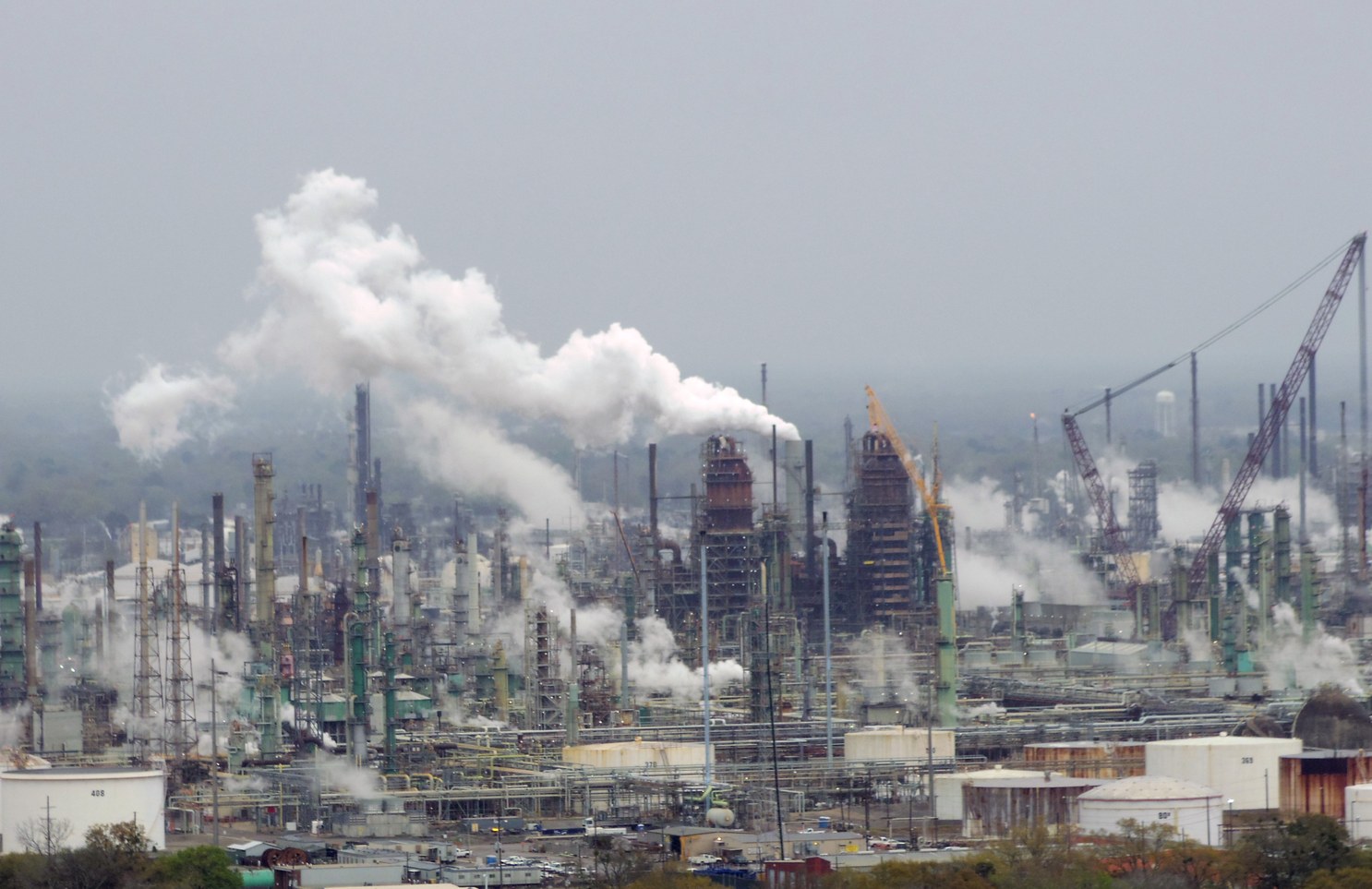
The reason is the crack. The diesel crack spread closed at a record $103.29 a barrel on September 1, touched $108.02 intraday the next day, and set another record close at $107.72 on September 10. Refining is the binding constraint, not extraction. Three shocks are stacked on the same barrel of distillate: the Hormuz campaign has cut Gulf product exports to a fraction of their pre-war run rate, Ukraine struck Russian refineries at least twenty one times in August alone and has taken out more than thirty percent of Russia’s working refining capacity, and Moscow responded by banning diesel exports, a ban first extended to September 30 and since pushed toward the end of October. Russia supplied roughly a tenth of world diesel before this began. That supply is not coming back inside the forecast horizon.
Into that, on Friday the president signed the Lindsey O. Graham Sanctioning Russia and Iran Act of 2026 into law. It expands sanctions on Russian energy, defence and the shadow tanker fleet, extends the Iran sanctions regime, and authorises tariffs against the largest buyers of Russian energy. We flagged this bill on Friday morning as the largest development of the week that nobody had marked. It is now law, and the point worth holding is narrow rather than dramatic: the two largest pools of distillate that could plausibly have loosened a record crack are Russian and Iranian, and the United States has just made both legally harder to touch. The Committee is tightening against a headline inflation rate that runs about a hundred basis points above core, and essentially all of that wedge is energy. Watching the flat price to judge that wedge has become the wrong instrument. Watch the crack.
The Tape: An Expiry Produced Nothing, Which Is Itself Information
Friday was a quarterly expiry and the index went almost nowhere. The S&P 500 added 0.16% to 7,650.50, the Nasdaq Composite added 0.39% to 26,522.55, the Dow lost 97.30 points or 0.19% to 51,682.64, and the Russell 2000 fell 0.50% to 2,860. Volumes ran well above normal because index options, index futures and single stock options all settled. Price did not.
The volatility index is the part that deserves attention. It was 17.10 on Friday morning and closed at 14.81. A VIX that falls more than two points through the single largest settlement day of the quarter, in a week containing a Federal Reserve hike, a Bank of Japan hike and a Bank of England vote with three dissents, is a market telling you it has run out of things it is willing to pay to hedge. We do not read that as complacency in the lazy sense. We read it as the options market having correctly observed that every one of this week’s scheduled events resolved without a gap, and having no calendar item left before the flash purchasing managers’ surveys on Wednesday.
Underneath the flat index, dispersion did all the work. Chipmakers rallied and carried the Nasdaq. Small caps, industrials and consumer discretionary have now fallen for five consecutive weeks. On the week the S&P lost 0.80%, the Nasdaq finished higher, and the Dow lost more than 1.5% for its worst week since March. That is not an index moving sideways. It is two markets, one of which is levered to an order book that extends past the policy rate and one of which is not, and the second of which has been losing for over a month while the headline concealed it.
Rates: The Curve Did the Right Thing All Week
The two year closed at 4.741% after five basis points on Friday and ten on the week. The ten year closed at 4.995% after six on the day and a little over two on the week, having traded through 5.004% intraday. The thirty year closed at 5.327%, three higher on Friday but nearly three lower on the week.
That shape is the single most constructive thing on this page. A week in which the front end added ten basis points and the long end gave back three is a bear flattening of roughly thirteen, and a bear flattening prices more policy rather than more compensation for holding duration. The long end has spent a month selling off on term premium, on fiscal supply and on an energy line the market did not believe would be contained. In the week the Committee actually moved and told the market it expected to move again, the long end rallied. Kevin Warsh will care more about that than about the twenty five basis points he delivered, because it is the market conceding that this Committee will not let the energy shock into expectations.
The dollar did the same work, up about 1.14% on the week on the hawkish press conference, and the yen finished at 156.68 after the Bank of Japan’s own hike, which is a full yen stronger than the 157.68 it printed immediately after the decision. Gold rose 1.1% on Friday to $4,388.34 with silver up 1.59% at $67.15. We changed our gold framework on Wednesday, from a real yield model to one in which gold trades against the probability that this Committee tolerates higher inflation for longer than it says. Friday was the third consecutive session consistent with the replacement.
August Industrial Production Is the First Hard Crack
The Federal Reserve published the August industrial production report on Friday morning and it was soft in a specific and useful way. Total output was flat against a consensus of plus 0.3%, following a 0.2% gain in July, and is up 1.3% on the year. Manufacturing output fell 0.3% on the month, the first decline of 2026, against plus 0.2% in July. Mining rose 0.1%. Utilities rose 1.8%. Capacity utilisation held at 76.3%, some 3.1 points below its long run average, and manufacturing capacity utilisation fell three tenths to 75.7%.
That composition is the energy shock arriving. Utilities up nearly two percent and factories down three tenths is a country burning more and making less. Diesel at $6.29 and a record distillate crack land in the cost base of every goods producer in the index, and August is the first month in which those prices were in force for the whole period.
We owe the reader a note about our own record here. On Monday we led with the September Empire State survey, where general business conditions collapsed from 20.6 to 7.6 and new orders fell to 2.0, and argued it was the first hard read on the post shock real economy. On Wednesday retail sales printed 1.2% against a 0.2% call and we marked that framing against ourselves, in writing, in this note. Friday’s national factory data is closer to the Empire State signal than to the retail sales signal. We are not reclaiming the call. One month of manufacturing output falling three tenths is not a cycle, and a household sector spending 1.2% in a month is a larger economic fact than a factory sector contracting 0.3%. What we will say is that the two datasets are describing different halves of the same economy, the consumer is absorbing the energy price and the producer is not, and the Empire State reading looks early rather than wrong.
The SEC Did by Order What Congress Refused to Do by Statute
The structural event of the week was regulatory and it arrived on Wednesday. The Securities and Exchange Commission issued a temporary, conditional innovation exemption permitting tokenised securities venues to run limited secondary trading in tokenised National Market System stocks through permissioned automated market makers and liquidity pools, with a five year permit and without registering as an exchange. Issuers must be notified thirty days before a tokenised version of their shares is offered and may decline.
The timing is the whole point. That order came two days after the Senate failed to advance the Clarity Act on a cloture vote of 49 to 50, sixty votes short of nothing and eleven short of the threshold. Congress declined to write a digital asset market structure into law, and within forty eight hours the agency granted by administrative exemption a meaningful slice of what the bill would have authorised. Coinbase rose 5.8% on Friday and bitcoin finished at $80,889, its best level since the Clarity Act died and well clear of the $75,000 shelf it defended on Tuesday.
Our read is two sided and we would rather state both halves than pick the flattering one. The practical effect is real: a legal route now exists to trade claims on American listed equities around the clock on permissioned venues, and the equity market’s operating hours have been one of the last genuinely fixed features of its microstructure. The fragility is equally real: an exemption granted by order can be withdrawn by order, it carries a five year clock, and it was issued into a Congress that had just voted the other way. Anyone building a business on this is building on a commission’s discretion rather than on a statute. Price it as a five year option, not as a permanent change in the rules.
The AI Capital Stack: Still Paying the Supplier, Still Charging the Borrower
CoreWeave fell 4.2% on Friday after announcing three billion dollars of convertible senior notes due April 2033, with a further five hundred million available to the initial purchasers and an equity raise alongside it. The paper is expected to carry a coupon between 2.375% and 2.875% with a conversion premium of 22.5% to 27.5%, sold under Rule 144A with capped calls.
Take the sequence rather than the single deal. The company priced $2.25 billion of 1.75% converts due 2031 in December 2025, $3.5 billion due 2032 in April 2026, and is now doing three billion more due 2033. That is roughly $8.75 billion of convertible paper in ten months from one operator, and the coupon has risen with each round while the conversion premium has not widened to compensate. A convertible is equity sold at a discount to buy time, and the market responded to the third one by marking the stock down four percent on a day the Nasdaq rose. Meanwhile SanDisk rose 6.2% and Micron rose 5.5% in the same session.
This is the same rule we identified on September 12, when Oracle beat on every line and closed down 1.74% while Dell and Hewlett Packard Enterprise added twelve percent on Oracle’s capital expenditure guidance. The tape pays the layer receiving the cheque and charges the layer writing it. Friday extended the rule from the hyperscalers to the neoclouds. Within the AI theme, operating leverage sits with memory, servers, networking and optics, and balance sheet risk sits with whoever is funding the megawatts. Holding the theme as one position is now the error.
The unpriced item inside that is labour. Micron’s Taiwanese unions in Taoyuan and Taichung, representing close to ten thousand of the roughly fifteen thousand staff there, are demanding a one time bonus worth about eighty three months of salary for fiscal 2026 and, from fiscal 2027, fifteen percent of operating profit distributed quarterly. A first mediation ended without agreement. The union chairman has said that absent a concrete proposal on September 18 and 21 they will declare negotiations broken down and move to a strike vote. Micron has put roughly forty four billion dollars into Taiwan, it is the company’s largest manufacturing base for DRAM and high bandwidth memory, and the company reports on September 30. A work stoppage there is not a labour story that belongs on the back page. With memory already tight and HBM4 shipping, it is a supply event, and it is the cleanest example this cycle has produced of workers correctly identifying that they hold a bottleneck.
Earnings: The Week’s Prints Came From the Wrong End of the Buildout
No company central to the AI complex reported this week, which is itself worth noting, because the four prints that did land all describe the rate sensitive economy underneath it.
| Company | Consensus | Reported or guided | Read |
|---|---|---|---|
| Lennar, Q3 | $1.30 on $8.37bn | $1.23 on $8.05bn | Miss, ASP down 4.6% to $371,000 |
| Nucor, Q3 guide | $5.99 | $5.55 to $5.65 | Cut, stock -3.7% |
| Steel Dynamics, Q3 guide | $5.60 | $5.34 to $5.38 | Cut, stock -3.4% |
| Fluence, FY26 guide | ~$3.0bn revenue | $2.4bn, EBITDA loss to $200m | Second cut in six weeks, stock -22% |
Our take: three of these four sell physical inputs into construction and one sells storage into the grid, and all four missed in the same week that Generac added roughly a third of its market value on an Amazon generator agreement worth up to eight billion dollars over its life. The distinction is not sentiment, it is whose balance sheet the order sits on. Generac holds a purchase order from a hyperscaler. Fluence holds a backlog it cannot convert without working capital at a four percent funds rate, which was an accounting footnote two years ago and is the entire investment case now. Nucor and Steel Dynamics sell into whatever gets built, and national construction is contracting faster than data centres are adding, with August housing starts at 1.275 million and permits at 1.394 million. Lennar is paying with price, taking its average selling price down 4.6% to keep deliveries growing two percent, and the bill lands in earnings down roughly thirty eight percent on the year. None of this falsifies the buildout. It sizes it, and the honest size is that the megawatt story is a minority of these order books.
One item stays unresolved. We flagged FedEx as reporting after Thursday’s close in the September 17 and 18 notes. We still cannot verify a first quarter release through any source we are willing to publish from. Rather than flag it a third time we are dropping it and will mark it when we can source it. Publishing a number we have not verified would cost more than admitting we lost track of a calendar entry.
Asia and Europe: One Currency Trade and One Energy Problem
Tokyo closed Friday with the Nikkei up 1.38% at 65,018.95, in record territory, while the Topix fell 0.07% to 4,091.14. That divergence is the more honest number. A price weighted index of large exporters at a record on a day the broad index is flat is a currency trade in a handful of names, not a Japanese equity bid, and it confirms what we argued on Friday: the Bank of Japan hike delivered the headline without delivering the consequence, because the yen weakened on the decision rather than strengthening. It has since recovered to 156.68, which is the first evidence that the carry unwind may be a matter of weeks rather than never.
Elsewhere in Asia the Kospi rose 2.66% to 6,894.23, Shanghai rose 0.94% to 3,911.87 and the Hang Seng rose 0.60% to 24,750.78, with the yuan at a four year high on an eighth consecutive firmer fixing.
Europe went the other way for the second straight session. The Stoxx 600 fell 1.1% to 635.45 and closed the week down 0.6%, the DAX fell 1.6%, the FTSE fell 1.5% and the CAC fell 1.49% to 8,065.02, with autos and telecoms leading the decline. The sector leadership is the tell and it is the same argument as the top call. European carmakers are the most diesel exposed large cap sector in the developed world, both in what they build and in what their customers pay to run it, and they are selling off in a week when crude fell. That only makes sense if you are looking at the refined product rather than the barrel, which is precisely the substitution this desk is asking readers to make.
Geopolitics
The Iran conflict reached its two hundred and third day on Friday with a fire pause in its ninth day and no new Iranian attacks reported. Hormuz transit counts remain contested, with two tracking datasets recording four and twelve transits against a pre-war run rate of 130 to 140. Iranian foreign minister Araghchi, speaking in Beijing, said Iran has agreed a plan with Oman to reopen the strait. No Omani official has confirmed it, and we would treat an unconfirmed claim made in a third country as positioning rather than progress. The president separately said he hopes the war is near an end. Iran’s own economy continues to deteriorate, with the rial past 2.3 million to the dollar and food inflation reported at 127.5%, which is the strongest argument that Tehran wants an exit and the weakest guide to when it gets one.
The Saudi East-West pipeline has now been shut since September 11. It normally moves four to five million barrels a day from the eastern fields to Yanbu on the Red Sea, bypassing Hormuz entirely. Aramco has guided to restoring roughly half of capacity within days and full operation within about six weeks. Independent expectations cluster around a restart in a couple of weeks at forty to sixty percent, which is two and a half to three million barrels a day. The market has already paid for the optimistic version of that schedule twice this week and given it back both times.
Xi Jinping arrives at the White House on Thursday for his first visit in a decade. Tariffs are the main agenda item, with the two sides consulting on a framework covering roughly thirty billion dollars of goods on each side agreed at the May meeting in Beijing, alongside rare earths, Taiwan, artificial intelligence, Iran and fentanyl. The Busan truce expires in November, which gives both sides a deadline rather than a preference. The one instrument that has plainly priced a constructive outcome is the yuan, and it has been managed higher for eight consecutive sessions to get there.
Key Events Next Week
| When | Event | What matters |
|---|---|---|
| Mon, 5:30am | Goolsbee remarks | First regional Fed voice after the 4.10% median |
| Mon 21 | Micron union deadline | Second of two dates before a strike vote |
| Tue, 1:00pm | $78bn 2-year auction | Demand at a cycle high front end yield |
| Wed, 9:45am | Flash PMIs | First survey covering the whole diesel spike |
| Wed, 1:00pm | $70bn 5-year auction | The belly, where the flattening is being paid |
| Thu 24 | Xi at the White House | Tariffs, rare earths, truce extension |
| Thu, after close | Costco | Cleanest read on the consumer absorbing fuel |
| Fri, 10:00am | UMich inflation expectations | The number that decides whether the curve holds |
| Sep 30 | Micron | $18bn of customer deposits, and the strike risk |
The auctions and the summit are the scheduled risk. The unscheduled risk is the one this note has spent its length on, which is that the distillate market has no slack, has just lost legal access to its two largest marginal suppliers, and feeds directly into the inflation expectations series that prints on Friday.
Accountability
Three marks, and one of them is heavy.
The volatility call is dead and we are burying it. For five sessions we argued the VIX was too low into a cluster of central bank events and a quarterly expiry. It closed the week at 14.81, lower than where we started making the argument, and it fell through the expiry itself. The position lost money the entire way. Being early in this business is indistinguishable from being wrong, and we were wrong.
The sanctions call worked and the market has still not marked it. We wrote on Friday morning that congressional passage of the Graham Act was the largest development of the week and that the market was ignoring it. The president signed it that afternoon. We take no credit for the signature, which was never in doubt, but the substance has our view in it and crude fell anyway. We are keeping the position.
The largest mark against us is one nobody else will make, so we will make it. This desk has written about crude flat price for nine consecutive sessions while the actual inflation was in the refining margin. Brent went from $108 to $102 to $104 to $103.87 over that stretch and we analysed each move carefully. In the same window the diesel crack set three separate records and pump diesel went through six dollars for the first time. We were looking at the input while the output was doing the damage, and the reason it matters is that the Federal Reserve is hiking against the output. That framing error is corrected as of this note, and it is the reason the top call reads the way it does.
Everything above is a settled mark to Friday’s close. Tokyo opens Sunday evening Eastern, and the flash purchasing managers’ surveys on Wednesday are the first data that will test any of it.