Tuesday, September 22, 2026, written at 9:20 a.m. Eastern, forty minutes before the open. Futures and pre-market levels below are indicative and can move before the bell. Tokyo is shut for a third consecutive session, the citizens’ holiday bridging Respect for the Aged Day and tomorrow’s autumnal equinox, so Asia has now run three days without its largest cash market.
Top Call: The Market Bought a New Layer of the AI Trade, and the Evidence Is Twelve Days Old
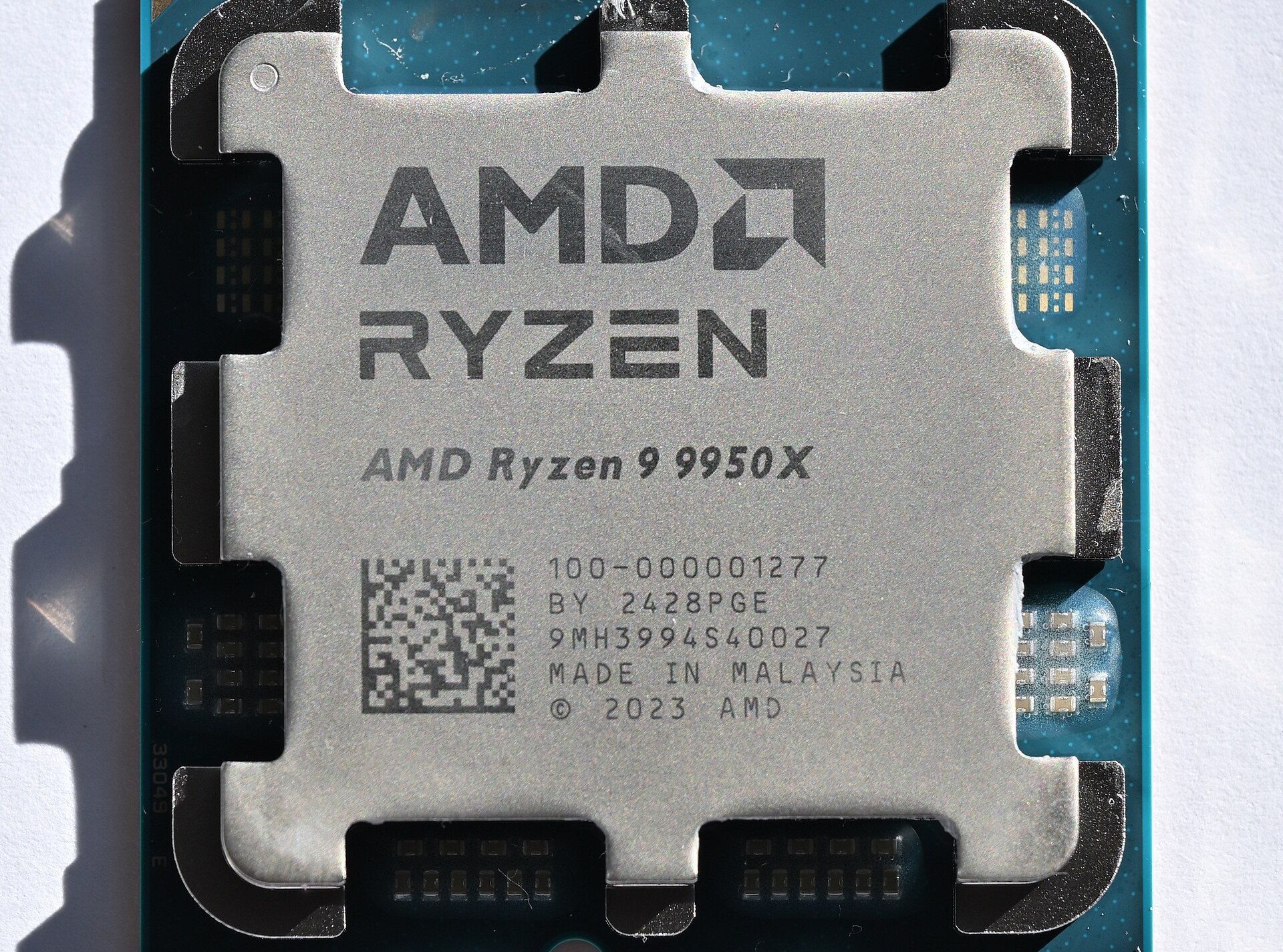
Meta rose 11.76% to $741 on Monday, its best session in thirteen months, after download data for its Muse personal agent came in ahead of ChatGPT’s comparable launch. That pulled the whole compute stack with it. AMD added about 10% and closed above a trillion dollars of market value for the first time, Intel gained 12.1%, Arm gained 17% and the Philadelphia semiconductor index rose 4.3% for a fifth consecutive advance. The Nasdaq Composite closed at a record 27,122.09, up 2.26%, with the S&P up 1.49% at 7,764.70 and the Dow up 366 points.
The mechanism being priced is specific and it is not about accelerators. Agentic workloads run many sequential steps of planning, code execution and tool calls, and that work lands on general purpose cores rather than on matrix hardware. So the market took evidence of agent adoption and re-rated the layer that spent three years being described as the loser of this cycle. Our view is that the direction is right and the evidence cited for it is the weakest part. Download counts over twelve days measure curiosity. The datapoint we would actually underwrite arrived in the same session and got a fraction of the attention: AMD has notified channel partners of a 10% price increase for the fourth quarter. Pricing power in a commodity compute part is a receipt. App store rankings are a survey.
The tell came six hours later. Korea opened up 2.20% at 7,161.61, printed 7,171.44 for a 2.34% gain and closed at 7,017.91, up 0.15%. The region that manufactures the entire thesis would not hold the gap that New York had just paid for. Some of that is mechanical, because Seoul is squaring up into the Chuseok break, and we would not build a thesis on one fade. But it is the second consecutive session in which Asia has declined to validate an American chip rally with its own money, and the last two weeks of this trade have been an argument about whether the order book or the narrative is leading. Monday was narrative. We would own the CPU re-rating and size it off the pricing data, not off the downloads.
The Tape: A Record Close With Nothing Behind It This Morning
Futures have gone quiet. S&P contracts are up 0.06% at 7,838, Nasdaq 100 futures are up 0.03% at 30,794, the Dow is up 0.30% and the Russell, which has been the weakest index in the complex through five losing weeks, is up 0.49% and leading. That is the shape of a market that has already taken its position and is now waiting for something. The VIX at 14.70 is lower again. We have stopped arguing that hedges are mispriced, but it is worth noting that a volatility index below fifteen into a presidential address at the United Nations, three Federal Reserve speakers, a seventy eight billion dollar auction at a cycle high front end and a state visit in forty eight hours is a market that is assuming all of it resolves quietly.
Monday’s internals were better than the headline. Breadth was not just seven names: Meta, Intel, AMD, Arm and Qualcomm all moved hard, Nvidia added only 2.19% and the Dow, which owns almost none of this, still managed 0.71%. Gold fell for a second day to $4,354 while bitcoin ran to $86,020 on nearly a billion dollars of spot exchange traded fund inflows, the largest single day in eleven months. Those two going opposite ways again, as they did on Monday, keeps saying the same thing. This is positioning, not a fresh view on the value of money.
Rates: The Front End Keeps Charging for the Rally
The two year closed at 4.751%, its highest close since July 1, 2024, on a day the Nasdaq made a record. The ten year fell 3.3 basis points to 4.962% and is down another four this morning near 4.92%, with the thirty year at 5.29%. That is another bear flattening, and it is the fourth consecutive session of the reflexivity this desk flagged on the day of the hike. Kevin Warsh said he would be hard pressed to describe financial conditions as restrictive and named them as his evidence. Equities have now eased them on Thursday, Friday, Monday and, at the margin, this morning. The front end is charging for it in real time.
Alberto Musalem supplied the words on Monday and they were not ambiguous. The St. Louis president said further increases are likely needed, that policy may still be stimulating the economy after this month’s move, that underlying inflation is running roughly a percentage point above target and is moving in the wrong direction, and that absent more restraint it is more likely than not that inflation sits substantially above 2% in eighteen months. He put July core personal consumption expenditures at 3.7% against a 2.3% low in April 2025. He also said he does not think the restraint costs jobs, which is the part that makes this hawkish rather than merely gloomy, because a committee that believes it can tighten without breaking the labour market has no reason to stop early.
That is two regional presidents in two sessions, Goolsbee on Monday morning in London and Musalem on Monday afternoon, both agreeing with the chairman rather than softening him. Today brings Williams and Jefferson mid morning and Barkin at one o’clock, alongside the Richmond Fed survey at ten and a seventy eight billion dollar two year auction at one. The auction is the one to watch. A cycle high yield either brings in real demand, which validates the front end pricing, or it tails, which tells you the market wants more compensation for a path the Committee has already published.
Energy: Crude Bounces, and the Physical Story Got Better Rather Than Worse
Brent settled at $98.35 on Monday and WTI at $93.28, a fifth consecutive decline. Both are up roughly one percent this morning, the first gain in six sessions, with Brent back near $99.4 and WTI near $94. The bounce is positioning into the General Assembly rather than news.
What changed underneath is more interesting than the flat price. Admiral Brad Cooper of Central Command said oil and liquefied natural gas shipments through Hormuz over the past two weeks hit a six month high, that the main transit lanes are clear of mines and that Gulf allies have moved more than a billion barrels through the strait in the last couple of months. Saudi Arabia is running roughly 2.9 million barrels a day through Hormuz and has effectively routed around the East-West pipeline that has been shut since September 11. Satellite imagery shows supertankers at Gulf terminals holding about fourteen million barrels, the most since June. Separately, Kyodo reported that Iran has signalled it could reopen the strait within a week if Washington lifts its blockade of Iranian ports.
Take those together and the crude leg of this war is de-escalating on the water regardless of what happens at a podium in Manhattan. That is a genuine change and we mark it as one. It does not touch the part of the complex we have spent a week on, which is refining. Nothing in the last five sessions added a barrel of distillate capacity, reversed Russia’s export restrictions or replaced a single damaged Russian refinery. American distillate cover is still the thinnest for the date since the early 1980s and the diesel crack was at a record nine days ago. We do not have a fresh crack print this morning and we are not going to reconstruct one, so the call sits unrefreshed rather than confirmed. But the shape of the argument is intact: the barrel is getting easier and the product is not.
Corporate: Agentic Commerce Found Its First Real Fight
The best corporate story on the tape is the one attached to the top call, and it cuts against it. On Sunday night Amazon blocked Muse from Amazon.com. Users trying to shop through the agent got a notice that continued access by an unauthorised AI agent violates Amazon’s conditions of use. Amazon’s stated objections are that Meta never told it the agent would be transacting on the site, that the agent does not identify itself while browsing, and that it appears to capture and store customer credentials. Meta says the model cannot see passwords or payment methods, which are held in secure storage and released for authentication without being exposed. On Monday, Meta and Shopify announced a partnership for shopping and checkout inside Muse.
This is not a squabble. Amazon has now taken Perplexity to court over its Comet browser and moved to block agents from Google and OpenAI, and it has now blocked the largest consumer distribution platform in the world on the day that platform’s agent went mainstream. The market spent Monday pricing the compute intensity of agents. It has not yet priced the question of what those agents are permitted to touch. An agent that cannot reach the largest retail catalogue in America has a much smaller addressable transaction stream than the one embedded in Wells Fargo’s new $796 target, and Meta responding within a day by signing Shopify tells you the company understands the distribution problem is the real one. The compute demand is probably robust to this. The revenue model is not.
Two other items belong on the same page. Intel’s move has a second leg beyond the agent story, because it is reportedly in talks with SK Hynix to manufacture chips in the United States, which would be the most substantive external validation Intel Foundry has received. And Alibaba used its Hangzhou conference this morning to unveil the Zhenwu V900, which chief executive Eddie Wu called China’s most powerful AI chip, claiming three times the performance of the prior M890, clusters of up to 500,000 units, a planned model of five to ten trillion parameters against 2.4 trillion for its current flagship, and a target of twenty gigawatts of cloud capacity by 2032. That lands two days before Xi Jinping’s state visit, which is not a coincidence, and it is the strongest public claim yet that export controls have produced a parallel stack rather than a ceiling.
Elsewhere: Palo Alto Networks is launching a continuous vulnerability scanning service built on a mix of frontier and open weight models. DWS is weighing emergency measures including redemption limits and penalty fees to head off a liquidity crunch in German property funds, which is the first properly uncomfortable European credit headline in some weeks. BASF explored a deal with Evonik earlier this year before cash constraints intervened. Roche posted positive Phase II data for its GLP-1 and GIP receptor agonist and won European approval for Susvimo. LVMH took price target cuts from RBC and Jefferies and Burberry was downgraded, which is European luxury pricing a Chinese consumer that the summit is not going to fix.
Earnings: A Thin Docket, and the One Print Today Is a Lesson in Reading Gross Margin
AutoZone is the only name of consequence this morning and it is not an AI story, but it is the cleanest read available on a consumer who has been paying six dollar diesel since early September.
| Metric | Consensus | Actual | Beat/Miss |
|---|---|---|---|
| EPS | ~$54.14 | $56.05 | Beat |
| Revenue | $6.681bn | $6.595bn (+5.6%) | Miss |
| Domestic same store sales | ~2% | +1.6% | Miss |
| Gross margin | n/a | 53.3%, +182bp | Beat on paper |
| Store count | n/a | 8,031 | Raised |
Our take: the beat is lower quality than the print. Management disclosed 145 basis points of tariff refunds and 105 basis points of non-cash LIFO benefit inside that 182 basis point margin expansion, which means the two non-operating items are larger than the entire improvement and the underlying gross margin went backwards. Revenue missed, domestic comparable sales ran 1.6%, and the company flagged a soft first eight weeks of the new quarter. The stock is down 17% this year and 32% over twelve months against an S&P up double digits, so expectations were not demanding, and the shares are indicated higher. We would not chase it. A defensive retailer whose earnings beat is built on a refund of tariffs it already paid, in a quarter where volume growth was 1.6%, is telling you the do-it-yourself customer is trading down rather than repairing more cars.
The rest of the week is where the substance sits. Accenture and Costco report Thursday. Micron reports on September 30 into sub ten day memory inventories and a Taiwanese labour dispute that escalated further on Monday, when a second mediation failed and the Taoyuan union confirmed it will hold a formal strike vote. Micron has said it cannot commit to any change before its September 30 results and its October 9 board meeting, which means the company has effectively scheduled the confrontation for the week after it prints.
Asia and Europe
Tokyo was shut for a third day and reopens Thursday. The yen at 157.02 is marginally firmer but has now spent four sessions failing to strengthen after a Bank of Japan hike to 1.25%, which remains the single most under-discussed fact in global funding markets.
Korea did the interesting thing, described above. Hong Kong closed at 25,055.29, up 0.05%, and Shanghai at 3,952.13, up 0.06%, both effectively flat despite the Alibaba announcement and despite an American tech session that added better than two percent. Chinese equities declining to rally on a domestic chip breakthrough two days before a state visit is a market that has learned to wait for the meeting.
Europe had the better session yesterday and is adding to it. The Stoxx 600 closed Monday at 642, up 1.0% for its largest single day gain since July 2, led by banks and technology, with the DAX up 1.1% at 25,575, the Euro Stoxx 50 up 1.3% at 6,318, the FTSE up 0.7% at 10,739 and the CAC up 0.9% at 8,139. This morning the DAX is up another 139 points at 25,714 and the FTSE is up 20 at 10,759. The regional fiscal picture is deteriorating underneath the rally. Scope cut France to A+ from AA- last Friday, putting it level with Fitch and S&P, citing repeated fiscal slippage and no credible path to stabilising the debt trajectory. British public sector net borrowing for August came in at £18.3 billion against a £15.7 billion expectation, which is an overshoot against the Office for Budget Responsibility’s own path ahead of an October 28 budget. Europe is buying growth stocks with one hand while its two largest bond markets run away from their own forecasts.
Geopolitics
The Iran war reaches day two hundred and six with the fire pause in its twelfth day. Today is the substantive one. The president addresses the General Assembly this morning, and Ambassador Waltz has trailed a speech covering the administration’s peace agreements, the Western Hemisphere, the twenty point Gaza plan and the position that Iran must never hold a nuclear weapon. President Pezeshkian addresses the chamber tomorrow. Foreign Minister Araghchi is already in New York and the administration has allowed Tehran’s core delegation to travel. Secretary Rubio said the president is open to a meeting and that nothing is scheduled. The market has now spent three sessions pricing that meeting. It remains unscheduled.
Yemen is the leg nobody is pricing. Houthi forces have struck Saudi territory with ballistic missiles and drones, injuring at least seventy three people, have targeted Aramco infrastructure on the Red Sea coast and have declared a blockade of Saudi shipping, the sharpest escalation since the four year truce with Riyadh collapsed in July. Gulf states postponed their own scheduled talks with Tehran because of it. A de-escalation at Hormuz that coincides with an escalation at Bab al-Mandab is not a peace, it is a relocation, and the second chokepoint carries the products rather than the crude.
Xi Jinping arrives in Washington tomorrow for a state visit running to Friday, with the White House meeting and state dinner on Thursday. The Wall Street Journal reports he is unlikely to bring a business delegation and that no Chinese chief executives are expected, which is a meaningful signal about how much commercial substance Beijing expects to announce. The truce expires November 10 and tariffs, rare earths and artificial intelligence are all on the agenda. Separately, the United States will reopen a military base in southern Greenland and establish a presence at a second site in the east.
Key Events Today and This Week
| When | Event | What matters |
|---|---|---|
| Tue, morning | Trump at the UN General Assembly | Iran language, and whether a meeting is announced |
| Tue, 10:00am | Richmond Fed manufacturing | Regional read after Empire and Philadelphia split |
| Tue, mid-morning | Williams, Jefferson | The centre of the Committee, not the wings |
| Tue, 1:00pm | $78bn 2-year auction | Demand at the highest yield since July 2024 |
| Tue, 1:00pm | Barkin | Third speaker of the day |
| Tue, after close | KB Home, Worthington | The rate sensitive economy again |
| Wed | Pezeshkian addresses the UN | The other half of the peace trade |
| Wed, 9:45am | Flash PMIs | First survey covering the full diesel spike |
| Thu 24 | Xi at the White House | Tariffs, rare earths, a truce expiring Nov 10 |
| Thu, after close | Accenture, Costco | Technology budgets and the six dollar diesel consumer |
| Fri, 8:30am | Core PCE | Musalem’s own number, after a 3.7% headline in July |
| Sep 30 | Micron | Memory demand against a live strike vote |
Accountability
The peace trade call is one-nil against us and we are marking it. We declined it on Monday morning on the grounds that it was priced off an unscheduled meeting. Crude then fell another two percent in the session and is only now bouncing. Being right about the logic and wrong about the direction for a day is still wrong for a day, and the honest update is that the physical evidence has moved toward the de-escalation case, not away from it, because Hormuz flows are at a six month high and Saudi Arabia has routed around its own shut pipeline. We are narrowing the call rather than defending it. The crude leg is easing. The distillate leg is not, and that is the leg we hold.
The distillate thesis is unrefreshed today rather than confirmed. We have no new crack print and we will not manufacture one.
The reflexivity call is working and it is the fourth session. Equities made a record close, the two year closed at a cycle high on the same afternoon, and two regional presidents in two days said the Committee is not finished. That is the mechanism operating exactly as described, and today’s auction is the next test of it.
The Korean demand call needs a caveat we did not attach yesterday. We led Monday with the customs file as the hardest read on AI demand of the month, and the American tape agreed with us inside a session. The Korean tape then opened up 2.20% and closed up 0.15%. We should have said at the time that a customs print is a backward looking receipt, and that the market which owns those exports gets a vote on what they are worth. It voted, and it voted flat.
The volatility call stays buried. The VIX is 14.70.