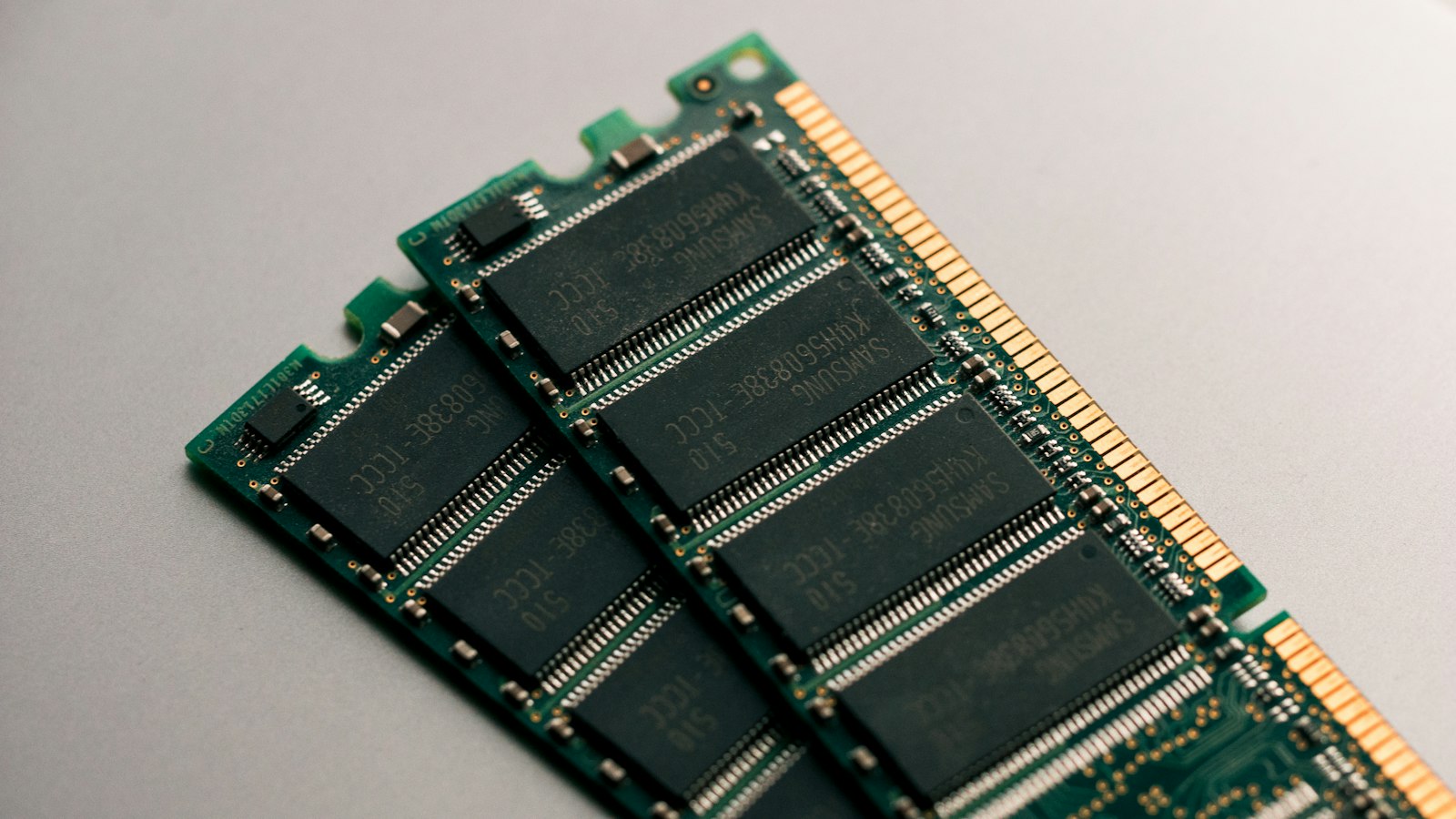
Thursday, October 1, 2026, written at 9:30 a.m. Eastern, half an hour before the open and on the first session of the fourth quarter. Jobless claims are in hand. The ISM manufacturing survey lands at 10:00, construction spending with it, and four Federal Reserve speakers follow through the afternoon. Nike reports after the close. Mainland China and Hong Kong are shut for National Day and will not return until October 8, which means the second largest equity market in the world is absent for both the ISM this morning and payrolls tomorrow. Futures and pre-market levels are indicative and can move before the bell.
Top Call: Micron Did Not Beat, It Re-Rated the Whole Memory Complex, and the Calendar Math Makes the Guide Better Than It Reads
Micron reported fiscal fourth quarter revenue of $54.23bn against a street near $51.07bn, non-GAAP earnings of $33.42 against roughly $31.61, and a non-GAAP gross margin of 87.0% against a guide of 86%. Then it guided the November quarter to $61.5bn plus or minus $1.5bn against a street near $57bn, with non-GAAP earnings of $38.15 against $35.40 and a gross margin of 86.25% struck after absorbing about $1bn of incremental incentive compensation and startup cost.
Yesterday this desk committed in advance to two readings of this print so that neither could be selected after the fact. The first was that a soft looking sequential guide would be calendar rather than demand, because the fourth quarter carried fourteen weeks and the first quarter carries thirteen. The second was that a guide below $55bn on comparable weeks would be the capacity thesis taking real damage. Neither branch was needed in the direction we prepared for, and the reason is the more interesting number on the page. Fourteen weeks of $54.23bn is $3.874bn a week. Thirteen weeks of $61.5bn is $4.731bn a week. That is 22% sequential growth per operating week, in a business already running at an 87% gross margin, guided one quarter ahead by a company that has to physically build what it sells.
The durability lines matter more than the beat. Customer financial commitments under Micron’s strategic supply agreements rose to roughly $32bn from $22bn in June, and more than 75% of fiscal 2027 shipment volume is already committed. That is a $10bn increase in prepaid or contracted customer obligation inside a single quarter. It is the same structure the desk priced last week in Anthropic’s seven year commitment to Akamai and the warrant attached to it: buyers of compute are now posting capital to secure physical supply rather than negotiating price on delivery. The capacity thesis published on September 26 said the market would sort companies by whether they own capacity, rent it, or have to fund it. Micron owns it, and this is what owning it pays.
Three qualifications belong in the same breath. An 87% gross margin in a memory business is not an equilibrium, it is a shortage rent, and every basis point of it is an advertisement for new supply. Micron spent $27.37bn of capital expenditure in fiscal 2026 against $89.68bn of operating cash flow, a reinvestment rate near 31% that is low by the standards of every prior memory upcycle, and that restraint is a large part of why the margin exists. The question for 2027 is not demand, which is contracted, it is whether three suppliers all looking at 90% data centre gross margins keep behaving. Second, Micron’s core data centre segment printed $18.00bn at a 90% gross margin and cloud memory $16.28bn at 83%, so the mix is already overwhelmingly weighted to the customer set with the most volatile capital plans. Third, and most telling about where the disagreement sits, Goldman Sachs is carrying a Neutral rating with a $1,100 target this morning while DA Davidson raised to $2,100 and Raymond James went to $1,100 from $530. That is close to a two times spread on a $1.2 trillion company one day after a fully disclosed quarter. Nobody is arguing about the numbers. They are arguing about what multiple to pay for rent.
The stock closed at $1,065.11 on Wednesday and is indicated up roughly 8% pre-market.
| Metric | Consensus | Actual | Read |
|---|---|---|---|
| Revenue FQ4 | About $51.07bn | $54.23bn | Beat by 6%, and 4.8 times last year |
| Non-GAAP EPS | About $31.61 | $33.42 | Beat; FY26 EPS $75.52 on $133.19bn |
| Non-GAAP gross margin | About 86% | 87.0% | Price, not units |
| FQ1 revenue guide | About $57bn | $61.5bn ± $1.5bn | +22% per week after the calendar adjustment |
| FQ1 EPS guide | About $35.40 | $38.15 ± $1.00 | Guided through $1bn of added cost |
| Customer commitments | Not forecast | $32bn, from $22bn | The line that makes it durable |
Rates: The Long End Made a 2002 High in the Same Week the Fed Got Less Likely to Hike
The ten year rose four basis points to 5.3338%, breaching the 2007 peak the desk has been marking for two weeks and reaching a level last seen in April 2002. The thirty year added three to 5.6702% and its highest since July 2002. The two year moved two basis points to 4.91%.
Hold that against the policy path. One week ago the October meeting was priced better than 70% for a hike. This morning CME fed funds futures put it near 35%, after Wednesday’s core PCE revision and after John Williams said there was no need for urgency. So the market has removed roughly 36 points of hike probability in five sessions and the long end has made a twenty four year high while doing it. Those two facts are frequently reported as a contradiction. They are not one, and treating them as one is the most common analytical error being made in this market right now.
What the long end is pricing is not the policy rate. It is the inflation the Federal Reserve has just become less likely to fight, plus the term premium required to hold duration against a deficit, against corporate supply, and against crude that went back over $100 this morning. A central bank that steps back from a hike into 3.0% core and 2.2% second quarter growth does not reduce long run inflation risk, it transfers it to the bondholder. The curve is doing the accounting. Two year to ten year is roughly 42 basis points this morning against something closer to 32 on Tuesday, and the steepening is coming almost entirely from the long end.
This is not confined to Treasuries. Japan’s thirty year yield rose five basis points to 4.20% overnight. Whatever is happening is a global repricing of duration, not an American rate story, and the single cleanest way to read it is that the developed world is being asked to fund more debt into higher trend inflation with less central bank cover.
Jobless claims did nothing to help. Initial claims fell to 197,000 from a revised 198,000 against a forecast of 201,000, the lowest since mid July, with the four week average down 2,500 to 200,000. That is not a labour market that needs a central bank standing aside. It is the sixth consecutive data point this week arguing the economy is fine and the inflation is the problem.
Equities: The Index Is One Trade and September Proved It
Wednesday closed with the Dow down 443.87 points to 50,906.05 and its lowest close since early June, the S&P down 19.30 to 7,651.54, the Russell 2000 down 11.06 to 2,796.86, and the Nasdaq Composite up 63.52 to 26,861.06. In September the Dow fell 4.29% and the Russell 5.39% while the Nasdaq rose. The third quarter delivered 2.03% on the S&P.
That spread is the entire market in one line. The yield shock is hitting everything that is not the artificial intelligence complex, and the complex is carrying the index on its own. A 24 year high in long rates is a mechanical valuation problem for small capitalisation balance sheets, for the cyclicals in the Dow, and for anything funded with floating debt, and none of it is a problem for a memory company generating $33.20bn of adjusted free cash flow in thirteen weeks. This morning the pattern repeats in reverse: Nasdaq 100 futures up about 1.0%, S&P contracts up about 0.6%, Dow futures barely positive.
The practical consequence is that index level readings of this market are close to worthless right now. The S&P finished a quarter up 2% during which oil rose about 45% and the long end went from under 5% to 5.67%. That is not a calm index. It is a very large divergence being netted to zero at the aggregate level.
Energy: The Tightening Came From Chinese Refiners, Not From the Negotiation
Brent traded below $97 in the European morning and reversed to $100.15 on the December contract, up 2.2%, after reports that Chinese refiners suspended October fuel exports outside Hong Kong and Macau, with PetroChina cancelling a set of gasoline and jet fuel cargoes. The stated reason is domestic protection, and Chinese domestic gasoline and diesel inventories have fallen to multi year lows. WTI November is near $91.74, up 1.5%, from $89.20 earlier.
This desk has run a distillate thesis since mid September arguing that the shortage in this cycle is in refined product rather than in crude, and that the crude price would keep being the wrong thing to watch. The thesis has been right on mechanism and consistently wrong on which barrel would show it. The mechanism arrived this morning from a direction we did not name: not an American export ban, not Russian refinery damage, but the world’s largest refiner withdrawing product from the seaborne market to protect its own pumps. That is a second major exporter pulling distillate and gasoline out of international supply, and it tightens the same cracks the Ukrainian strike campaign has been tightening, for an entirely unrelated reason.
Note what crude itself did. Brent is lower than Wednesday’s $103.50 even after a 2.2% rally, having traded a range of more than three dollars this morning on a product headline. Day two hundred and fifteen of the war produced nothing: Trump told Time the United States may destroy Iran because peace with Tehran is impossible, Pezeshkian said Iran will not avoid dialogue, the strait stays closed, and the Saudi East-West pipeline continues to do the actual work of keeping Brent near $100 rather than $115. The discipline rule of carrying no directional crude view pays for a sixth consecutive week, and it pays for the same reason every week: the marginal input is a piece of infrastructure or a policy decision somewhere outside both negotiating rooms.
Asia: Korea Is the Most Interesting Chart in the World Right Now
Tokyo took the Micron print and ran. The Nikkei closed 2,203 points higher at 68,957, up about 3.3% and a six week high, with Advantest up 7%, Murata up 6% and Kioxia up 4%. The composition is worth noting: the gains are in test equipment, components and memory rather than in the index’s megacap names, which means Tokyo read the Micron guide as a statement about the supply chain rather than about one company.
Seoul is the harder read and the more important one. The Kospi reversed an early decline to close 1.95% higher at 6,971.35, Samsung Electronics up 2.79% to 276,000 won and SK Hynix up 3.21% to 1,833,000 won. South Korea reported September semiconductor exports of $60.3bn, a record, up 262.8% year over year. That is the strongest single fundamental datapoint produced by any economy this quarter.
And foreign investors sold a net 21.51 trillion won of Korean equities in September, a fifth consecutive month of selling, with Samsung and SK Hynix accounting for 76.6% of it. So the two companies responsible for the best export number in the index’s history were three quarters of the foreign selling in the month they produced it. There are two possible explanations. Either foreign investors have a view on memory that contradicts every contract Micron disclosed last night, which is not credible given what the same investors are paying for Micron, or they are selling the won and the equity is collateral. With the American ten year at 5.33% and the dollar still near 101, the second explanation does almost all of the work. That reframes Korean equity weakness as a currency and rate differential problem rather than a semiconductor problem, and it means the Kospi resolves when the American long end does, not when memory prices do.
Hong Kong and the mainland are shut for National Day through October 7. The Hang Seng last closed at 24,613. China is absent for the ISM this morning, for payrolls tomorrow, and for whatever the first week of the quarter produces.
Europe: The Only Major Bloc Falling, and for a Reason That Has Nothing to Do With Memory
The Stoxx 600, the DAX and the CAC 40 are each down about 0.6% with the FTSE 100 off 1.1%, the DAX near 24,880 and the Euro Stoxx 50 near 6,181. Europe is the only major equity bloc lower on a day the memory complex re-rated, and the reason is domestic.
German preliminary September inflation came in at 3.3% year over year against 3.1% expected, up from 2.9% in August, with the harmonised measure at 3.3% against 3.2%. Spain printed 4.9%. The eurozone flash estimate arrives tomorrow at 09:00 GMT and is forecast at 3.6% from 3.2%, with core at 2.5% from 2.4%. A 40 basis point monthly acceleration in German headline inflation is a large number, it is driven by physical energy rather than by services, and it lands into an ECB the market has priced as finished.
The divergence this desk flagged yesterday is now two days old and holding. American inflation was revised down by a change in statistical method on Wednesday. European inflation is accelerating because the continent imports every barrel it burns and has no shale to offset it. One of those is a measurement event and one is a price event. If the bloc print confirms tomorrow, the rate differential trade that carried the dollar through September has a genuine problem, and European equities are telling you so this morning before the fixed income market does.
Corporate: Accenture Is the Result Nobody Is Discussing and It Should Be
Accenture reported after Wednesday’s close and the stock is up about 16%, on record annual bookings of $84.5bn, a fiscal fourth quarter beat, and fiscal 2027 guidance of 3% to 6% revenue growth, $76.43bn to $78.65bn of revenue and $14.39 to $14.81 of earnings, with at least $9.5bn committed to shareholder returns.
That deserves more attention than it is getting, because the single most popular structural short in this market is the thesis that agentic systems hollow out professional services, and Accenture is the largest pure expression of it. The company has now stopped breaking out artificial intelligence bookings separately on the grounds that the work is embedded in ordinary client projects rather than sold as a line item. Read that honestly in both directions. It removes a disclosure investors were using to track the transition, which is a reason for scepticism. It also describes a firm whose deployment work is growing fast enough to stop being a separate category. Set it beside Concentrix, which beat at $2.92 against $2.71 and guided the fourth quarter below consensus, and the emerging picture is that agentic systems are currently destroying the low end of outsourced labour and expanding the high end of integration work. Those land on different companies and on very different people.
Hewlett Packard Enterprise is up about 3.9% on a $1.2bn order from the neocloud Vultr, the first win for its AMD Helios AI rack, with each rack carrying 72 AMD Instinct MI455X accelerators alongside Juniper based networking and liquid cooling. HPE raised its fiscal 2027 networking revenue growth target to the high teens or low twenties from 14% to 17%. The relevant detail is the customer: a neocloud, not a hyperscaler, buying an AMD based rack. The second tier of capacity providers is now large enough to move a major vendor’s multi year guidance on a single order, which is the capacity thesis showing up one layer below where it has been visible.
Nvidia’s Open Agent Safety Platform, announced Monday with more than 100 partners including Anthropic, SpaceX and Microsoft, pairs an open source runtime called OpenShell that tracks agent actions and enforces policy with a hardware reference design called Sentry that can isolate an agent within milliseconds. It follows OpenAI’s voluntary pause of training and tool using inference. OpenAI is not among the named partners, which is the most informative fact in the release.
Elsewhere: FactSet rose 3.8% on $4.52 against $4.32. Acuity Brands earned $5.77 against $5.62 on sales of $1.244bn against $1.257bn. Mattel fell 4.2% on the appointment of Roger Lynch as chief executive and chairman. Moderna fell 3.2% on a Citigroup downgrade to Sell. On the deal tape, announced third quarter volume fell about 10% year over year, leaving $3.8 trillion year to date against the $5 trillion record of 2021, so the advisory recovery that showed up in Jefferies’ numbers last week is losing momentum at exactly the point the banks report.
Nike reports after the close into consensus near $11.35bn of revenue, down from $11.59bn, and about $0.44 of earnings, down roughly 10%, with the shares near a twelve year low. It is the household side of the same economy that just printed 197,000 claims and 2.2% second quarter growth, and it is the cleanest available read on whether the consumer weakness visible in sentiment surveys is showing up in discretionary volume yet.
Key Events Today and This Week
| When | What | Why It Matters |
|---|---|---|
| Thu, done | Jobless claims 197,000 | Lowest since mid July; no case for standing aside |
| Thu, 10:00am | ISM Manufacturing | 54.6 last; new orders seen 57.0, prices paid 72.5 |
| Thu, afternoon | Barkin, Cook, Goolsbee, Kashkari | Four speakers into a 35% October |
| Thu, after close | Nike | The household side, near a twelve year low |
| Fri, 5:00am ET | Eurozone flash CPI | 3.6% expected from 3.2%; the ECB question |
| Fri, 8:30am | September payrolls | ADP said 90,000; this settles the week |
| Through Oct 7 | China and Hong Kong shut | Absent for the ISM and for payrolls |
The prices paid component at 10:00 is the line to watch rather than the headline. A 72.5 print against 71.1 would mean goods inflation is accelerating at the factory gate in the same week the long end made a 2002 high and crude went back over $100, and it would make tomorrow’s payrolls a very uncomfortable number regardless of which way it breaks.
Accountability
The capacity thesis passes its scheduled test on the terms set in advance. On September 30 we wrote that a guide below $55bn on comparable weeks would be the thesis taking real damage and that a soft looking sequential number would be calendar. The guide came in at $61.5bn, which is 22% growth per operating week, and the customer commitment line went from $22bn to $32bn. We will take the win and name what would still break it: a single quarter in which committed volume for the following fiscal year stops rising, or any of the three suppliers raising capital intensity materially above the 31% reinvestment rate Micron ran in fiscal 2026. Neither has happened.
We prepared a defence we did not need, and that is worth flagging. Half of yesterday’s Micron framing was an explanation of why a weak sequential guide would not mean what it looked like. It was correct arithmetic and it went unused, and preparing a reason in advance for why a bad number would be fine is a mild form of anchoring even when the arithmetic is sound. We are noting it so that the next time we pre-commit to two readings, both of them point at evidence rather than one of them pointing at an excuse.
The gold and bitcoin carry framework is mixed today and we are not going to call it a pass. The framework says the pair should move together against the real rate. Gold is up about 0.6% near $4,182 and bitcoin is down toward $83,070 on a morning the nominal ten year made a twenty four year high. The reconciling explanation is that breakevens widened with crude back over $100 and European inflation accelerating, so the real rate may not have risen at all even though the nominal did. That is a plausible reading and it is also exactly the kind of after the fact reconciliation we should distrust. The co-movement leg is wrong today. The framework stays in use at reduced confidence until we have a clean test.
The distillate thesis is right on mechanism and wrong on source for a third week. We have argued the shortage is in refined product and we have named American export policy and Russian refinery damage as the channels. The channel that actually moved the market this morning was Chinese refiners cancelling cargoes to protect domestic inventories. Being right about the structure while repeatedly naming the wrong trigger is a real limitation, not a technicality, and it suggests we have been watching the supply side of the Atlantic basin and under-watching Asian product balances.
The crude discipline rule pays for a sixth week. Brent traded from under $97 to above $100 in a morning on a headline neither Washington nor Tehran generated. Carrying no directional view remains correct.
Monday’s breadth question gets a practical answer rather than a resolution. We left it open for want of clean data. September’s numbers settle the substance even if they do not settle the original dispute: the Dow fell 4.29% and the Russell 5.39% in a month the Nasdaq rose. Breadth is not ambiguous. It is bad, and it has been bad for a month, and the index is being carried by one trade.