Saturday, October 10, 2026, written at 9:15 a.m. Eastern. This is a weekend wrap covering the week to Friday’s close. US markets are shut and every figure below is settled rather than indicative, with the exception of the Kremlin statement that landed this morning. Bond markets are closed Monday for Columbus Day while equities trade. September CPI lands Wednesday and the big banks open earnings season Tuesday.
Top Call: Three Separate Headlines on Friday Were One Policy
Three things happened on Friday and the market priced them as three things. They were one thing.
First, the University of Michigan preliminary index fell to 46.3 against a 47.6 consensus, the second worst reading in the history of the series behind May’s 44.8. Year ahead inflation expectations rose to 4.7% from 4.6% and the five to ten year gauge to 3.5% from 3.4%, the second consecutive monthly increase in both. Current conditions collapsed to 44.7 from 50.9. The survey director singled out lower income households and those with small equity portfolios.
Second, the President announced that Putin had agreed to supply diesel, and the Treasury’s Office of Foreign Assets Control issued Russia related General License 135 authorising the sale, delivery and import of Russian origin diesel. The headline numbers are 300,000 tons immediately, 500,000 tons in November and 1,000,000 tons thereafter, with a further 3 million tons flagged against refinery capacity.
Third, the President established a three person committee to investigate Fed Governor Lisa Cook, with a closed door White House hearing set for November 5 and a written response due November 10. The Supreme Court had already held that a governor cannot be removed without adequate cause and process. The hearing date sits two days after the midterms.
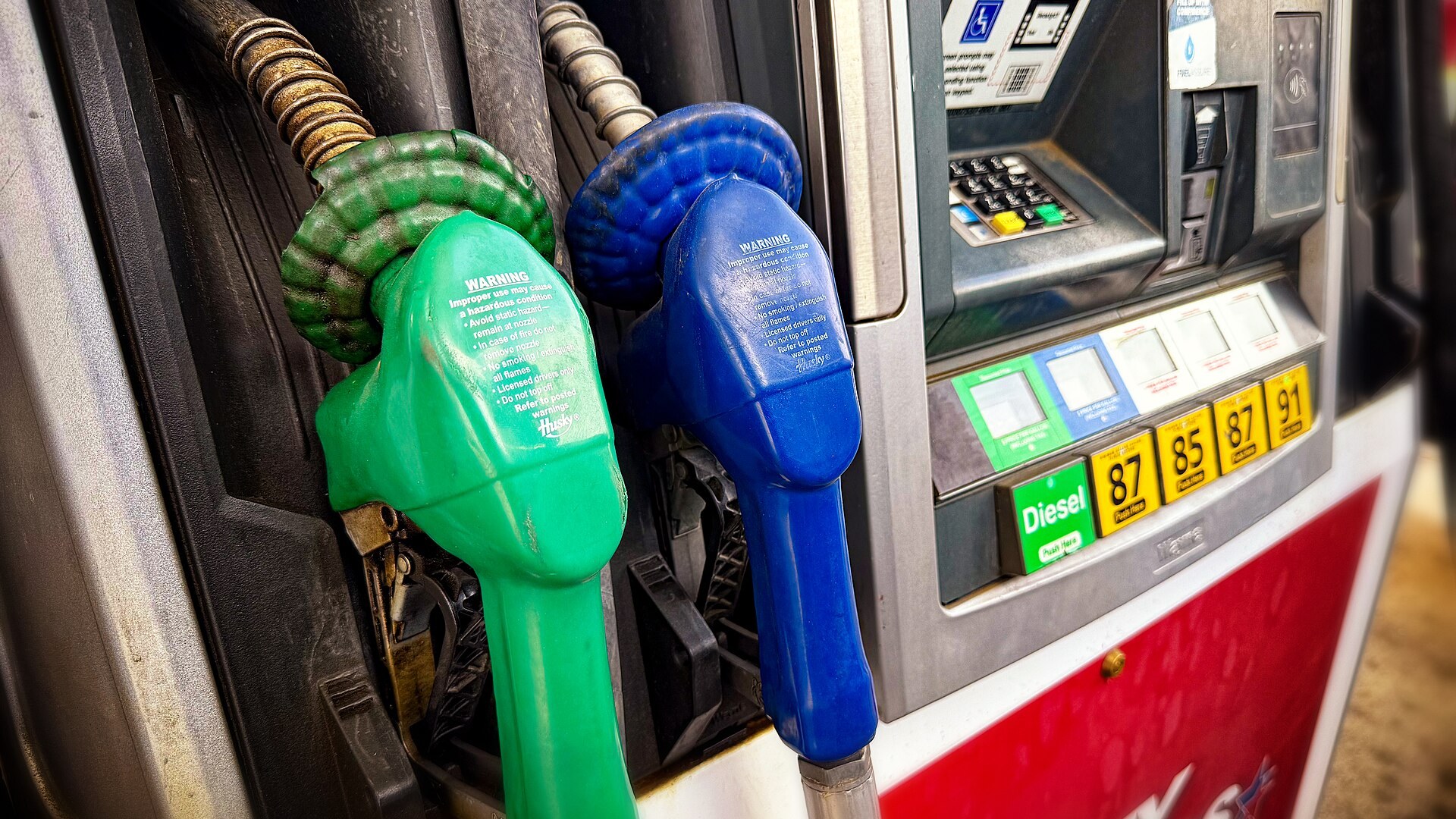
Now put them together. Retail diesel printed $6.199 a gallon in the EIA weekly survey on October 5, through the June 2022 record of $5.816. Distillate inventories are roughly 14% below the five year average nationally and 32% below on the East Coast. Refinery utilisation has been running near 98%, the highest since 2018, so the constraint is not crude and it cannot be fixed by running harder. Diesel cracks touched $100 a barrel and above. That is the binding political constraint 24 days before an election, and it is exactly what the Michigan survey measured.
So the administration reached for the two instruments that are not the policy rate. It waived energy sanctions on Russia, and it opened a process against the one Fed governor it has been trying to remove since August 2025. Whatever the legal merits of the Cook case, the timing tells you what the price level has become politically.
The arithmetic on the diesel is the part nobody should miss. Six million barrels, which is what the announced tonnage converts to, covers roughly a day and a half of American diesel demand. One analyst put the maximum effect at perhaps a 5% to 6% supply increase into year end and called it helpful rather than a needle mover. Russia banned diesel exports in July after Ukrainian drone strikes on its refineries, removing something like 800,000 barrels a day from the market. The waiver does not restore that. It restores about thirty six hours of it, and it does so by spending the sanctions architecture that took three years to build.
What was bought is not volume. It is a precedent, and the precedent is that energy sanctions are now a consumer price instrument. Once that is established, every sanctioned barrel in the world carries an implied political option, and every counterparty knows the expiry date is early November. Zelensky called it a weak decision by strong partners, which is the right verdict politically and understates it commercially.
One market understood this and it was not oil. Gold rose 1.42% to $4,216.30 on a session when the ten year yield rose a basis point and the dollar held near an eighteen month high. Gold up with yields up and the dollar firm is not a rate trade and it is not a currency trade. It is the inflation credibility trade, and it was the only honest price on the tape Friday. Equities took the Iran de-escalation and bought it. Crude took the diesel announcement, measured it, and went back to where it started. Gold took all three headlines together and drew the correct conclusion.
Our positioning follows from that. We would own real assets and the physical constraint over anything whose value depends on the policy rate falling or on an institution behaving predictably between now and November 3. We remain long the constraint in AI, meaning optics, memory and foundry, and we stay cautious on the claim. And we would treat gold weakness from here as an opportunity rather than a signal, because the thing that repriced on Friday was not a commodity. It was the market’s estimate of how the price level will be managed.
Rates: The Front End Did Not Move and That Is the Point
The two year closed at 4.80%, unchanged. The ten year rose a basis point to 5.24% after touching 5.35% earlier in the week, a twenty four year high. The thirty year eased a basis point to 5.60%, holding the relief that followed Thursday’s reopening, which cleared at 5.62% with a 2.54 bid to cover and indirect bidders at 72.3%.
Read the front end against the day’s news. Consumer sentiment printed its second worst reading ever, which is a growth negative, and inflation expectations rose at both horizons, which is a policy positive. The two year did not move a basis point. The market is saying those two forces are exactly offsetting, and that is a market with no conviction about the path rather than a market that has made up its mind. Polymarket has another 2026 hike near 78%, October near 18%, with the target range at 3.75% to 4.00%.
The Cook committee belongs in this section rather than in politics. A board seat is a vote, and a vote is a basis point. The process now has dates on it, the hearing is November 5 and the written response November 10, both after the election and both before the December meeting at which the market has roughly 78% odds of a hike. We are not going to forecast the outcome. We will say that the term premium at the long end has been the story of this quarter, and that a live removal process against a sitting governor is a term premium input whether or not anyone wants to model it that way. The thirty year at 5.60% is not expensive insurance against institutional noise.
The expectations series deserves one more line because we flagged it as the thing to watch on Friday morning. The New York Fed’s one year measure rose to 3.9% from 3.6% this week. Michigan’s rose to 4.7%. That is two independent surveys in one week showing households repricing inflation upward while the committee argues about a single additional hike. Households are not forecasting the Fed. They are forecasting the pump.
Energy: The Oil Market Scored the Diesel Deal Correctly
Brent settled around $104.43, effectively flat, after trading as low as $102.91 intraday on the no strike headline. WTI’s November contract was $91.45, down four cents. For the week Brent held a gain and WTI was roughly flat to slightly lower. Quotes differ by vendor and by contract roll, so treat the levels as a range rather than a tick.
The round trip is the information. Crude fell early when the President said the United States would not attack Iran before November 3, then recovered everything once the market did the diesel arithmetic above and once the escalation in the Gulf reasserted itself. A market that ignores a sanctions waiver from the world’s largest consumer is a market telling you the constraint is refining and freight, not barrels. That has been our view for three weeks and Friday was the cleanest confirmation of it yet.
The Gulf got worse, not better. Eleven tankers were attacked transiting Hormuz in the week to October 4, the most since the war began in February, with another five this week by CNBC’s count. The IRGC claimed a strike on the LPG carrier NV Sunshine for using what it called the illegal southern route, said it has taken control of the administration of the strait, and warned that action against violating vessels will no longer be confined to Hormuz. Twelve sailors were injured Monday. Kpler has Hormuz exports at 8.5 million barrels a day for the week to Wednesday, around 40% below the pre-war norm.
Hold those two facts next to each other. Flows through the strait are down 40%, the attacking party has just asserted administrative jurisdiction over it and extended its threat geographically, and Brent is $104. The risk premium embedded in that price is small relative to what is actually happening on the water. We think the market is underpricing a legal closure of the strait and overpricing the probability of a military one, which is roughly the opposite of how it was positioned a week ago.
Geopolitics: Moscow Is Now the Channel
The Kremlin said this morning that Putin relayed Tehran’s position on a peace deal to Trump during Friday’s call, acting with Pezeshkian’s backing. The call was ostensibly about diesel. It was not only about diesel. Pezeshkian said Thursday that Iran had revised its proposals and was ready to finalise them through mediators, after Trump rejected a seven day plan in late September.
So within a single week the United States has given Russia a sanctions waiver on its most valuable refined product and accepted Russia as the intermediary to Iran. Those are two separate concessions and they were almost certainly one negotiation. We have no view on whether a deal gets done. We have a strong view on the price, which is that Moscow now holds a position in American energy policy and in American Middle East diplomacy that it did not hold eight days ago, and it acquired both while its own export ban was the proximate cause of the shortage being solved.
We said on Friday that we would not trade the Putin and Pezeshkian headline out of Turkmenistan. That was wrong by Saturday morning and we deal with it below.
Equities: The Relief Rally Faded Where It Mattered
The S&P 500 closed at 7,811.54, up 46.18 points or 0.59%. The Dow added 423.31 points or 0.83% to 51,654.95. The Nasdaq Composite rose 172.83 points or 0.64% to 27,366.17 and the Russell 2000 gained 0.46% to 2,806.98. The VIX fell 3.83% to 14.82. All three large cap averages finished the week higher, with the S&P up somewhere between 0.95% and 1.2% depending on the vendor. The Russell appears to have been the only major index lower on the week, at roughly 0.9%, though we would hold that one loosely.
Now the detail that matters more than any of those numbers. Nvidia was up about 1.5% pre-market on the Bloomberg report that OpenAI expects to reach or exceed $70bn of annualised revenue by year end. It closed down 0.52% at $229.28.
That is the whole AI debate in one session. The headline that was supposed to repair Thursday’s damage got bought at the open and sold all day in the single most important stock in the complex. Thursday’s problem was that the Financial Times put OpenAI’s actual run rate near $50bn against the $70bn investors had been carrying. Friday’s answer was that the company expects to get to $70bn eventually. The market tried that answer on for an hour and took it off. A forecast is not a run rate, and the roughly $150bn of financing in syndication across the Broadcom and Anthropic package, the SpaceX raise and the Broadcom and OpenAI Nexus programme is underwritten against the run rate.
Meanwhile the constraint traded exactly as it should. Lumentum rose about 6% after its chief executive said optical components are sold out through early 2029. Moderna rose around 9% on a public private cancer vaccine initiative involving the NIH. The index gained, breadth was reasonable, and the leader was red. Own the constraint, not the claim, and Friday was the market making that distinction for us.
Telecom: Eight Billion Dollars of Spectrum, Roughly Sixty Billion of Market Cap
The carrier repricing was far more violent than the pre-market tape suggested on Friday morning. T-Mobile closed down 13.27% at $148.58, AT&T down 9.81% at $22.17 and Verizon down 8.75% at $41.65. On any reasonable share count that is on the order of $60bn of combined equity value in one session, against an $8bn spectrum purchase.
SpaceX is buying up to 14 megahertz of paired 800 MHz licences from Grain Management, which acquired them from T-Mobile in August, and the deal needs FCC approval. The FCC separately authorised SpaceX’s 15,000 satellite direct to device constellation. T-Mobile falling hardest is the detail worth sitting with, since it sold these exact airwaves two months ago and the market has now decided they were strategic.
We wrote on Friday that this is entry rather than a coverage overlay and that we would not buy the dip on valuation alone. We will restate it more firmly. The three incumbents announced a satellite joint venture on October 2 that excluded Starlink, and seven days later the excluded party bought cleared low band spectrum. The joint venture was an answer to a question that had already changed. Until there is clarity on FCC conditions and on what Starlink Mobile actually charges, the terminal value of American wireless is genuinely unresolved, and a dividend yield is not compensation for that.
Asia and Europe
Hong Kong was the best market of the week’s final session. The Hang Seng rose 425.56 points or 1.79% to 24,211.35, led by internet names, with the Hang Seng Tech index up 3.1% to 4,197 and still near a two year low. The index finished about 1% higher on the week after a brutal start, having fallen 2.6% on October 2 in its steepest one day drop since March.
The mainland stayed heavy underneath. The Shanghai Composite added a point to 3,813 and the CSI 300 rose 0.2% to about 4,317, but the index lost close to 1% on the week for a ninth consecutive weekly decline. The AI supply chain was the weak spot, with the 5G Communication Index down as much as 6% to a two month low. The split we flagged on Friday is intact: Lumentum sells out western optical capacity through 2029 on the same day China’s optical module names fall. Hong Kong internet and mainland AI hardware are now trading as two different asset classes.
Tokyo closed effectively flat at 69,031 with SoftBank down more than 3% on reports it is seeking up to $100bn from Gulf investors for an AI acquisition vehicle. Seoul and Taipei were closed for holidays, so the two markets with the most direct exposure to the memory and foundry story still have not voted on either the OpenAI revenue story or the Lumentum capacity story. Monday’s Korean open remains the test we set.
Europe rebounded hard on the Iran headline. The Stoxx 600 rose 0.97% to around 631.6, recovering from Thursday’s close at a near four month low, with the DAX up 1.13% to roughly 25,087, the FTSE 100 up 1.06% and the CAC 40 up 0.95%. The French trade continued to heal, with the OAT to Bund spread near 135 basis points against 159 a week ago and against the 142 point session high that was the widest since 2012. The budget debate opens Tuesday and the deficit is still above 5% of GDP, so we continue to treat that compression as a trade rather than a repair.
Earnings That Matter
We are screening for prints with a direct line to the capacity cycle and to the fuel shock. On that test the week produced three that count and one that does not.
| Company | The print | Our read |
|---|---|---|
| Samsung (prelim) | Op profit 107.4trn won, up about 783%, the first 100trn quarter in Korean history; revenue about 195trn vs 199-207trn expected | A margin story, not a volume story. Shares fell 2.4%. Memory pricing is doing the work and unit demand is not keeping pace |
| TSMC (Sept rev) | NT$511.86bn, up 54.6% y/y vs August’s 53.3%; Q3 about NT$1.49tn vs NT$1.46tn consensus | Accelerating, and the cleanest audited number in the complex. Puts the bear case entirely on funding rather than demand |
| Applied Digital | Revenue $341.9m, up 322%, vs about $111m expected; GAAP loss $0.76 vs $0.27 expected; new 210MW fifteen year lease worth roughly $5.2bn | The gap between $341.9m of revenue and $65.8m of base rent is low margin construction billed to tenants. Read the rent line, not the revenue line |
| Delta | Q3 adjusted EPS $1.72 vs $1.77; revenue $17.59bn, up 15.7%; FY26 EPS cut to $5.10-$5.60 from $6.50-$7.50 | A cost print, not a demand print. The Q4 guide assumes the October 2 forward curve, which Brent has already traded through |
The Samsung and TSMC pair is the one to hold onto. Foundry revenue is accelerating into a record and memory profit is up nearly eight fold, yet Samsung’s revenue line missed and its shares fell. The cycle is being driven by price, and price driven cycles end when the buyer substitutes. We now have two pieces of evidence that the buyer is starting to. Apple cut October iPhone 18 Pro component orders by at least 15% and traced it to a $100 price increase caused by the AI memory squeeze. Separately there is persistent reporting that Nvidia has been evaluating lower HBM stack configurations for Rubin Ultra, including 8-high instead of 12-high, on cost and supply grounds. Nvidia has confirmed none of that and we are not treating it as fact. We are treating it as the right question, because if the largest buyer of high bandwidth memory responds to record pricing by specifying less of it, the memory upcycle has a ceiling that nobody’s model currently contains.
Delta sits in a different bucket and is the fourth straight print where the operating business is healthy and the forward number falls on an input cost, after Lamb Weston, Constellation Brands and PepsiCo. Levi Strauss beat and raised on Tuesday, but $0.16 of its $0.48 came from tariff refunds, which is the same pattern wearing better clothes.
Week Ahead
| When | What | Why it matters |
|---|---|---|
| Mon Oct 12 | Bond market closed, equities open; India CPI | Thin liquidity into the CPI print |
| Mon Oct 12 | Korea and Taiwan reopen | Two sessions of unexpressed opinion on memory and foundry |
| Tue Oct 13 | JPMorgan, Goldman, Citi, Wells Fargo; French budget debate opens | JPM consensus EPS $5.90 on $51.5bn; first read on credit costs |
| Wed Oct 14 | September CPI, headline 3.6-3.7% vs 3.4%, core near 2.4% | Last CPI before October 27-28. Energy drives the expected jump |
| Wed Oct 14 | Morgan Stanley, BofA, BlackRock; China CPI | Breadth behind the 30% earnings growth claim |
| Thu Oct 15 | PPI, retail sales, claims, Philly Fed; TSMC Q3 | The capex guide is the buildout’s only audited forward number |
| Fri Oct 23 | UMich final October | Confirms or revises the 4.7% expectations print |
| Oct 27-28 | FOMC | October near 18%, another 2026 hike near 78% |
| Nov 3 / Nov 5 | Midterms, then the Cook hearing | The sequence is not an accident |
Wednesday is the week. A core reading at 0.3% or higher on the month reopens the October debate, and the headline is expected to jump largely on the record September fuel prices that produced Friday’s Michigan print. The uncomfortable scenario is a hot headline with a soft core, because that is the combination that leaves the committee no good option and leaves the administration reaching for more of what it reached for on Friday.
Accountability
We said we would not trade the Putin headline and it turned out to be the week’s most important one. On Friday we wrote that Putin’s offer to help end the war, made alongside Pezeshkian in Turkmenistan, was a headline we would not trade. By Saturday morning the Kremlin was confirming that Putin had relayed Tehran’s negotiating position directly to Trump, and Russia had collected a sanctions waiver on diesel in between. We treated a diplomatic headline as noise because it came out of a regional summit, which is the same error in a different costume as the one we made on Thursday when we bought a strike report sourced below the principal. The lesson we are drawing is narrower than “take diplomacy seriously.” It is that when a party to a conflict has something the United States urgently needs in an election month, its diplomatic offers are priced, not rhetorical.
The Michigan expectations call was right and we will take it. We wrote Friday morning that the expectations series mattered more than the headline, and that a confirming move after the New York Fed’s jump to 3.9% would be the second independent survey showing households repricing inflation. One year expectations rose to 4.7% and the five to ten year to 3.5%, both for a second straight month. The headline also missed badly at 46.3. We called the right variable and the direction, and we did not anticipate that the policy response would arrive the same afternoon in the form of a Russian sanctions waiver.
We were right on the carriers and still too small. We said Thursday’s selloff was being read correctly, that spectrum purchase is entry rather than overlay, and that we would not buy the dip on valuation. The stocks then fell 8.8% to 13.3% into Friday’s close against the 6% to 7% we quoted pre-market. Being directionally right and magnitude wrong on a structural repricing is a real miss, because the position sizing follows from the magnitude. We underweighted how much of incumbent wireless value is terminal rather than current.
Our funding thesis is still not confirmed by the instrument we keep pointing at. We conceded Friday that the thirty year auction resolved against us. This week the thirty year fell another basis point and the ten year sits at 5.24%, below where it was on Wednesday. The sovereign market is not stressed. What is consistent with the thesis is narrower and we will state it narrowly: a withdrawn IPO at Firmus, Nvidia closing red on a bullish OpenAI headline, and a $50bn versus $70bn dispute over the definition of a run rate. That is an equity and disclosure problem, not yet a credit problem. If December’s CPI and FOMC pass without high yield spreads widening materially from the 305 basis points we flagged on Wednesday, we will have been wrong about the mechanism even if we are right about the direction.
The bifurcation test is still outstanding and now has a date. Korea and Taiwan were closed Thursday and Friday. We said Monday’s Seoul open would test whether the AI trade is splitting by geography. It now has two sessions of news to absorb at once. If Seoul follows Hong Kong’s internet rebound rather than the mainland’s AI hardware selloff, our geographic read is wrong and we will say so on Tuesday.