Tuesday, October 13, 2026, written at 9:15 a.m. Eastern, fifteen minutes before the open. Every future, yield, currency and commodity level in this note carries that stamp and can move before the bell. The Treasury market reopens today after the Columbus Day close, so Friday’s 4.80% two year is the last official print at the front end. Four large banks and UnitedHealth have already reported. September existing home sales land at 10:00 and September CPI arrives tomorrow at 8:30.
Top Call: One Claim Repriced a Moat, One Spread Repriced the Buildout
Two things happened in the last twenty four hours and only one of them was a price.
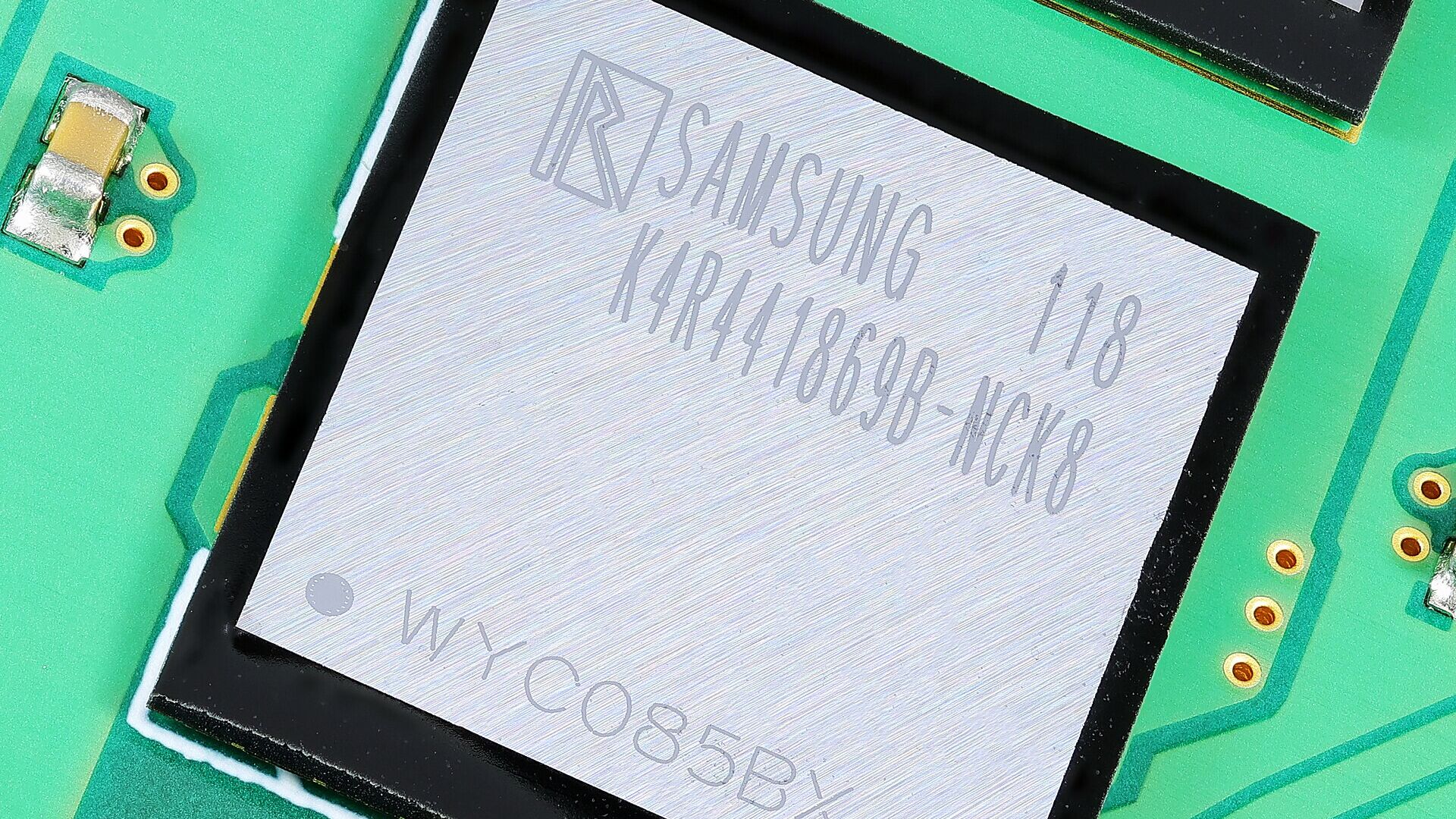
ChangXin Memory Technologies, the Chinese dynamic random access memory maker, said over the weekend that it has made key progress on a 4F² memory cell built around a proprietary vertical surrounding gate transistor, and that it plans a DDR5 server module on that structure by the end of 2026. It disclosed no technical specifications, no launch date and no yield data. Korea priced it as though it had. The Kospi closed down 5.46% at 6,035.35, its lowest close since July, after trading more than 7% lower and through 6,000 intraday, triggering a sell side trading curb for the first time in nearly two months. SK Hynix fell 10.09% to 1.443m won and Samsung Electronics 7.39% to 232,000 won. Foreign investors sold roughly $3.1bn of Korean equities in a single session.
The other event was a yield. JPMorgan and Goldman Sachs are underwriting only $1.3bn of Volta Infrastructure’s $5bn financing and marketing the larger $3.7bn facility, secured on roughly 36,000 Nvidia graphics processors, on a best efforts basis. The relaunched paper prices at SOFR plus 625 to 650 basis points with an original issue discount of 97 to 98, an all in yield of 11.21% to 11.75%. An earlier attempt at SOFR plus 500 failed to clear in August and September, and buyers came back asking for another 125 to 150 basis points plus the discount. Commitments are due tomorrow. The $1.3bn slice cash collateralises a letter of credit behind a Bitdeer data centre lease in Norway whose end customer is Anthropic on a six year compute agreement.
Put the two side by side. The Korean selloff is the market marking down a terminal value on the strength of a press statement, which is the opposite of information. The Volta book is the market setting a clearing price on artificial intelligence infrastructure credit after a failed first attempt, which is exactly information. Eleven percent, with the two arranging banks declining to hold three quarters of it, is the most honest number anyone has produced on this cycle since Hock Tan said yesterday that capital may be the biggest constraint of all. He was describing a condition. Volta is the invoice.
Our read is that the CXMT move is an overreaction in the near term and a legitimate repricing in the long term, and the distinction is the whole trade. CXMT holds roughly 10% of global DRAM and has shown no volume manufacturing on this structure. SK Hynix published its own 4F² roadmap in 2025 and Samsung has been targeting sub ten nanometre DRAM on the design for 2028, so the architecture is not news to the incumbents. What is news is that the market will now discount a Chinese entrant into the one semiconductor segment where pricing power was assumed to be structural through 2027. We have been treating the memory shortage as a multi year duration story. Today says it is a cash flow story with a terminal value that can be written down by a spokesman.
Asia: Seoul Breaks, Tokyo Reopens Lower, China Barely Moves
The Kospi has now fallen from 6,941.39 on October 6 to 6,035.35, a 13% drawdown in five sessions, and the composition of the decline has changed. Last week it was yields, the won and the Firmus withdrawal. Yesterday it was two executives in Singapore. Today it is competitive supply. Three different causes producing the same tape in one week is usually a sign that the selling is positioning rather than analysis, and Korean turnover down roughly 70% from its late May peak supports that. The won weakened as much as 0.8% to 1,341.60 after a two year high the previous day.
Tokyo reopened after the Sports Day holiday and the Nikkei 225 fell 1.82% to 67,777.52, its first session since Friday, though the broader Topix was marginally positive, which is the same semiconductor against everything else split we have been describing. Taiwan fell 1.95% with TSMC down 1.6%. The MSCI Asia Pacific index fell as much as 2.1% to its lowest since August 4.
China is the detail worth holding onto. The Hang Seng rose 0.31% to 24,345.22 and the CSI 300 fell only 0.29% to 4,276. The market whose national champion supposedly just leapfrogged the global memory duopoly did essentially nothing. Either the mainland does not believe CXMT’s claim, or it has already been priced through the long campaign of domestic substitution, or the float in Hong Kong and Shanghai has no clean way to express it. We lean toward the second and third. The read across is that this story is tradable in Seoul and Taipei and almost untradeable in Shanghai, which is itself a statement about where the risk premium for Chinese technology policy actually sits.
The IMF published forecasts alongside all of this, with India at 7.0% for both 2026 and 2027, China at 4.5% this year and 4.0% next, and emerging and developing Asia at 5.1% for 2026, while warning that global yields could spike again. Nobody traded a word of it.
Bank Earnings: Trading Carried It, Fixed Income and the Bond Rout Did the Damage
| Bank | Consensus EPS | Actual EPS | Verdict |
|---|---|---|---|
| JPMorgan | $5.90 | $5.57 ($5.75 ex-charge) | Miss |
| Goldman Sachs | $13.07 | $17.01 | Large beat |
| Citigroup | $2.66 | $2.85 | Beat |
| Wells Fargo | $1.85 | $1.87 | Narrow beat, revenue light |
JPMorgan produced its first clean headline miss in years. Net income rose 6% to $15.3bn on revenue up 8% to $50.2bn, but earnings came in at $5.57 against $5.90 expected, and $658m of securities losses taken in the quarter’s bond rout cost 18 cents of that. Net interest income rose 13% to $27.1bn and the firm raised full year guidance to roughly $106.2bn, lifted the markets excluded figure by $1bn to $97.5bn and put 2027 near $107bn. Fixed income sales and trading was the soft spot at $5.37bn against roughly $6bn expected. Jamie Dimon’s framing was that large fiscal deficits, sticky inflation, elevated asset prices, rising interest rates and geopolitical conditions continue to shift under the surface.
Goldman Sachs was the opposite print. Earnings of $17.01 against $13.07 expected on revenue of $18.68bn against $16.84bn, with Global Banking and Markets revenue up 32% to $13.46bn, equities up 72% to $6.44bn on financing and derivatives, investment banking fees up 21% to $3.22bn and record advisory revenue of $1.65bn. Its fixed income line was also flat to slightly lower at $3.47bn, and the fee backlog declined from the prior quarter.
Citigroup beat at $2.85 against $2.66 on revenue of $23.845bn, up 8% year on year but down 4% sequentially, with a 12.8% common equity tier one ratio, about $4.1bn returned to shareholders and an agreement to acquire Kard. Its fixed income line was also light. Wells Fargo earned $1.87 against $1.85 on net income of $5.95bn with credit quality holding across consumer and business books, but revenue of $21.87bn grew only 2% and came in under expectations, and the shares fell roughly 3% before the bell.
Our take is that the quarter is better than the reaction and worse than the headline beats. Three of four banks cleared consensus, the equity financing franchise is printing records, and credit costs are not the problem anyone feared. The problem is the two things that recur across all four reports. Fixed income revenue disappointed at the firms that dominate it, and the bond rout that took the ten year to a twenty four year high last week showed up as a realised mark at JPMorgan rather than as a tailwind. A bank sector that needs trading to carry the quarter while its own securities portfolios are being marked down by the curve is not a defensive rotation, and the KBW Bank Index being roughly 12% off its August peak reflects that rather than contradicting it. The cleanest read through to the top call is that the same two institutions reporting these numbers are the ones declining to hold Volta paper. They know what their balance sheets can absorb and they are telling you in two places at once.
UnitedHealth: The Quarter Nobody Is Talking About
| Metric | Consensus | Actual |
|---|---|---|
| Adjusted EPS | $4.14 | $4.69 |
| Revenue | $111.4bn | $112.7bn |
| Medical care ratio | n/a | 88.4% from 89.9% |
| 2026 guidance | n/a | Raised |
UnitedHealth beat by 13% on earnings, raised its full year profit outlook and improved its medical care ratio by 150 basis points year on year, with the gain attributed to tighter medical cost control and better margins at Optum. The shares are up roughly 3% pre market.
This is the single most underweighted data point of the morning. The managed care thesis for two years has been that medical cost trend was structurally broken and that utilisation would keep grinding margins down. A 150 basis point improvement in the ratio with guidance raised says the repricing cycle is working. In a session being driven by an unverifiable claim about transistor geometry, a large cap insurer actually fixing its cost structure is the better piece of evidence about where 2027 earnings come from.
Custom Silicon: Microsoft Prices the Second Source
Microsoft announced Maia 300 yesterday, the third generation of its accelerator line, claiming 40% more tokens per megawatt and up to seven times the rack scale token throughput of Maia 200, with 2.5 times the memory bandwidth, 33% more capacity and roughly twice the high bandwidth memory bandwidth per watt. It plans multi gigawatt Azure Maia deployments from 2027 and intends to make it the primary inference system for its own products. Reuters has reported the rollout could involve more than a million chips next year, and Microsoft is said to be negotiating with TSMC for over 300,000 units. These are all vendor figures with no third party benchmark.
Cerebras is the other side of the same coin. It closed down 10.69% at $146.62 yesterday, a post listing low, 62% below its first day high of $386 and 21% below its $185 offer price, after a SemiAnalysis report that OpenAI moved its fastest GPT-6.1 tier onto Nvidia graphics processors. Neither company confirmed it. Roughly 19.4m shares come free of lock up tomorrow. The stock rebounded about 9% after Sam Altman reaffirmed Cerebras as a close partner.
The common thread with CXMT matters more than any of the three stories alone. In one week the market has been handed a Chinese second source in memory, a hyperscaler second source in inference silicon and a report that the largest model company moved its flagship tier away from a specialist accelerator back to the incumbent. Every one of those is a margin question dressed as a technology question. The optical complex told you the same thing yesterday without any news at all, with Ciena down 9.95% and Lumentum 9.78% on a session with no earnings, no guidance and no analyst action. Memory names are extending it this morning, with Micron off more than 3% pre market, SanDisk about 5%, Seagate over 5% and Western Digital close to 6%.
Rates: The Curve Reopens Lower Into Tomorrow’s Print
The Treasury market reopens with yields modestly lower. The ten year is 5.206% against Friday’s 5.24% official close, the thirty year 5.56% against 5.60% and the five year 5.00% against 5.02%. Friday’s two year of 4.80% is the last official front end print. The policy range is 3.75% to 4.00%.
September CPI arrives tomorrow at 8:30. Consensus is 3.7% year on year against 3.4% in August with core at 0.2% month on month and roughly 2.5% year on year, and the Cleveland nowcast slightly lower at 3.6% and 2.4%. Petrol is doing most of the work in the headline, and American pump prices have now tied 2022 for the most days above $4 a gallon in a single year. October is priced somewhere between 17% and 26% and December between 70% and 85%.
We said yesterday that a headline at 3.7% on energy with core at 0.2% changes nothing because it is the distribution the curve already holds, and we stand on that. The asymmetry is still core at 0.3% or above, which puts October back in play. The one thing today adds is that the bond market has had no way to position for two sessions and has to compress it into one, so expect the tape into tomorrow morning to be noisier than the information in it.
Energy and Geopolitics: Supply Headlines Against a Target Set That Has Not Changed
Brent is $105.47 and down 1.1%, WTI $92.94 and down 0.9%, both easing from yesterday’s highs.
The offer is Russian again. President Trump said Russia has agreed to boost diesel supplies to world markets, following Sunday’s unconfirmed energy ceasefire announcement, which a White House official has since narrowed to refineries only. Moscow still has not confirmed either. Our standing rule has been that supply side policy responses in this conflict are worth about one session, and yesterday we shortened it to a few hours. Today the same channel produced a second headline and crude is down roughly a dollar. Call it a dollar and one session of decay per announcement, and note that nothing physical has moved.
The demand side was more substantive. OPEC’s October monthly report trimmed 2026 demand growth to 0.2m barrels a day from 0.4m while raising 2027 to roughly 2.6m, and Secretary General Haitham Al Ghais said yesterday that this year’s growth is now running near 400,000 barrels a day against the 1.4m projected in January. A cartel that has cut its own demand forecast by about a million barrels a day across nine months while prices sit above $105 is telling you that this is a risk premium market and not a balance market. That is the honest frame for anyone underwriting energy exposure here.
The risk premium itself has not improved. Riyadh’s King Khalid International Airport remains closed. Saudi Arabia intercepted three Houthi ballistic missiles on Monday. The week’s death toll stands at at least 20 with hundreds wounded. A Houthi official has threatened a swift and painful response if the United States joins Saudi strikes, and Saudi strikes have been reported on Kamaran island, the Qanawis district and Jawf province. We wrote yesterday that an insurer who has repriced an airport cannot un-reprice it on a headline. Crude down a dollar on a Russian diesel promise while a major Gulf hub stays shut is that asymmetry showing up in the tape.
Europe: Banks Lead, Again, and the Divergence Widens
The Stoxx 600 is 636.67 and up 0.16%, the DAX 25,290.54 and up 0.05%, the FTSE 100 10,704.90 and up 0.46%, with the CAC 40 modestly higher. Banks led for a second session. The franco-German ten year spread sits around 142 basis points, a post 2012 high, which is the one European risk nobody is being paid to watch.
Europe rising while Seoul fell 5.46% and Tokyo 1.82% is now a five session pattern rather than an observation. The composition is the point. European indices carry banks, insurers, defence and luxury and almost no memory or optical exposure, so they are mechanically the cleanest expression of a market that wants equity risk without semiconductor cycle risk. That works until it meets tomorrow’s American inflation print, because the one thing European banks and Korean memory have in common is that both are priced off the same curve.
Key Events Today
- 8:30 a.m. JPMorgan earnings call underway; Goldman Sachs, Wells Fargo and Citigroup follow through the morning
- 10:00 a.m. September existing home sales, consensus 3.96m against 3.98m in August
- Tomorrow September CPI at 8:30, then Bank of America, Morgan Stanley, BlackRock and ASML
- Tomorrow Volta Infrastructure commitments due; Cerebras lock up release of roughly 19.4m shares
Accountability
We were wrong about the direction the memory thesis would break from. For three weeks this desk argued that the weak point in the memory complex was demand destruction in the downstream, and we built that case through the Apple order cut, the 20.1% decline in third quarter personal computer shipments and the shrinking denominator underneath the server share statistic. That argument is still intact and it is still not what broke the stock. The break came from the supply side, from a Chinese entrant we have never mentioned in a single note. We had no view on CXMT at all, which is a coverage failure and not a forecasting one, and it is the second time in a week we have been surprised by an actor we were not watching.
We also owe a correction on framing. Yesterday we wrote that owning the constraint does not protect you when the market decides the constraint has been fully paid for. Today the market decided something sharper, which is that the constraint may not be permanent. Those are different claims and the second one is more damaging to anything held on a capacity thesis. Writing the softer version when the harder version was available is the mistake.
What resolved our way was the credit call. We said yesterday that Goldman’s pairing of equities overweight and credit underweight was this desk’s own thesis arriving through a strategist rather than a spread, and we flagged that an opinion is not a print. Volta is the print, inside one session, at 11.21% to 11.75% with the arrangers holding a quarter of it. We will take that, and we will state the standing test it creates. If the Volta book clears tomorrow at the top of that range or wider, or if the best efforts tranche is cut, the funding thesis has its confirmation in a cleared price rather than a marketed one. If it clears comfortably inside the range, we are early again and we will say so here.