Wednesday, October 14, 2026, written at 9:15 a.m. Eastern, forty five minutes after the September consumer price index and fifteen minutes before the open. Every future, yield, currency and commodity level in this note carries that stamp. ASML, Bank of America, Morgan Stanley and BlackRock have reported. The Federal Reserve’s Beige Book lands at 2:00 and Volta Infrastructure’s $5bn loan book closes at 5:00.
Top Call: The Inflation Was Not Only Gasoline, and the Curve Priced Time Rather Than Level
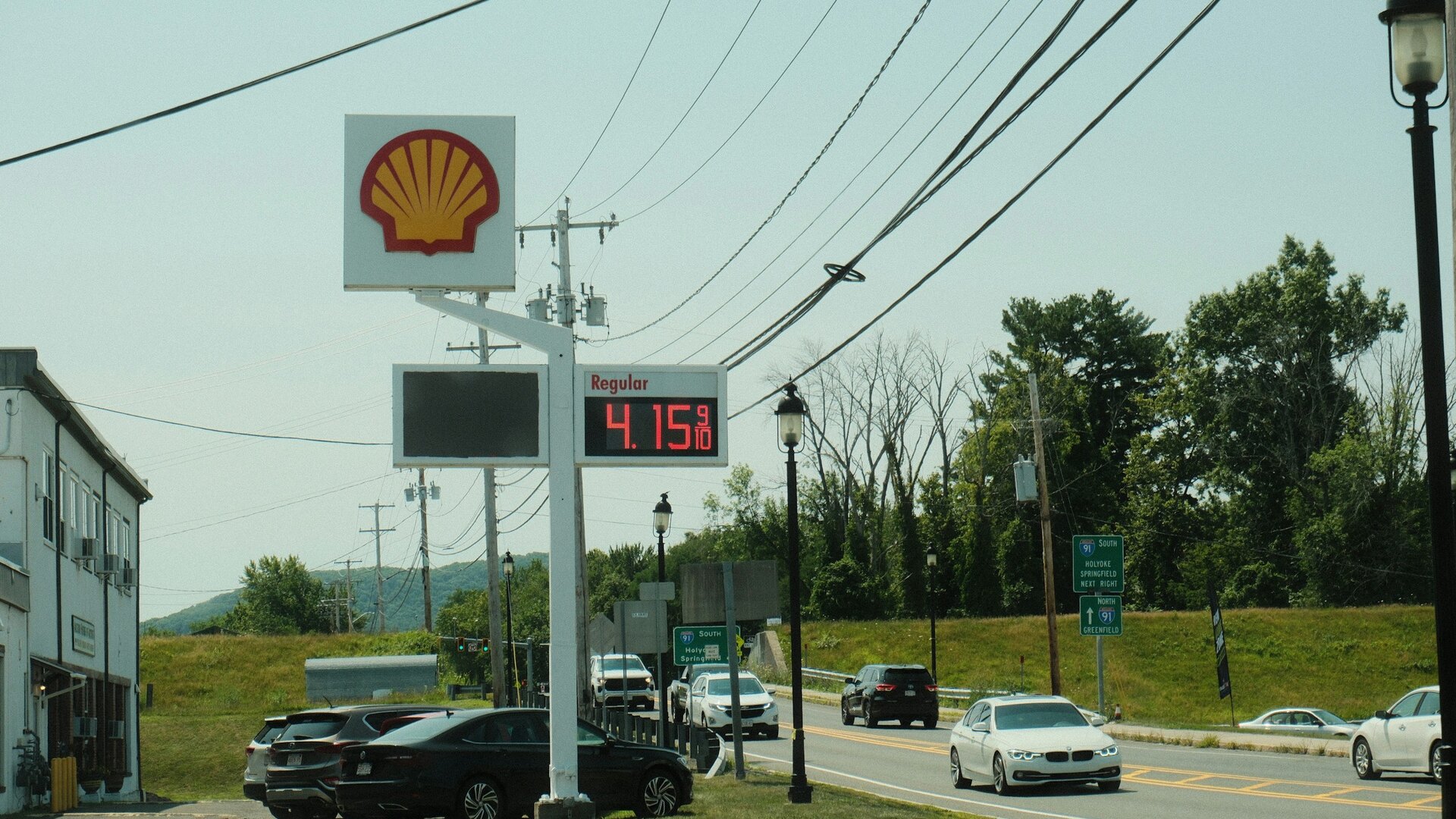
September core CPI printed 0.3% month on month against a 0.2% consensus, and 2.6% year on year against 2.5%. The headline was 0.6% month on month and 3.7% year on year, a tenth above forecast and up from 3.4%. Gasoline rose 9.1% in the month and 34.2% over the year and did more than half the monthly work, which is the part everyone expected. Shelter at 0.4% and used vehicles at 0.7% are the part nobody did.
For six weeks this desk, and most of the sell side, has carried the same defence of a rising headline, that it is an energy shock passing through a war premium and that the underlying trend is intact. Core at 0.3% is not fatal to that argument but it removes the evidence for it. One tenth is small. One tenth arriving in the month when the committee is openly debating whether it is finished is not.
The reaction is the more interesting half. The two year sits at 4.80% and has essentially not moved. The ten year added roughly ten basis points to 5.32% and the thirty year three to 5.59%. The market did not raise its estimate of the peak policy rate. It raised its estimate of how long the rate stays there, and it paid for that in the five to ten year part of the curve, which is where duration lives rather than where policy expectations do. Gold confirms it, down 1.57% to $4,111.90 on a hot inflation print, which only happens when the move is in real yields rather than in inflation compensation. Russell 2000 futures are off 1.34% against 0.39% for the S&P, a ratio of roughly three and a half to one, because floating rate borrowers care about the duration of restrictive policy far more than about one more quarter point.
That distinction matters today more than on most days, because the two largest artificial intelligence credit events of the week both price off the long end that just moved. Volta’s $5bn book closes at 5:00 this afternoon at talk of 11.21% to 11.75%, and Anthropic shows its third quarter financials to institutional investors ahead of a listing its backers have discussed near $2tn. Both are discounting exercises on cash flows that arrive in the 2030s. A ten basis point move in the ten year is not a headline. It is the input.
September CPI: The Tenth That Mattered
| Metric | Consensus | Actual | Prior |
|---|---|---|---|
| Headline m/m | 0.6% | 0.6% | 0.4% |
| Headline y/y | 3.6% | 3.7% | 3.4% |
| Core m/m | 0.2% | 0.3% | n/a |
| Core y/y | 2.5% | 2.6% | 2.4% |
Hike odds for the October 27 and 28 meeting moved from a 17% to 26% range yesterday into a 22% to 40% range now, depending on whether you read CME FedWatch or the Reuters survey, and December sits somewhere between 72% and 88%. That spread between venues is itself informative. A market that genuinely believed in an October move would not be quoting it eighteen points apart.
Three officials spoke before the print and all three pointed the same way. John Williams said one more increase this year is appropriate with no need for anything in 2027. Susan Collins expects the committee to go a bit further by year end and sees inflation staying above target on energy. Thomas Barkin said 2% remains achievable. None of that is hawkish by the standards of the last two months, and none of it has been revised in public since 8:30. Our read is that the committee’s own framing, one more and done, survives this print intact, and that the risk to it is not October but the January meeting, by which point two more core readings at 0.3% would make the pause look like a mistake rather than a pause.
China Printed 5% Producer Inflation and Record Exports on the Same Morning
This is the most underweighted release of the session and it is not close.
Chinese producer prices rose 5.0% year on year in September against a 4.5% consensus and 3.8% in August. Consumer prices rose only 0.9%. September exports rose 36.3% year on year to a record $447.18bn against a 25.5% forecast, imports rose 31.0% to a record $313.66bn, and the trade surplus came in at $133.53bn against $118.1bn expected.
For most of the last four years the global disinflation trade had a Chinese component, namely a producer price index in outright deflation that subsidised goods prices everywhere else. That component is gone. A 5% producer price index in the world’s manufacturing base, with exports running at a record and a consumer price index still under 1%, describes an economy whose input costs are rising faster than its ability to pass them to its own households and which is therefore exporting the difference. The read across to American goods inflation is not immediate, since there is a lag of two to three quarters through freight and inventory, but it means the favourable base effect that every 2027 core forecast quietly assumes is no longer there.
Mainland equities did not care. The CSI 300 fell 1.36% to 4,217.68 and the Shanghai Composite 0.89% to roughly 3,767 on a record export print, which tells you the domestic bid is being set by something other than the trade data. That has been true all quarter.
ASML: Record Quarter, Shares Lower, and a Shortage Extended to 2028
| Metric | Consensus | Actual |
|---|---|---|
| EPS | EUR 10.68 | EUR 12.95 |
| Revenue | EUR 11.58bn | EUR 11.66bn |
| Gross margin | n/a | 57.5% from 51.6% |
| Systems shipped | n/a | 113 from 86 |
ASML beat earnings by more than 21%, shipped 113 lithography systems against 86 a year ago, expanded gross margin by almost six points and guided the fourth quarter to EUR 14.2bn to EUR 15.2bn with the full year at EUR 44bn to EUR 45bn. The net income line of EUR 4.96bn includes a EUR 500m gain on the revaluation of its first Mistral tranche, which is worth stripping out before anyone calls this a clean 70% increase.
The sentence that matters is not in the numbers. Management said order book momentum has increased quarter on quarter through the year and that planned supply for 2027 and 2028 will not fully meet customer demand, and that it is now investigating capacity beyond the 30% increase previously communicated. That is the third time in six sessions that a supplier of a physical bottleneck has told the market it is sold out past 2028, after Lumentum on optical components and Intel on hardware generally.
The shares fell anyway, down 1.86% to $1,717.76 and a further 2.3% after hours. We take that seriously rather than dismissing it as valuation. A capital equipment company that beats by 21% and extends its shortage by a year and still trades down is a company whose multiple already contains the shortage. That is the same observation we made about memory last week and got only half right, and it is worth stating plainly: in this part of the market, good news about physical capacity is no longer a catalyst, it is a confirmation of something already paid for.
Banks: Equities Carried It Again, and the Fine Was the Story at BofA
| Bank | Consensus EPS | Actual EPS | Verdict |
|---|---|---|---|
| Morgan Stanley | $2.95 to $3.17 | $3.03 | In line to narrow miss |
| Bank of America | ~$1.10 | $1.08 adj, $0.91 GAAP | Miss |
| BlackRock | ~$14.25 | $15.93 | Large beat |
Morgan Stanley earned $3.03 on net income of $4.91bn, up 6.5%, with revenue up 12% to $20.34bn. Equities trading revenue rose 41% to $5.8bn, roughly $909m above the StreetAccount estimate. Fixed income fell 7% to $2.01bn and investment banking rose only 2% to $2.16bn, about $110m light. Whether this is a beat depends entirely on which consensus you use, which is itself a comment on how wide the dispersion has become.
Bank of America is the weak print. GAAP earnings of $0.91 on net income of $6.9bn, adjusted earnings of $1.08 against roughly $1.10 expected, and revenue of $29.96bn against about $30.7bn. The gap is a $1.2bn non tax deductible charge from FinCEN’s anti money laundering assessment, which carries credit for the OCC’s $750m penalty and costs about 17 cents. Consumer banking revenue of $11.57bn rose 4%. The shares are down more than 3% before the bell. The fine is not recurring, but the revenue miss is, and it arrives in the quarter when every peer’s trading desk had its best print in years.
BlackRock is the one unambiguously good report. Adjusted earnings of $15.93 against roughly $14.25, revenue of $7.75bn against $7.46bn, $205bn of net inflows, assets under management of $15.49tn against $13.46tn a year ago, and a 47.8% adjusted operating margin. The shares are up close to 4%.
The pattern across six banks in two days is now clear enough to name. Equities financing and derivatives are producing records at Goldman, Morgan Stanley and anyone else with a prime brokerage, fixed income is soft at every single firm that reported, and the differentiator is not credit quality but whether the institution had the balance sheet pointed at the right asset class when the curve moved. That is a cyclical quarter dressed as a structural one, and we would not extrapolate the equities line.
AI Credit: Volta Closes at 5:00 and Anthropic Opens Its Books
Volta Infrastructure’s $5.012bn package is due by 5:00 p.m. Eastern. The structure is a $1.3bn first lien term loan C alongside a $3.712bn facility secured on graphics processors, talked at SOFR plus 625 to 650 with a zero floor and an original issue discount of 97 to 98, which is an all in yield of 11.21% to 11.75%. Apollo has anchored it with a $1.5bn order. Semafor reports the deal is expected to price later this week at a rate of at least 11%, with a step down if Anthropic obtains an investment grade rating.
We pre committed yesterday to treating this book as the test of the funding thesis, with the stated bar being a clear at or wider than 11.75% or with a cut tranche. That resolves after the close and we will mark it tomorrow on those terms and not on any others. The one thing already visible is the Apollo order, which matters because Apollo is now the anchor or a lead in the Broadcom and Anthropic lease package, the SpaceX chip financing, the OpenAI Nexus programme and this. A single institution has become the clearing house for the cycle’s credit, and the diversification the market thinks it has across four deals is substantially one balance sheet.
Anthropic presents third quarter financials to institutional investors today ahead of a Nasdaq listing expected around mid November. The company filed confidentially on June 1 and was last valued privately at $965bn in May. Reported investor talk runs near $2tn, with New Constructs publicly valuing it at $150bn and calling it the most ridiculous offering of the year, a spread of more than thirteen times between the most and least optimistic published marks on the same asset.
Hold those two events together. The same company’s six year compute agreement sits behind the Bitdeer lease that the Volta term loan C cash collateralises, the same three banks arranging the equity offering include two that declined to underwrite three quarters of the debt, and both prices get set within hours of each other today. Our view has not changed: the equity market will give this company almost any number it asks for, and the credit market has already told you what it thinks the cash flows are worth. When those two disagree by this much, the credit market is usually the one that has done the work.
Asia: Seoul Gave Back a 2.6% Rally
The Kospi opened at 6,062.08, traded as high as 6,190.65 for a gain of better than 2.5%, and closed at 6,008.81, down 0.44% and lower for a sixth consecutive session. Samsung Electronics was up 2.59% and SK Hynix 2.29% early. Foreign investors sold another 1.18tn won on the main board, less than yesterday’s figure but a seventh straight session of outflows.
We called the ChangXin selloff an overreaction in the near term yesterday and this is half a vindication at best. The absence of follow through selling is real, and a 5.46% day that produces a 0.44% day after it is a market that has stopped compounding the story. But an index that opens up 2.6% and closes down is not a market that has rejected the story either, it is one where every bounce is being sold by the same foreign accounts that have been leaving for seven sessions. Hyundai Motor Securities expects foreign buying to return around late October earnings, the November midterms and the Anthropic listing. That is three external catalysts and no internal one, which is a fair description of the problem.
Tokyo closed at 67,744.29, down 0.05%, after trading above 68,000 intraday. The Hang Seng closed at 24,314.17, down 0.13%. Mainland China fell as described above.
Energy and Geopolitics: Aramco’s Headquarters, and the IEA Extends the Diesel Squeeze
Brent is $106.58 and up 0.55%, WTI $95.46 and up 1.40%, both higher for a second session.
The escalation is now reaching infrastructure that was previously untouched. A Houthi missile struck Saudi Aramco’s Dhahran headquarters, causing a limited fire with no casualties reported. The Saudi led coalition struck an oil facility in Sanaa. A further missile aimed at Riyadh was intercepted this morning and King Khalid International Airport is expected to remain closed into the weekend. UKMTO logged a container ship struck by an unknown projectile in the Strait of Hormuz yesterday, Reuters reports Iran shifting tactics to increase attacks on shipping before the American midterms, and Central Command publicly rejected an IRGC Navy claim that the strait is under Iranian control. President Trump said a decision on Iran is coming very soon and that he spoke with the Saudi Crown Prince, while Axios reports he and Prime Minister Netanyahu discussed a joint operation against military and nuclear targets. He has separately said he will not strike before November 3.
A missile landing on the corporate headquarters of the world’s largest oil company is a different class of event from a missile landing on a terminal, because it is aimed at the counterparty rather than at the barrel. Nothing physical was interrupted. The insurance and staffing implications of a producer’s head office becoming a target are not priced anywhere, and will not be until someone cannot staff a building.
The IEA’s October report, published this morning, is the substantive piece. Diesel supply stays tight into the second half of 2027, and inventory rebuilding may not begin before then. Global diesel exports in September ran 700,000 barrels a day below last year, with a 1.3m barrel loss from Russia and the Middle East only partly offset. Diesel refining margins hit a record of almost $95 a barrel in September and benchmarks, though off the $200 highs, remain near twice the price of crude. Against that, the agency sees 2026 demand falling 2.6m barrels a day with diesel accounting for a quarter of the decline, supply falling 5.8m this year and then rising 7.7m in 2027 to put the market back into surplus.
That is the honest two sided picture and it deserves to be read as one trade rather than two. Crude is a 2027 surplus story. Distillate is a 2027 shortage story. Anyone underwriting energy exposure on the crude curve alone is hedging the wrong barrel, and the reason European inflation is running where it is has far more to do with the $95 refining margin than with the $106 Brent print.
Europe: A Sixth Session Higher While the ECB Describes the Same Problem
The Stoxx 600 is 638.17 and up 0.50%, the DAX 25,398 and up 0.55%, the CAC 40 7,882 and up 0.69% and the FTSE 100 10,681 and up 0.29%. That is six consecutive sessions of gains against an Asian tape that has fallen in five of them. The German ten year is 3.46%.
The central bank commentary was unusually direct. Philip Lane said the rise in long term yields is a material tightening, which is a governing council member conceding that policy is being set by the bond market rather than by the council. Christine Lagarde said inflation is rising mainly on energy with no second round effects yet, which is precisely the argument American core CPI just undermined at 8:30. Pierre Wunsch said the ECB will probably have to hike again without committing. Three officials, three positions, one curve.
Europe’s outperformance remains compositional rather than analytical. These indices hold banks, insurers, defence and luxury and almost no memory or optical exposure, so they are the cleanest available expression of equity risk without semiconductor cycle risk. That worked for six sessions. It does not survive a sustained move in the long end, because European banks are the most rate sensitive large cap complex in the developed world, and the yield that just moved was not European.
Also On The Tape
- Grupo Televisa up 4.5% on a $2bn agreement for AT&T’s Mexican wireless business, structured as a fifty fifty joint venture with Fintech Holdings and targeted to close in the first quarter of 2027
- Liquidia up close to 47% on a global settlement with United Therapeutics resolving all six pending suits, with net payments of $380.7m staged across 2026 and 2027
- Alibaba up about 2% on the launch of its Qwen Glasses N1 series at 2,999 yuan, roughly $450, with shopping, payments and health tracking
- Alaska LNG cleared, with President Trump saying all permits are granted and Taiwan reported to have agreed to buy 30% of the gas and invest $4.4bn
- Rio Tinto third quarter Pilbara output down 1% to 83.4m tonnes with shipments up 2% to 85.7m, and a note that Hormuz conditions remain highly volatile
- Johnson & Johnson fell 6.8% yesterday despite adjusted earnings of $2.59, a sales beat and raised guidance, with GAAP earnings of $0.09 after a talc litigation charge
- Cerebras faces another roughly 19.4m share unlock wave, with the lockup fully expiring no later than November 9
The Record
Yesterday we wrote that the CPI asymmetry was core at 0.3% or above, that such a print would put October back in play, and that the headline at 3.7% on energy would change nothing. Core printed 0.3%, October moved from a 17% to 26% range into a 22% to 40% range, and that is the test resolving on its stated terms. We take no particular credit for it. Naming the right threshold while simultaneously writing that the tape into this morning would be noisier than the information in it was wrong on the second half, and it was wrong in the specific way that matters, namely that we expected the print to be noise and it was information.
The larger concession is the framing we have carried since early September, that this inflation is an energy shock and that the core is clean. Shelter at 0.4% and used vehicles at 0.7% are not energy, and today is the first month in which the composition stopped supporting the story. We are retiring the energy only frame rather than defending it.
We also owe a correction on Korea. Calling the ChangXin reaction an overreaction in the near term was directionally supported by today’s session but the mechanism we described was wrong. We expected stabilisation to show up as a bid. It showed up as the absence of a second wave of selling while every rally was still distributed into. Those are different market structures and only one of them resolves favourably.
The open item is Volta, which prices after the close on the terms we set yesterday, at or wider than 11.75% or with a cut tranche. We will mark it tomorrow either way.
Key Events Today
- Through the morning: Morgan Stanley, Bank of America and BlackRock earnings calls; ASML call already completed
- 2:00 p.m. Federal Reserve Beige Book, the last full survey before the October 27 and 28 meeting
- Afternoon Fed speakers Bowman and Barkin, plus remarks from President Trump
- 5:00 p.m. Volta Infrastructure $5bn loan commitments due
- Today Anthropic third quarter financials presented to institutional investors ahead of its Nasdaq listing