Tuesday, November 3, 2026, written at 8:30 a.m. Eastern. It is Election Day, Japan is shut for Culture Day, and the Nasdaq 100 closed in correction territory last night for the first time since the spring. Apple delivered the best quarter in its history after the bell and lost 4% of its value on one sentence about memory. Korea and Taiwan both fell 3.59%. AMD reports tonight into options pricing a 9% move, and the first polls close at 6:00 p.m.
Top Call: The Memory Bill Arrived at the One Company That Is Not Building Anything
Apple beat on every line that matters. Revenue of $114.48 billion against $113.39 billion expected, up 12% on the year. Earnings of $2.10 against $1.99. iPhone revenue of $57.6 billion, up 17%, with the new Duo supply constrained and no end date offered. Services at an all time high of $31.57 billion. Net income of $30.71 billion. December quarter revenue guided to growth of 7% to 10% against a 6.1% consensus, which is a raise, not a trim.
Then the company guided gross margin to 45% to 46% against the 46.3% the street carried and the 47.9% it had just delivered, and chief financial officer Kevan Parekh said most of that decline is memory. Chief executive John Ternus used the word unprecedented twice to describe what Apple is paying for DRAM and NAND, said the September quarter already carried higher memory costs, said the December quarter will be worse, and then said the part that actually moved the stock: pricing for memory purchases continues to increase beyond December. Mac and iPad supply will be constrained in the holiday quarter for the same reason. Asked directly whether it would raise prices, Apple declined to answer.
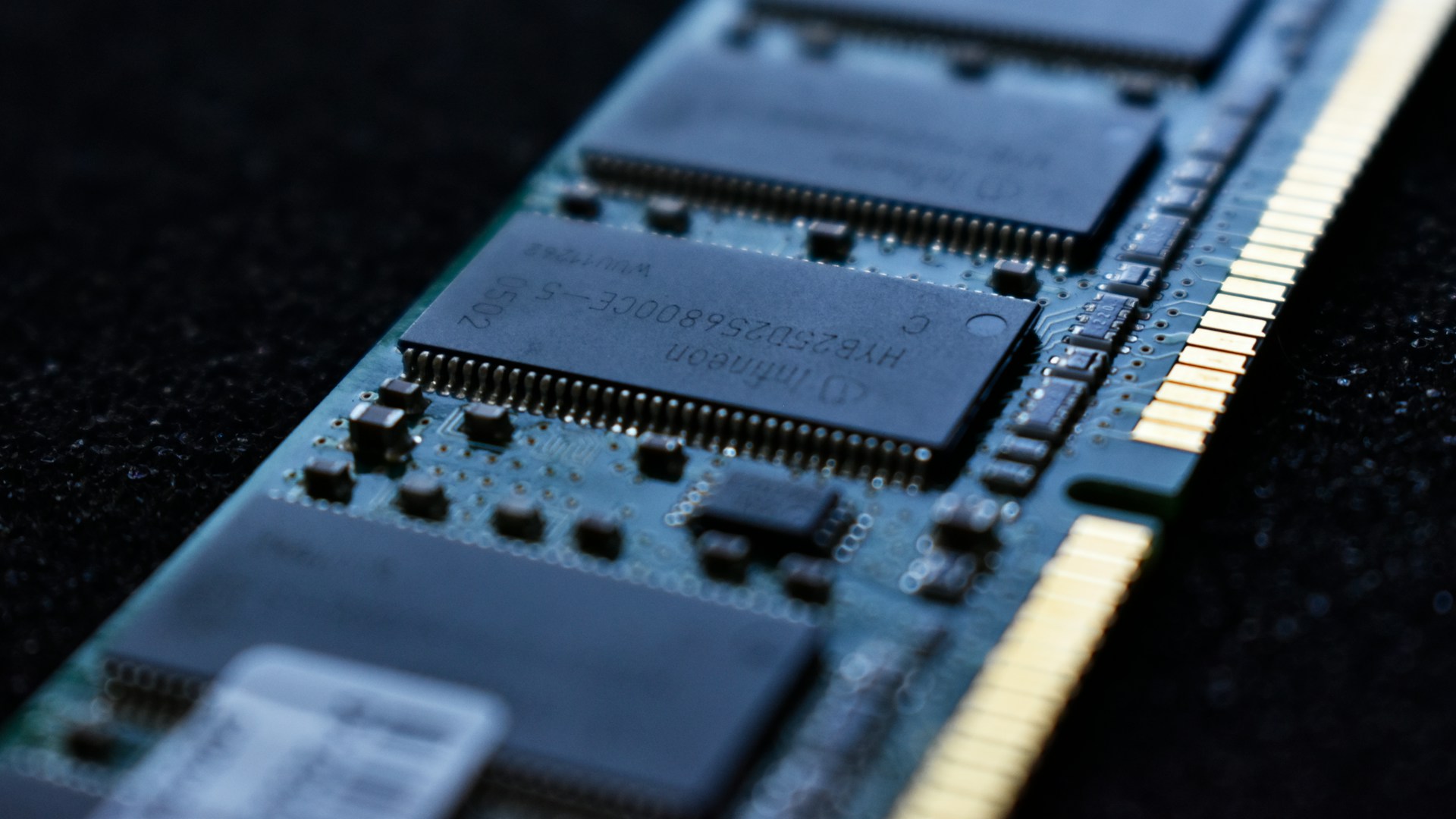
This is the moment the artificial intelligence build stopped being someone else’s capital spending problem. For three weeks this desk has argued that the market is repricing the cost of funding the build rather than the demand for it, and that argument has been fought entirely inside the hyperscalers and their suppliers. Apple is neither. It has no hundred billion dollar annual capex plan, no backlog to defend, no bond deal to place. It simply buys memory, and the bidding war for high bandwidth capacity has now raised its input cost enough to take roughly two points off the gross margin of the largest consumer hardware franchise on earth. That is the artificial intelligence capital cycle landing on an income statement that has nothing to do with artificial intelligence.
Two points of gross margin on about $140 billion of holiday quarter revenue is real money, but the number is not the point. The point is that Apple has spent the year functioning as the hedge against this trade, rising whenever semiconductors were sold, and the hedge has now been contaminated by the thing it was hedging. If memory inflation runs through Apple, it runs through every handset maker, every server original design manufacturer, every automotive electronics supplier and every personal computer original equipment manufacturer, most of which have less pricing power than Apple and none of which have a $31 billion services annuity to absorb it. Intel told us the same thing last week in a different language when it blamed its December guide on a personal computer slowdown and component shortages. We filed that as an Intel problem. It was not.
Apple: The Numbers
| Metric | Consensus | Actual | Result |
|---|---|---|---|
| Revenue | $113.39bn | $114.48bn, up 12% | Beat |
| EPS | $1.99 | $2.10 | Beat |
| iPhone | ~$56.4bn | $57.6bn, up 17% | Beat |
| Services | ~$31.7bn | $31.57bn, record | In line |
| Dec quarter revenue guide | +6.1% | +7% to +10% | Raise |
| Dec quarter gross margin guide | 46.3% | 45% to 46% | Miss |
Our take: the operating business is in better shape than at any point in five years and the stock is down 3.9% at $325.25 because the only line management cannot control is the one that broke. Greater China revenue and iPad both missed, which matters less than it reads, because the September quarter margin of 47.9% already included about a point of tariff refund benefit that does not repeat. Strip that and the sequential step down is closer to four points than two. We would not read this as a thesis break. We would read it as the end of Apple as a clean hedge against the semiconductor complex, which is a different and more awkward problem for anyone who has been using it that way since September.
The Memory Trade Broke in Both Directions on the Same Morning
Here is the contradiction worth sitting with. Apple confirmed overnight that memory pricing is accelerating and will keep accelerating past December. That is, on its face, the single best piece of pricing evidence the memory industry has received this cycle, delivered by its largest and most price sensitive customer. Samsung Electronics then fell 4.15% to 219,500 won, SK hynix fell about 5% to 1,398,000 won, the Kospi dropped 3.59% to 5,648.79, the Kosdaq lost 4.08%, and foreign investors sold roughly 1.5 trillion won of Korean stock. Taiwan fell 3.59% to 43,307.54. Samsung Electro-Mechanics lost 7.38% and SK Square 5.37%.
Both halves cannot be correct about the same industry. A customer saying your prices are unprecedented and still rising is not bearish for you unless the market has already stopped paying for the cash flow and started pricing the date on which it ends. That is what is happening. We wrote yesterday that the market had separated NAND, which is normalising, from high bandwidth memory, which is not, and that the bull case had narrowed to the better half. Today the market stopped making that distinction and sold both, on a day with no memory specific news, because the selling is no longer about memory. It is about artificial intelligence capital spending as a category, and Korea and Taiwan are the highest beta expression of that category available to a foreign investor at two in the morning New York time.
The honest reading is that these are now positioning markets rather than fundamental ones. SK hynix is sold out through 2029 on an 80% operating margin and has lost more than a fifth of its value in five weeks. Nothing in the order book changed. What changed is that the marginal holder of that order book was a momentum fund, and the momentum turned in the first week of October. European semiconductors carried the same read this morning with ASML down 3.4%, STMicroelectronics and Infineon each down 3.9% and the Stoxx technology sector off 2.1%.
Oracle Issued $20 Billion Into Its Own Drawdown
Oracle filed to sell $10 billion of common stock and $10 billion of senior notes, and then priced 86.21 million shares at $116. The stock fell 8.8% on Monday to roughly $120, a four month low, and is down about 37% this year. Gross debt was already $125.34 billion. Larry Ellison’s paper wealth fell about $11 billion in an afternoon.
We have spent two weeks describing a funding window that is closing. Oracle just walked through it rather than waiting for a better price, which tells you how management ranks dilution against the risk of not having the money. The equity piece is the signal. A company convinced its shares are temporarily mispriced does not sell 86 million of them at a four month low, and a company that could fund the build out of operating cash flow would not need to. It is the same logic Marvell used on Monday when it bought Lumentum for $115 billion entirely in paper, and the same logic Meta used with its $95 billion equity raise last week. When the debt market reprices, everyone discovers that their own stock is the only acquisition and construction currency left.
The credit backdrop supports the urgency. High yield spreads sit near 339 basis points, close to eighteen month wides. Bonds tied to artificial intelligence infrastructure trade near 115 basis points against roughly 78 for broad investment grade. Below investment grade artificial intelligence infrastructure debt outstanding reached $184 billion by mid October against $125 billion in June, at least eighteen data centre financings now carry double digit yields, and the Financial Times has JPMorgan, Morgan Stanley, SMBC and MUFG all approaching internal exposure limits, with about $18 billion of loans against an Oracle leased New Mexico facility under pressure. Brookfield announced a $27 billion data centre at the Drax power station in North Yorkshire this morning, which sent Drax up 8.2% and is a reminder that the pipeline being funded today was underwritten at last year’s cost of capital.
Palantir Did Everything Right and Fell 6.5%
Revenue of $2.31 billion against $2.18 billion expected, up 96% and above $2 billion for the first time. Adjusted earnings of $0.44 against $0.41. United States commercial revenue up 148% and larger than United States government revenue for the first time in the company’s history, which is the structural milestone the bulls have waited four years for. Full year guidance raised to roughly $8.53 billion, with the growth guide lifted about nine percentage points and the fourth quarter put near $2.65 billion. Truist went to $250 and UBS reiterated buy. The stock closed at $178.34 and trades at $166.74 pre-market, down 6.5%.
At a price to sales multiple north of 100 there is no print that clears the bar, because the bar is not a number, it is a rate of change in the rate of change. The commercial crossover is genuinely important and will still be important in a year. The lesson of the past three sessions is narrower and applies to Shopify this morning as well: in a tape where the multiple is doing the work, a beat and a raise buys you nothing and a single soft second order metric costs you fifteen percent.
Election Day, and What the Options Are Willing to Pay For
Polls close in stages from 6:00 p.m. Eastern, starting with parts of Indiana and Kentucky, with Ohio and North Carolina at 7:30 and the large eastern states at 8:00. The RealClearPolling generic congressional ballot has Democrats ahead by 8.2 points at 51.4 to 43.2. Prediction markets put a Democratic House at roughly 92% and the Senate between 69% and 75%, while polling based models run a little higher on the Senate. Silver Bulletin calls the House all but certain and the Senate closer than the markets imply.
The options market is not pricing a shock. Roughly 0.86% is priced for today and 1.85% through Friday, with the VIX at 21.40 and November futures below spot at 20.65 on a flat term structure. Skew at 152.78 is elevated, which says the hedging is being done in puts rather than in volatility outright. That configuration is consistent with an outcome most participants believe they already know.
The honest view is that divided government is the base case and that it is close to fully reflected. What is not reflected is the second order consequence for the one trade that actually matters to this tape. A Democratic House changes the fiscal impulse at the margin and changes very little about the Federal Reserve, where futures still carry a 75.2% chance of a December hike. It does change the political calculus around Iran, since the argument all along has been that the administration has been holding renewed action until after this vote. That window opens tomorrow.
Crude: Monday’s 8% Fall, Then Qeshm
Brent fell about 8% on Monday to roughly $104 on genuine progress out of Doha, with President Pezeshkian saying the Supreme Leader had granted the government wider authority to negotiate and President Trump saying oil was dropping like a rock and a deal could happen before the vote. European gas futures fell almost 9% alongside.
Overnight the direction reversed. United States forces conducted what officials described as defensive strikes on Iran’s Qeshm Island inside the Strait of Hormuz, after the Revolutionary Guard fired on an American aircraft and claimed it had downed an MQ-9 drone. Iranian state media reported multiple explosions. Officials were careful to frame this as a continuation of limited action rather than a resumption of the campaign, and Vice President Vance said no deadline has been set for a deal. Brent is back near $105 and WTI near $97, both up about half a percent.
Two things follow. First, the strait has not reopened, whatever the two day plan says, and October carried the heaviest attack rate on commercial shipping in the strait since March. Second, and more useful, we now have a clean measurement of what the premium is worth. The market paid about eight dollars for a credible diplomatic path in a single session and gave back less than a dollar for a live exchange of fire between the two parties on the day after. That asymmetry says the complex is positioned long risk premium and wants an excuse to reduce it, which is a different market from the one that spent October bidding every headline higher.
Rates, Data, and the Part of the ISM That Mattered
The ten year sits near 4.90% and has not moved much in either direction, the two year is 4.59% and the thirty year 5.28%. The dollar index is unchanged at 101.77 with the Swiss franc firmer by 0.2%, which is the only visible safe haven bid this morning. Gold is down 1.08% near $3,905 after running into sellers at $3,970, and Bitcoin is at $77,212 with about $399 million of outflows from Bitcoin exchange traded funds yesterday, almost all of it from one fund, and a sixth consecutive outflow day in ether products.
Monday’s ISM manufacturing survey was better than it looked and better than we expected. The headline rose to 55.5 from 54.5 against a 54.7 consensus, the tenth consecutive month of expansion, with production at 59.0, the strongest since November 2021. We flagged prices paid as the number to watch rather than the headline, and it came in at 75.2 against 77.5 expected and 77.9 prior. That is the first genuine cooling in the input cost series in months, even though it has now risen for twenty five consecutive months and sat above 70 for nine. Employment at 52.4 held up. The offset was construction spending, which fell 1.9% in September for the steepest monthly drop since April 2020, a number that deserves more attention than it received.
Today brings September job openings at 10:00 a.m., expected near 7.1 million after 7.079 million, with quits at 3.09 million and layoffs at 1.66 million, alongside factory orders expected up 1.1% after 0.1%. With payrolls on Friday at a consensus near 55,000 and the Treasury refunding tomorrow, the quits rate is the line to read. A labour market where people have stopped leaving jobs is one where wage pressure resolves itself without the Federal Reserve needing to add to the December case.
Asia and Europe
Japan was closed for Culture Day, which removed the region’s largest market from the tape and concentrated the selling in Korea and Taiwan, both down 3.59%. Hong Kong was again the exception, up 0.42% to 23,491.62, and has now diverged from the regional direction on six separate sessions we have flagged this month, which is no longer coincidence. Mainland China was mixed to soft with the CSI 300 off 0.2% at 4,008.87 and the Shanghai Composite down 0.82% at 3,608.10, giving back part of Monday’s policy driven bounce, and there is an unconfirmed Financial Times report that the securities regulator has paused initial public offerings and large share sales outright. If that is accurate it belongs in the same column as the short selling clamp: supply management, not demand creation.
Australia rose 0.34% to 8,886.8 after the Reserve Bank raised the cash rate 25 basis points to 4.85%, the highest since 2008 and the fifth increase this year, on a 6-3 vote with softer forward guidance. The Australian dollar fell back to about 0.6980 on the dovish tone rather than rallying on the hike, which is the right read of a split board at the end of a cycle.
Europe opened lower and stayed there, with the Stoxx 600 near 647.13 and the DAX at 25,820.18, technology off 2.1% and mining off 2.2% as copper fell 2.8% to $6.38. Bayer rose as much as 5.6% on a beat and a raised outlook, and food, beverage and healthcare were the only green sectors. The industrial labour news was heavy: Schaeffler will cut 3,460 jobs and close five European sites, and Volkswagen’s restructuring is now reported to involve around 100,000 positions. Swiss inflation came in at 1.5% against 1.3% expected.
Also On The Tape
- Shopify fell about 16% despite revenue up 32% to $3.74 billion, adjusted earnings of $0.49 against $0.47 and operating income up 66% to $568 million, because gross merchandise volume of $119.15 billion missed the $120.08 billion estimate and subscription revenue of $836 million missed $850.2 million. At 87 times earnings there was no room for a rounding error
- Pfizer beat convincingly at $0.87 against $0.73 on $16.58 billion of revenue and raised full year guidance to $62 billion to $64 billion of revenue and $2.95 to $3.05 of earnings. Clorox and Yum Brands also cleared, Zebra beat on earnings but guided free cash flow light, and Dynatrace fell about 15%
- Marvell is recovering, up 2.81% to $176.22 after closing down 12.7% on its own deal, with Lumentum down 18.6%. Intel is up 3.65% and Nvidia 1.89%, which is the first session in a week where the large semiconductor names have traded apart from the memory complex
- Anthropic’s listing is approaching, with reporting putting the window between mid November and Thanksgiving week at a valuation somewhere between $1.5 trillion and $2 trillion, and Robinhood is reportedly competing for retail allocation. That deal is now the single largest scheduled test of whether the funding window is open or closed
- Disney is preparing deep cuts across theme parks, television and film, and Barclays is already removing roughly 5,000 roles on artificial intelligence adoption. The labour line item is where this cycle shows up before the revenue line does
The Record
Yesterday’s pre-committed test failed, and it failed cleanly. We wrote that if Monday’s bid in technology was an oil trade wearing a technology costume, then a Hormuz deal that fell apart should take the Nasdaq down with crude. Crude did the opposite of falling apart, dropping 8% on real diplomatic progress, and the Nasdaq Composite fell 1.07% anyway with the Nasdaq 100 down 1.4% into correction. Cheaper energy did not rescue technology. The oil framing was wrong, or at least far too small, and the correct framing was the one we had been using for three weeks and then abandoned for a session: this is a cost of capital and now a cost of goods repricing inside the artificial intelligence complex, and it is indifferent to the price of crude.
We were also too relaxed about the Marvell arbitrage. We described both stocks as slightly lower pre-market and called it the spread doing its job. Marvell closed down 12.7% and Lumentum down 18.6%. Issuing a third of yourself in a tape that has stopped paying for growth is not a technicality, and we flagged the risk in the right paragraph while badly underestimating the size of it.
What we had right was the shape of the Apple print. We said the absence of a capital spending story would leave gross margin carrying the entire event, and it did. We had the level wrong, because we carried a 47% to 48% guide and the company delivered 45% to 46%, and we attributed the step down to tariffs when the actual cause was memory.
Two tests for tomorrow. First, AMD reports tonight against roughly $13.1 billion of revenue, $1.95 of adjusted earnings and $8.2 billion to $8.3 billion of data centre revenue, with options pricing a 9% move after a 26% decline in a month. If AMD beats and guides data centre higher and the stock still falls, the correction is about the multiple rather than the demand, and the memory selloff this morning is the same trade. Second, if Samsung and SK hynix fail to recover within two sessions despite Apple publicly confirming that memory pricing is accelerating, then the market has moved from pricing the size of the memory cycle to pricing its end date, and we should stop treating the Korean tape as a positioning story.
Key Events Today
- 10:00 a.m.: September job openings, consensus 7.1 million after 7.079 million, with quits 3.09 million and layoffs 1.66 million. Factory orders expected up 1.1% after 0.1%
- Pre-market: Pfizer, Shopify, Fiserv, Eaton, Marathon Petroleum, Ferrari and Yum Brands have reported or report shortly
- After the close: AMD, Amgen at $5.76 on $10.06 billion, Arista Networks, Super Micro Computer, Block, Booking Holdings and Apollo
- 6:00 p.m. onward: Polls close in stages, with the first meaningful eastern state calls expected after 8:00 p.m. and the Senate picture unlikely to resolve before late evening
- Tomorrow: Treasury quarterly refunding, Qualcomm, McDonald’s, Novo Nordisk, Uber and AppLovin report, and the political window for renewed action against Iran opens