Wednesday, November 4, 2026, written at 8:15 a.m. Eastern. Democrats took both chambers of Congress overnight, Greg Abbott lost Texas, and three artificial intelligence hardware companies reported the best collective night of the quarter. Futures fell as much as 2.5% on the early returns and then reversed hard, but not evenly: Dow futures are up 1.73%, the Nasdaq 100 is up six basis points, and the gap between those two numbers is the entire story this morning. ADP lands at 8:15 a.m. and the Treasury refunding at 8:30 a.m., so this is a reading of the tape before two live events.
Top Call: The Constraint Moved From Capital to Permits
For three weeks this desk has argued that the market was repricing the cost of funding the artificial intelligence build rather than the demand for it. Last night the demand half of that argument was settled about as decisively as a quarter can settle anything. AMD put up $13.38 billion of revenue against $13.06 billion expected, $2.09 of adjusted earnings against $1.94, data centre revenue of $8.5 billion up 97% on the year, and then guided the December quarter to roughly $17 billion against a $16.23 billion consensus, with data centre alone at about $12.8 billion. Management told the call to expect 2027 revenue growth above 80% with data centre passing 80% of total sales and server revenue doubling. On that guide AMD will outsell Intel in a quarter for the first time in the company’s history. Arista grew 58.5% to $3.66 billion, its fastest as a public company, and guided the fourth quarter to $3.9 billion to $4.0 billion against $3.60 billion. Supermicro delivered $19.95 billion against its own $17.35 billion guide and put fiscal 2027 at $72 billion to $82 billion against a $69.17 billion consensus.
Three companies, three beats, three raises, no ambiguity. The Nasdaq 100 is unchanged.
What moved instead was everything the build has to touch on the ground. CoreWeave is down 7%, IREN down 6%, Nebius down 5%, Tesla down almost 6% and SpaceX down more than 7%, the last two because they run large compute sites in Texas, Tennessee and Mississippi. Gina Hinojosa took the Texas governorship from Greg Abbott by 52.9% to 45.6%, ending three decades of Republican control, and Keisha Lance Bottoms won Georgia by 54.3% to 45.7%. Both campaigned in part on a moratorium on data centre development. GLJ Research puts Texas at roughly a quarter of all United States data centre capacity due online by 2030, and CBRE has Atlanta as the single most active data centre construction market in the country. Abbott had already paused new Texas permits pending an audit before he lost.
So the shape of the problem has changed again. In September the question was whether the demand was real. In October it became whether the build could be funded, and the answer came back as wider credit spreads, equity issuance at four month lows and an $115 billion all paper acquisition. This morning the question is whether the thing can be physically sited, powered and permitted in the two states where a quarter of it was supposed to go. That is a slower variable than a credit spread and a much harder one to hedge, because it does not trade. It shows up as a delayed interconnection queue eighteen months from now, inside a backlog number that still looks fine today.
The honest read is that this is not a demand problem and the market is not treating it as one. It is a conversion problem. AMD can sell $17 billion of silicon a quarter; the open question is the rate at which anyone can plug it in. That is also why the correct expression of the news is not to sell the chip companies. It is the dispersion itself: the Dow up 1.73%, small caps up 1.36%, solar up high single digits to 10%, and the index that holds the build flat on a night when its three biggest suppliers all raised guidance.
AMD: The Numbers
| Metric | Consensus | Actual | Result |
|---|---|---|---|
| Revenue | $13.06bn | $13.38bn, up about 46% | Beat |
| Adjusted EPS | $1.94 | $2.09 | Beat |
| Data centre | ~$8.2bn | $8.5bn, up 97% | Beat |
| Q4 revenue guide | $16.23bn | ~$17.0bn, plus or minus 3% | Raise |
| Q4 gross margin guide | 55.5% | ~55% | Miss |
Our take: this is the strongest guide AMD has ever issued and the stock is roughly unchanged, having given back an after hours gain of more than 7%. Two details matter more than the headline. First, the quarter carried a non-cash charge above $1 billion tied to warrants issued to OpenAI and Meta, which is the clearest accounting expression yet of how much of this cycle’s revenue is being bought with equity rather than won on price. Second, Client and Gaming fell 8% on the year and is guided to contract more than 20% sequentially in the fourth quarter because higher memory prices are weakening personal computer demand. That is the same sentence Apple delivered on Monday and Intel delivered last week, now written into the guidance of the company with the best data centre franchise outside Nvidia. The memory bill is no longer an Apple story or an Intel story. It is the standing tax on every consumer silicon line in the market, and the only businesses escaping it are the ones selling into the build itself.
What the Sweep Actually Changes
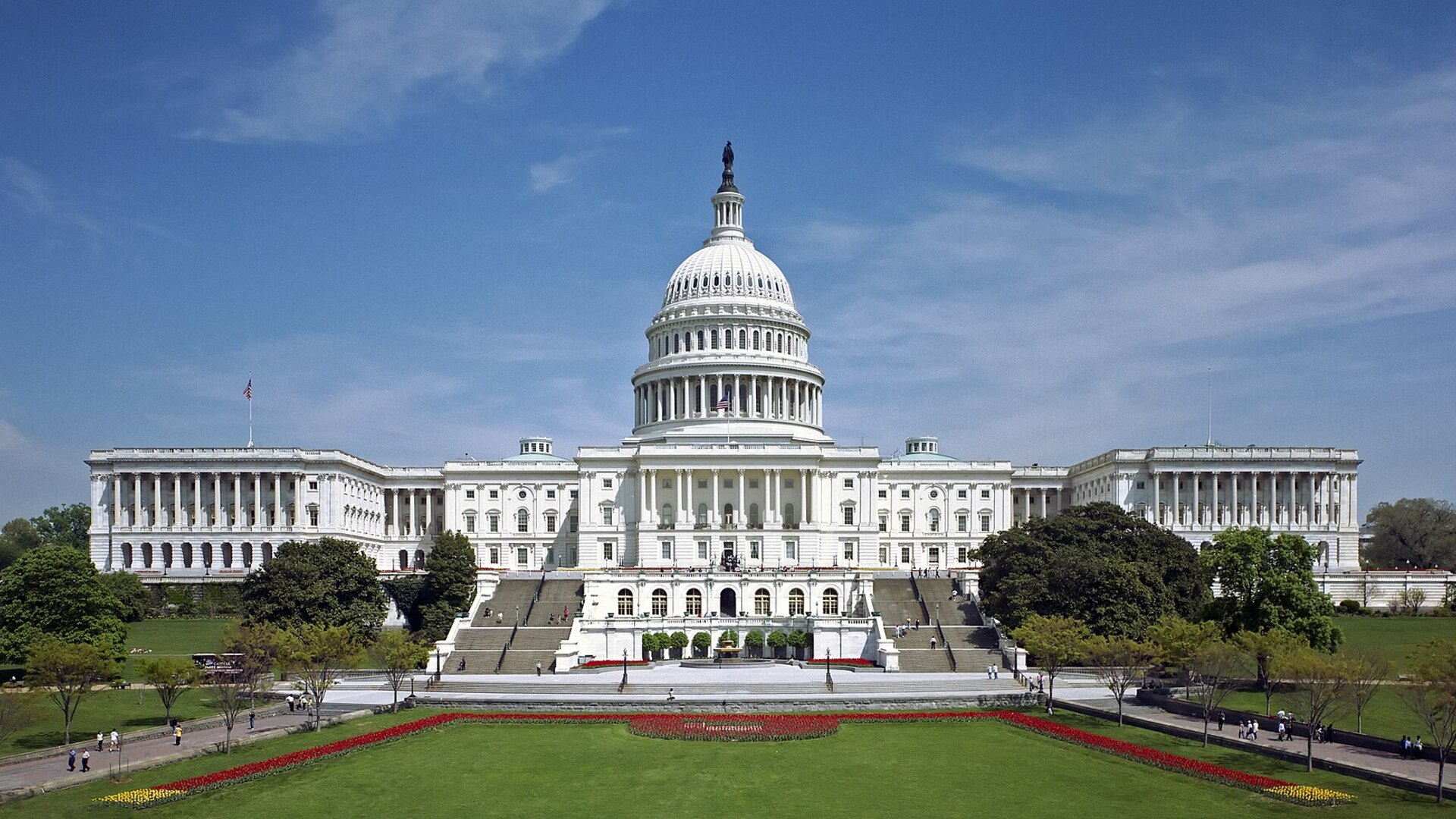
Democrats hold 54 Senate seats with two races uncalled and 228 House seats against the 218 needed. Trump told the New York Times he would accept the result and said he could work with Democrats on many issues, which removed the tail risk that was keeping overnight futures down 2.5%. The conventional read is divided government, legislative gridlock and therefore no policy change worth pricing, and that is why the Dow is up almost 900 points.
We think that read is right about legislation and wrong about everything else. A Democratic Congress cannot pass an artificial intelligence bill over a Republican veto. What it can do is hold hearings, subpoena utility rate filings and make the social licence of the data centre build a permanent national argument. More to the point, the races that matter for compute were not federal. They were state and gubernatorial, and the executive power to pause permits, deny interconnection and withdraw tax abatement sits there. Aidan Yao at Amundi called the night a referendum on artificial intelligence rather than on Trump, which is an overstatement that is pointing at something real. At least twenty candidates across thirty six governor’s races ran on some form of data centre moratorium. Enough of them won in the right places that the build now has a political cost curve as well as a financial one.
The second order effect is the one to watch into year end. Household electricity bills were the mechanism that made this issue work at the ballot box, which means the political pressure runs through utility rate cases rather than through Congress. That is where the hyperscalers’ power contracts get repriced, and it is a far more direct transmission channel into capital spending than any bill that will not pass.
The Rotation Is the Signal
Look at what was bought and sold on the same tape. First Solar is up 9.4%, Sunrun 10%, Enphase 7.6%, with volume in the Invesco Solar ETF running at forty times normal on Cboe data. In Europe Orsted gained about 7%, Vestas 5%, SMA Solar 11.6% and Nordex 8%. Against that, the neocloud complex is down 5% to 7% across the board and Trump Media is down 11%.
This is not a tech selloff. It is the market finally being handed a second place to put money inside the energy transition trade, after a year in which the only way to own electricity demand was to own the thing consuming it. A Congress that will defend clean energy credits and state houses that will slow the compute build is a combination that shifts the margin from the buyer of power to the producer of it. The Dow up 1.73% against a flat Nasdaq 100 says the same thing in index form, and it is the cleanest rotation print of this entire drawdown precisely because it arrived on the best earnings night the complex has had.
Rates, the Dollar and a Gold Move Worth Noticing
The curve rallied a few basis points across the board, with the ten year near 4.92%, the two year 4.57% and the thirty year 5.28%. The dollar broke below 101.50 with the euro up 0.6% at 1.1260 and the Australian dollar through 0.7010. The VIX collapsed 12% to about 18.25, which is a textbook event vol crush after an outcome that was already in the price.
Gold is the number to sit with. It is up about 2.8% to roughly $4,046, back above $4,000 for the first time since the margin driven liquidation of late October, after falling 3.5% on October 30 to a one year low. Five sessions ago we read that collapse as forced selling rather than a change of view, and said the tell would be whether it stabilised. It has done rather more than stabilise. A 3% day in gold on a softer dollar, lower real yields and a Congress that will not cut spending is a straightforward fiscal trade, and it reverses the cleanest piece of evidence we had that the market was in a liquidity event. Bitcoin, which has correlated with that liquidity read all month, is up only 0.4% at $78,141 after a third consecutive day of exchange traded fund outflows worth about $116 million. The two assets have stopped telling the same story, and gold is the one we would believe.
Yesterday’s data was firmer than the narrative allows. September job openings came in at 7.52 million against roughly 7.1 million expected, and factory orders rose 1.8% against 1.1%. That pushed the ten year to about 4.96% during Tuesday’s session before the election bid took it back. December hike pricing has drifted from 85% after the October 28 hold toward roughly 72% to 80% depending on the source, which looks too low given a labour market where openings are rising again. ADP is expected at 69,000 after 90,000, ISM services at 54.8, and payrolls land Friday at a consensus near 55,000.
Europe: Inflation at a Three Year High
Euro area flash inflation hit 4.0% in October from 3.8%, the highest in three years, driven by energy at 20.8%, the fastest since December 2022, as the Hormuz disruption works through the gas and power complex. Services accelerated to 3.3% and core held at 2.5%. Italy printed 5.6% and France 3.8% while Germany eased to 2.8%, a dispersion that makes the December meeting genuinely difficult for a central bank that has already lost its president as of February 7. The Riksbank decides this morning with all eighteen economists surveyed by Bloomberg expecting a hike to 2.00%.
European equities are nonetheless strong, with the Stoxx 600 up about 1%, the DAX 1.54% and the FTSE 100 adding 130 points, led by renewables and by Novo Nordisk, up more than 6% after beating with 79.2 billion Danish kroner of revenue against 73.5 billion expected and raising its outlook on oral Wegovy. Note that core inflation at 2.5% against a headline of 4.0% is an entirely energy driven print, which is the argument for looking through it, except that energy has now been elevated for four months and services are no longer falling.
Asia
Japan took the worst of it, with the Nikkei down 1.4% to 62,188.63 after trading as low as 60,030 intraday, a swing of more than 4% on the American election returns. Taiwan fell 0.83% to 42,948.91 in a fifth consecutive down session, with an intraday range from 41,855 to 43,741 that tells you more about conditions than the close does. Korea was the interesting one: the Kospi dropped roughly 4% intraday and closed up 0.62% at 5,683.80 with the Kosdaq up 1.5%, but SK hynix still finished down 0.1% and Samsung down 0.7%. Reuters reported TSMC, Samsung, SK hynix and Kioxia all lower on the data centre politics.
China went the other way with conviction. The CSI 300 rose 2.31% to 4,101.34 and the Shanghai Composite added about 2.2% to 3,686, while the Hang Seng gained 1.69% to 23,919. That is the seventh session this month in which Hong Kong and the mainland have diverged from the regional direction, and it is now plainly a function of the policy support package rather than coincidence. A tape where American politics is slowing the American compute build and Beijing is actively supporting its own equity market is a relative value setup that will get more attention than it deserves on a single session.
Also On The Tape
- Anthropic filed an amended S-1 showing third quarter revenue of $16.96 billion, up 47% sequentially after 144% in the second quarter, nine month revenue of $33.24 billion, and roughly $895.4 billion of aggregate committed spend, substantially all of it compute and infrastructure. It plans to market shares next week for a Nasdaq listing as ANT. Growth decelerating from 144% to 47% in one quarter is the number the book will have to explain
- CVS will split into two public companies by the first half of 2028, unwinding the Aetna acquisition, and fell more than 2%. Another conglomerate discovering that the market will not pay for breadth in a tape that wants clean cash flow
- Block rose 9% on a beat and a raised full year guide, Duolingo gained 18% on revenue, users and margin, and Alight added 22% on raised guidance. Skyworks fell about 11% on a weak current quarter guide and Toast fell 5% despite a beat as its chief financial officer departs
- Crude is lower again, with Brent near $102.28 and WTI $95.25, both off more than 1%, as Iran called Washington’s latest response unsatisfactory while talks continue through Qatar and Pakistan. The complex has now given back roughly $15 of Brent in four sessions against a physical market that drew 5.3 million barrels
- Qualcomm and Arm report after the close, Qualcomm into options pricing a 9.6% move on a consensus of $2.16 and about $10.12 billion. Given what AMD said about personal computer demand and memory costs, the handset read is the one that matters
The Record
Two tests were set yesterday and both have now resolved, in opposite directions.
The first was AMD. We wrote that if AMD beat, guided data centre higher and the stock still fell, then the correction was about the multiple rather than the demand. AMD beat on every line, guided data centre to roughly $12.8 billion, raised 2027 growth above 80%, and the stock is unchanged after giving back a 7% after hours gain. That is close enough to a fail to count as one. The framing was too narrow. The stock is flat not because the multiple is contracting but because a new risk arrived on the same night from a direction we were not looking, and it cancelled out the best guide the company has ever given. We had been treating the midterms as a macro event with an outcome everyone already knew. The outcome was known. The consequence for the compute build was not priced at all, and we should have seen it, because we wrote on October 22 that electricity prices were becoming the political transmission channel for this cycle and then never followed the thought to a ballot.
The second test was Korea. We said that if Samsung and SK hynix failed to recover within two sessions despite Apple confirming accelerating memory prices, the market had moved from pricing the size of the memory cycle to pricing its end date. SK hynix is down 0.1% and Samsung down 0.7% after a 4% intraday drawdown, with the index up only because the rest of the Kospi carried it. That is a fail by any reasonable standard, and we are retiring the positioning framing. The memory complex is being discounted on duration now, not on magnitude, and we should stop expecting good pricing news to rescue it.
One test for tomorrow. Watch whether the neocloud group, CoreWeave, IREN, Nebius, Applied Digital and TeraWulf, stays down for a second session once the headline flow from the election clears. If it recovers with the rest of technology by Thursday’s close, then this morning’s move was a reflex to the result and the permitting story is noise. If it does not, the market has started pricing a physical constraint on the build, and the backlog numbers that everyone has been underwriting the sector on become the next thing to re-examine.
Key Events Today
- 8:15 a.m.: October ADP private payrolls, consensus about 69,000 after 90,000
- 8:30 a.m.: Treasury quarterly refunding. Sizes expected unchanged at $125 billion, with the live question being whether the “next several quarters” guidance language is altered and whether long end buybacks are expanded
- 10:00 a.m.: ISM services, consensus 54.8 after 54.9, and S&P Global services final at 9:45 a.m.
- 10:30 a.m.: EIA weekly crude and product inventories after a reported 5.3 million barrel physical draw
- Pre-market: CVS, McDonald’s, Novo Nordisk, Uber, Datadog, Emerson, Kraft Heinz, Grainger and GlobalFoundries
- After the close: Qualcomm, Arm, MercadoLibre, DoorDash, Expedia, McKesson, AppLovin, Snap, Coherent and Motorola Solutions
- Tomorrow: Bank of England decides and is expected to begin tightening, ConocoPhillips, Airbnb, Cloudflare and Lumentum report