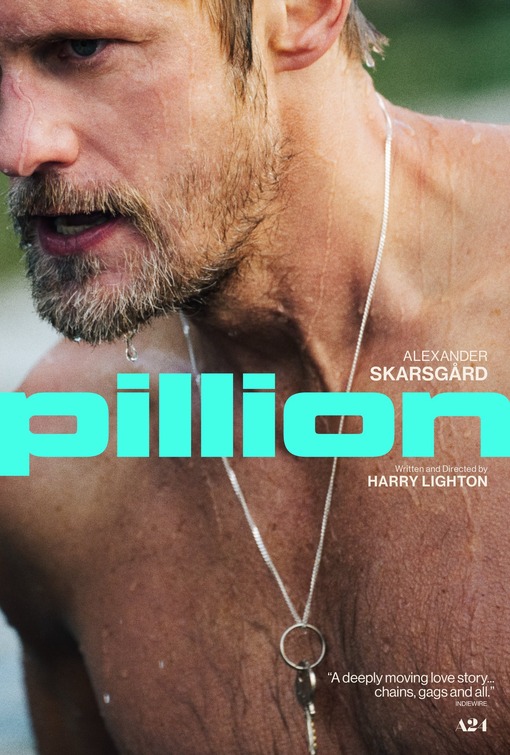
There is a particular kind of film that does not explain itself, does not contextualize its world for the uninitiated, and does not apologize for the choices its characters make. Pillion is that film. It drops you into a BDSM relationship between two men without a tutorial and trusts you to find your footing alongside Colin, who is doing exactly the same thing. That trust in the audience is one of the film’s most quietly confident qualities.
Colin is timid in the way that some people are timid: not from weakness but from a genuine disposition toward deference, a preference for being guided rather than leading. Ray reads this immediately. The fact that he brings exactly what Colin loves most to their very first meeting is not accidental. Ray is intelligent in the specific way that people who need control tend to be intelligent; he identifies what you want and uses it to position himself as the person who can provide it. The dynamic that follows is unambiguous: Ray dictates everything, from where Colin sleeps to how he moves through the world, and Colin accepts this not because he has no self but because this particular arrangement of power is, for a while, what he needs.
The integration into Ray’s motorbike world is the film’s warmest passage. Colin finding a community, a rhythm, a set of people who receive him without question: it reads as genuine happiness, the kind that arrives unexpectedly through a side door you didn’t know was open. Which makes what follows feel all the more precise and painful.
The dinner with Colin’s mother is the film’s turning point and its most dramatically concentrated scene. Her disapproval lands not just as a mother’s discomfort with an unconventional relationship but as an outside perspective on the power imbalance she can see clearly because she is not inside it. The fight that follows does not resolve anything. It simply draws the lines more visibly.
When Colin hurts himself after her death and Ray briefly softens, lets him sleep in the bed, cooks him breakfast, steps back from the architecture of dominance, the film holds that tenderness carefully, knowing it will not last. And it does not last. Ray returns to himself the following day with no explanation, because Ray does not explain himself. That is rather the point. The brief glimpse of a different Ray does not represent hidden depth so much as it represents the outer limit of what he is capable of offering, and the film is honest enough to show that limit without sentimentalizing it.
Colin’s eventual departure is the film’s quiet triumph. The man who entered the relationship without a voice leaves it having found one, not dramatically, not with a speech, but with the simple act of walking out when his needs are consistently discounted. And just as you believe Ray might finally bend, might offer the one concession that would bring Colin back, he leaves instead. Because Ray has always needed to be at the top. Dominance is not a preference for him. It is a condition of existence. You are either in or you are out, and there is no negotiation between those positions.
The film is made with a restraint that serves it enormously. Conversation is secondary to atmosphere, to the physical language between two people, to what is communicated through proximity and silence and the direction of a glance. It captures emotional change the way emotional change actually happens: gradually, in the body, before the mind has words for it.
I did not fully understand this world going in. I understood it completely by the time it ended. That is precisely what good cinema is supposed to do.