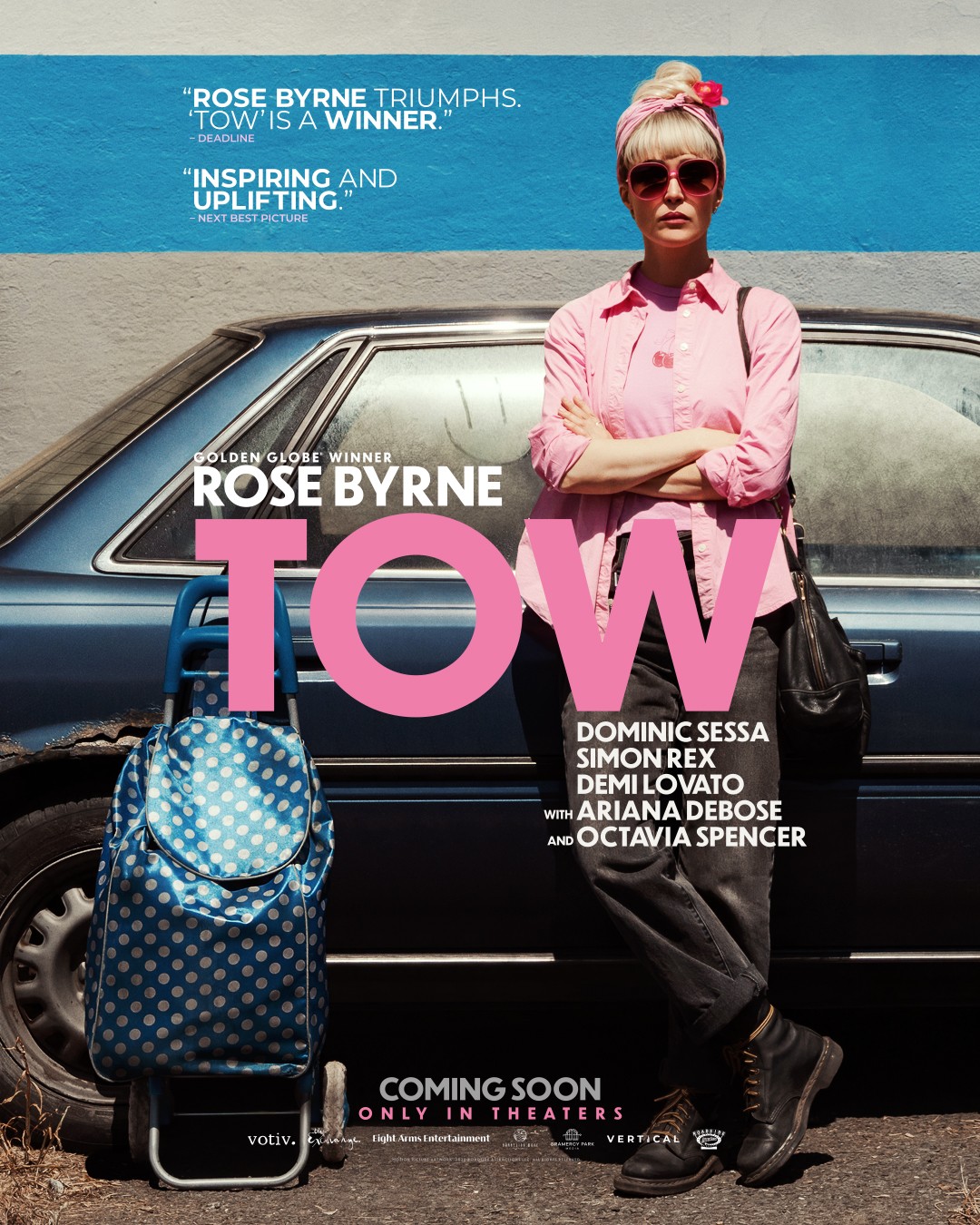
There is a particular kind of injustice that Tow understands well: the kind that is technically legal, socially invisible, and specifically designed to grind down people who don’t have the time or resources to push back. Amanda’s car gets stolen, then towed, then held for a fee she cannot pay, by a company that knows she cannot pay it and is counting on that fact. The film takes that single bureaucratic cruelty and stretches it across a year of Amanda’s life, watching what it costs her and what it builds in her simultaneously.
Rose Byrne is perfectly cast. She brings exactly the right quality to Amanda: a woman who is not remarkable by any conventional measure, who exists at the margins of systems that were designed to overlook her, and who chooses to fight anyway not because she is unusually brave but because the car is simply everything she has. Byrne never reaches for sympathy and never plays Amanda as a victim awaiting rescue. She is stubborn, occasionally irrational, and entirely believable. The role requires someone who can make ordinariness feel like quiet heroism, and Byrne does that without announcing it.
The supporting cast earns its place. The friends made at the shelter, the administrator, the lawyer who tries his best and still manages to complicate things along the way: none of them are there for decoration. Each one gives Amanda something she didn’t have before, a clearer understanding of her situation, a model of how to absorb help without losing herself, a reason to keep moving. The film is honest about the fact that fighting a monopoly system alone is nearly impossible, and that accepting support is not weakness but necessity.
What stays with you is the contrast the film quietly builds between Amanda’s world and everyone else’s. The towing company boss who enjoys himself freely. The dog that is simply happy. The life that continues around her while she cannot access any of it. These are not heavy-handed images; they are just placed there, the ordinary world doing its ordinary thing while Amanda stands outside it, which is a more effective indictment of structural inequality than any speech the film could have written.
The growth is real and handled without sentimentality. By the end of the year, Amanda is someone who can offer help instead of only needing it, who can share something real in a meeting without calculating the cost, who makes choices from a calmer place. The film earns that arc.
The limitation is in how it is told. The filmmaking is functional rather than expressive: scenes switch without dwelling, without pressing into the texture of any particular moment long enough to make it linger. The material deserves something that breathes more, that holds a shot until you feel the weight of Amanda’s exhaustion or the specific satisfaction of one small victory. Instead it moves efficiently and without much pressure, which is why a film with this much to commend it does not quite move you the way it should.
Solid, honest, and well-performed. Just a little too even-keeled to fully land.